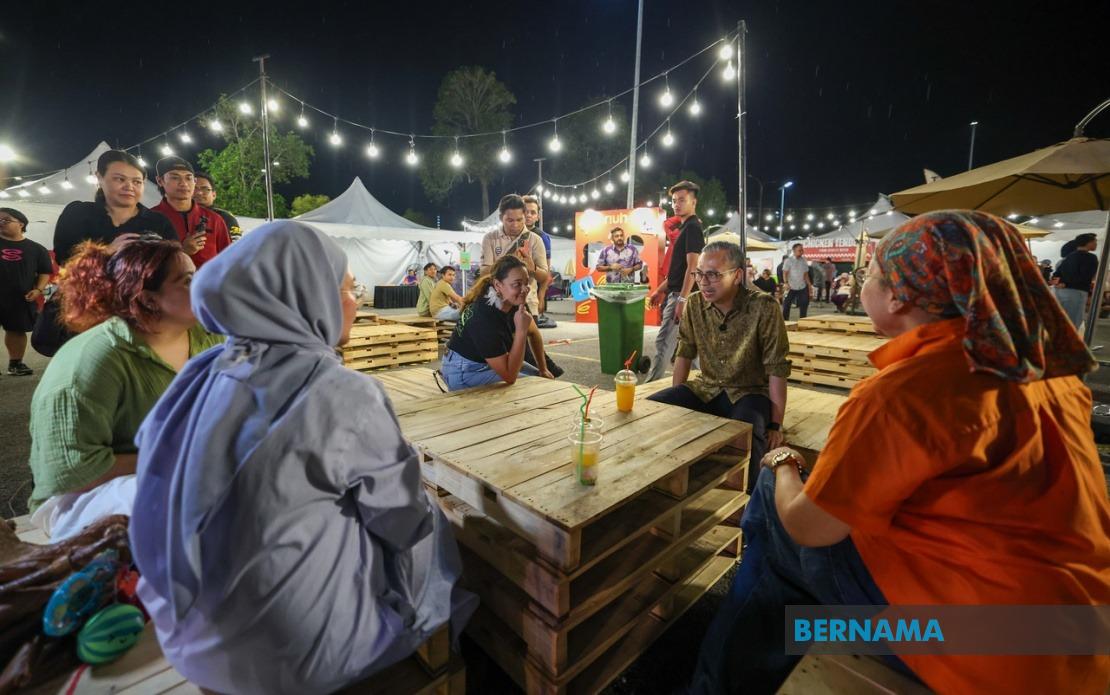
Communications Minister Datuk Fahmi Fadzil has expressed strong satisfaction with the reception of the RIUH Pi HAWANA carnival, viewing it as a successful vehicle for promoting Malaysia's creative sector and independent entrepreneurs. Speaking at the event held at PICCA Convention Centre @ Butterworth Arena, Fahmi highlighted how the programme demonstrates the depth of local talent available across multiple generations of performers and business owners. His remarks underscore the government's commitment to providing platforms that celebrate homegrown creative excellence beyond traditional media channels.
The carnival, running through the weekend, has drawn encouraging public participation from across Penang and beyond. Fahmi noted that the attendance figures validate the decision to integrate the creative showcase with National Journalists' Day, or HAWANA, celebrations—an observance organised annually by the Communications Ministry since 2018. The event structure appears to have struck a balance between entertainment, commerce, and cultural recognition that resonates with families and creative industry participants alike.
What distinguishes RIUH Pi HAWANA from typical industry trade shows is its deliberate mixing of established and emerging artists on a shared platform. Fahmi specifically mentioned the inclusion of acts like Exists, emphasising the value of creating opportunities where veteran performers and younger talents can interact directly with audiences. This intergenerational approach addresses a persistent challenge in Malaysia's entertainment sector: the difficulty younger artists face in gaining exposure and building fan bases without established industry connections or substantial marketing budgets.
The carnival's scale reflects ambitions to become a recurring fixture in Malaysia's cultural calendar. MyCreative Ventures, the organising entity, has assembled a comprehensive offering that extends well beyond concert performances. The event features 24 local creative brands spanning design, crafts, and digital content, alongside 20 food and beverage vendors that have become integral to modern music and arts festivals. These commercial elements provide genuine income opportunities for small business owners who might otherwise lack access to high-footfall venues or established promotional networks.
Fahmi's call for continued public attendance, particularly from Penang residents, signals awareness that such events require sustained community engagement to succeed. Regional audiences often represent untapped markets for creative content and products, especially in states outside Klang Valley where cultural events can struggle to generate the critical mass needed for profitability. By encouraging broader participation, the minister implicitly acknowledges that peripheral Malaysian cities deserve equivalent access to quality entertainment offerings.
The 18 live performances showcase a deliberately diverse roster that cuts across musical genres and career stages. Established acts like Bunkface bring fan bases and production value, while emerging names such as Chelsia Ng and Fugo offer fresh material that appeals to younger demographics. This curation strategy reflects lessons learned from music festivals globally: heterogeneous lineups create incentives for different audience segments to attend, increasing overall attendance while reducing demographic concentration that can disadvantage underrepresented performers.
Interactive workshops mentioned in the carnival's programming represent an often-overlooked dimension of cultural events that particularly benefits smaller economies. These sessions likely cover areas such as music production, visual merchandising, social media marketing for creators, or hands-on crafts instruction. For independent entrepreneurs and freelance artists, exposure to industry professionals and peers can yield practical knowledge and networking connections that accelerate career development more effectively than formal education pathways.
Fahmi's suggestion that RIUH Pi HAWANA should become a permanent fixture alongside future HAWANA celebrations reflects strategic thinking about policy sustainability. Rather than treating creative promotion as episodic intervention, positioning the carnival as an annual expectation allows businesses and performers to plan accordingly and build fan loyalty year-over-year. This approach contrasts with ad hoc cultural initiatives that struggle to gain traction precisely because they lack predictability and institutional backing.
The integration of journalism celebration with creative industry promotion also carries symbolic weight worth examining. HAWANA commemorates the profession of journalism and media workers, while RIUH Pi HAWANA simultaneously elevates independent creators and entrepreneurs operating largely outside traditional media structures. This juxtaposition suggests evolving definitions of cultural authority and information distribution, acknowledging that content creation now encompasses performers, digital artists, podcasters, and small media producers alongside credentialed journalists. For Malaysian policymakers, this represents tacit recognition that creative industries contribute to national soft power and economic dynamism comparable to conventional media.
The carnival's establishment in Butterworth, rather than Kuala Lumpur, carries additional significance for regional development narratives. Penang has long positioned itself as a creative hub, yet often struggles to secure major events relative to federal territories. Hosting RIUH Pi HAWANA there strengthens the state's credibility as a cultural destination while distributing economic benefits and talent exposure opportunities beyond peninsular core regions. This geographic strategy aligns with broader Malaysian development goals emphasizing regional equity and reduced urban concentration.
Looking forward, the success metrics for RIUH Pi HAWANA will likely extend beyond attendance figures to encompass measurable outcomes for participating brands, performers' career trajectory, and repeat visitation rates. If the carnival achieves its implicit objectives—generating sustainable income for creative entrepreneurs, providing career momentum for emerging artists, and cultivating audiences for independent content—it could serve as a template for other Southeast Asian nations navigating similar questions about supporting creative economies in the digital age.