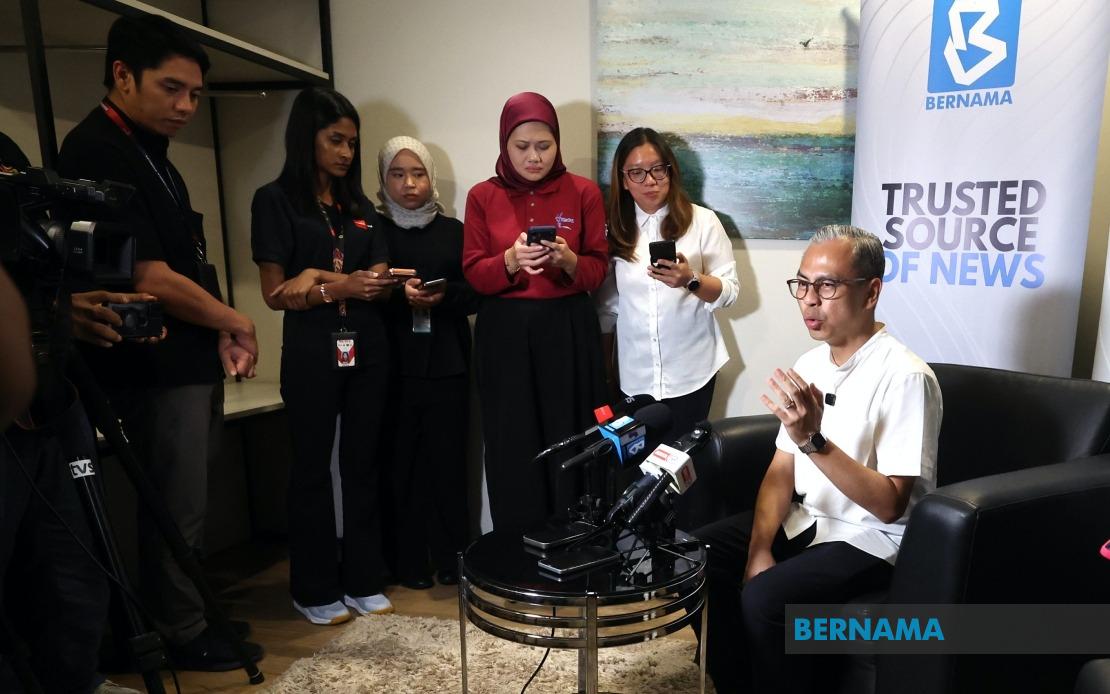
Communications Minister Datuk Fahmi Fadzil has unveiled plans to strengthen the Malaysian Media Council as a robust self-regulatory mechanism, signalling the government's commitment to fostering an ethical and responsible media landscape across Malaysia. Speaking during a visit to the Malaysian National News Agency's operations centre in Johor Bahru on July 7, Fahmi emphasised that the newly established body requires substantial institutional support during its formative years to fulfil its mandate effectively.
The minister outlined a comprehensive strategy to expand the MMM's reach and influence within Malaysia's fragmented media ecosystem. Beyond providing direct governmental assistance, authorities intend to actively encourage greater participation from media organisations and digital platforms, recognising that a more inclusive membership base would strengthen the council's capacity to address industry-wide challenges through collaborative mechanisms. This approach reflects an understanding that media self-regulation functions most effectively when stakeholders collectively commit to shared ethical standards and accountability frameworks.
Fahmi acknowledged that most traditional media organisations already demonstrate strong adherence to professional journalistic principles and ethical codes. However, he highlighted a critical gap in the current regulatory landscape: the proliferation of unvetted content circulating through social media platforms, where information spreads rapidly without consideration for Malaysian sensitivities, cultural contexts, or legal frameworks governing defamation and privacy. The minister referenced a recent incident in Banting to illustrate this concern, where graphic images and investigative details from a violent crime were widely shared online, potentially compromising both victim privacy and ongoing police investigations.
The participation of social media platforms within the MMM structure represents a significant evolution in Malaysia's approach to digital governance. While major platforms maintain their own content guidelines and policies, these frameworks typically reflect international standards rather than local circumstances and values. By incorporating social media entities into a Malaysian-specific self-regulatory council, policymakers hope to bridge this disconnect. Such integration could facilitate more contextually appropriate content moderation decisions and encourage platforms to recognise their responsibilities within the Malaysian media ecosystem rather than operating purely as neutral distribution channels.
This initiative gains further significance following Prime Minister Datuk Seri Anwar Ibrahim's announcement that complaints against journalists from recognised media organisations would no longer automatically trigger government investigations or enforcement action. Instead, such matters must be referred first to the Malaysian Media Council for independent assessment. This procedural reform represents a crucial safeguard against potential state interference in journalism and establishes a transparent, scrutinised pathway for addressing grievances. By inserting an independent intermediary between accusers and enforcement agencies, the mechanism aims to prevent journalists from facing prosecution or investigation without proper due process and external oversight.
The structural improvements being proposed reflect Malaysia's recognition that media freedom and professional standards are complementary rather than competing priorities. A self-regulatory body with genuine industry participation and government backing can establish and enforce ethical boundaries without the heavy-handedness often associated with state-directed regulation. This distinction carries particular weight for Malaysia's international standing, as the country seeks to improve its positioning within indices measuring press freedom and democratic governance across Southeast Asia and globally.
Fahmi specifically noted that strengthening the MMM framework could positively influence Malaysia's ranking in the Media Freedom Index, a barometer increasingly scrutinised by investors, international observers, and civil society organisations. This acknowledgment reflects the government's understanding that media freedom and institutional stability are interconnected economic and political assets. Countries perceived as having robust, independent media oversight mechanisms often attract stronger international investment and enjoy enhanced diplomatic relationships based on demonstrated commitment to institutional integrity.
The challenge of integrating social media platforms into Malaysia's regulatory framework extends beyond technical or bureaucratic considerations. These companies must be persuaded that voluntary participation in local self-regulatory mechanisms serves their long-term interests by reducing friction with authorities and building trust with local communities. The incentive structure needs careful calibration: platforms should perceive MMM membership as preferable to facing potential government-imposed restrictions or future regulatory mandates that might prove more onerous.
For Malaysian readers and regional observers, this development signals a deliberate shift toward collaborative governance models within the media sector. Rather than relying primarily on top-down legislation or ministerial directives, authorities increasingly recognise the legitimacy and effectiveness of industry-led accountability structures. This approach has proven successful in other jurisdictions and aligns with broader regional trends toward multi-stakeholder governance frameworks in telecommunications and digital policy.
The proposed expansion of MMM membership also reflects recognition that Malaysia's media landscape has fundamentally transformed. Traditional news organisations no longer monopolise information distribution; citizen journalists, influencers, and ordinary users now shape public discourse through digital channels. Any regulatory framework that ignores this reality will inevitably prove ineffective. By explicitly seeking to incorporate social media platforms, policymakers demonstrate awareness that comprehensive media governance requires engaging all significant actors within the information ecosystem.
Implementing these recommendations will require careful coordination between government agencies, media organisations, and digital platforms. The Malaysian Communications and Multimedia Commission, Department of Information, and various industry bodies must align their approaches to ensure consistent messaging and coherent enforcement. Fahmi's presence at Bernama during his announcement underscores the importance of official news infrastructure in supporting these initiatives and communicating policy objectives to both professional media practitioners and the general public.
The timeline for expanding MMM membership and operationalising new self-regulatory mechanisms remains unspecified, but Fahmi's public commitment suggests momentum toward implementation. Media organisations and digital platforms should anticipate engagement from government bodies and industry associations regarding participation frameworks and compliance procedures. For Malaysia's broader media ecosystem, this initiative represents an inflection point: the country is consciously attempting to establish governance mechanisms that respect professional independence while maintaining community standards and protecting vulnerable populations from harm.

