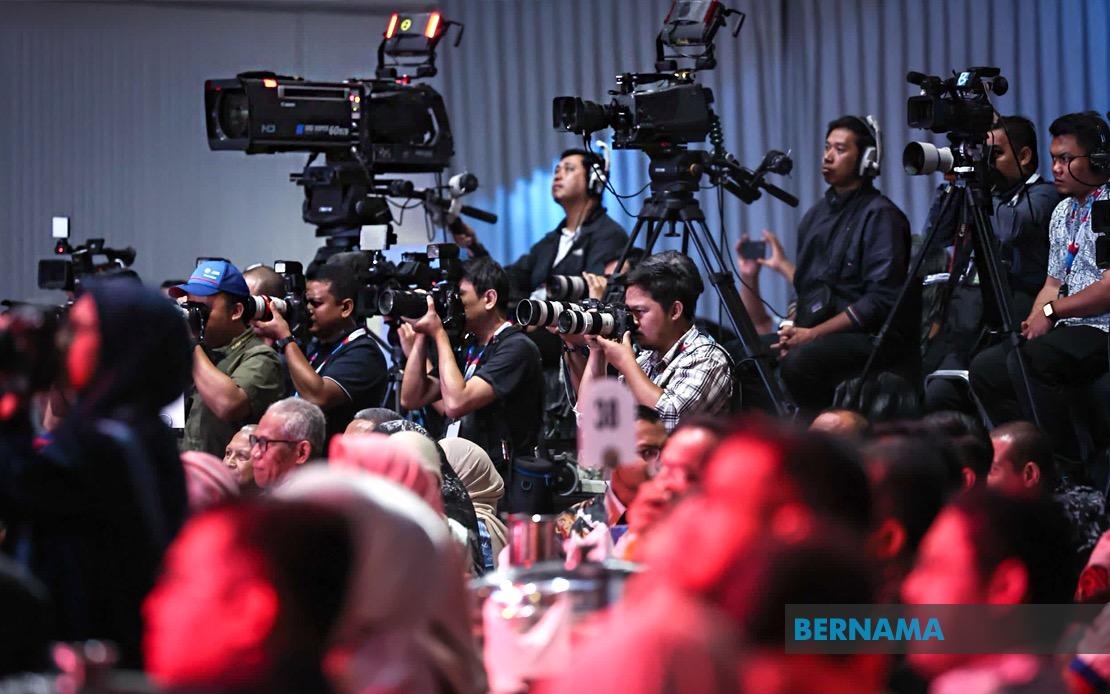
The Malaysian Media Council (MMM) has publicly backed Prime Minister Datuk Seri Anwar Ibrahim's recent directive establishing a formal procedure for handling complaints against journalists from established news organisations. Under this framework, such complaints must be submitted to the Council before any subsequent action is initiated, a requirement the MMM views as instrumental in preserving press freedom while maintaining professional standards across Malaysia's media landscape.
The Council's endorsement represents a significant moment in the ongoing tension between media freedom and public accountability in Malaysia. By positioning itself as an intermediary reviewer, MMM seeks to prevent what it characterises as arbitrary or precipitous action against journalists, ensuring that disputes relating to editorial decisions, reporting accuracy, and journalistic conduct are examined through a contextualised lens rather than treated as routine legal or administrative matters. This approach reflects growing international concern about Malaysia's media environment, particularly following its performance in global press freedom rankings.
MMM characterises the Prime Minister's statement as formal recognition of independent media self-regulation, a principle that underpins professional journalism in mature democracies. The Council operates on the premise that resolving media-related grievances through professional channels serves the broader public interest by distinguishing between legitimate complaints requiring correction and those that may reflect political pressure or misunderstanding of journalistic function. This distinction matters considerably in Malaysia's polarised political environment, where complaints can sometimes weaponise regulatory processes.
Crucially, the Council emphasises that its role remains circumscribed. MMM does not claim authority to shield journalists from criminal law or civil proceedings, nor does it seek to replace courts or law enforcement agencies. Rather, it positions itself as a specialised body capable of evaluating complaints through the lens of journalism ethics, professional standards, and democratic principles. This limitation is important, as it preserves the judicial system's integrity while creating a specialized pathway for media-specific disputes.
The MMM's complaints mechanism operates through a staged process. Initial screening by the Secretariat determines whether complaints fall within the Council's jurisdiction and concern journalistic practice specifically. Where appropriate, complaints are forwarded to relevant media organisations for response or corrective action. More complex matters proceed to formal assessment under the Council's Code of Conduct and recognised journalism principles. This tiered approach theoretically prevents frivolous complaints from consuming resources while ensuring substantive grievances receive proper consideration.
MMM has framed this framework as fundamentally protective of media accountability rather than hostile to it. The Council argues that genuine media responsibility requires process legitimacy—that corrections are taken seriously precisely because they emerge from transparent, independent evaluation rather than external pressure. Without such legitimacy, the Council suggests, corrections become merely defensive responses rather than honest corrections serving public interest. This distinction resonates with international media governance best practices.
The timing of this endorsement carries particular significance given Malaysia's continued challenges in global press freedom metrics. International observers have flagged concerns about harassment of journalists, legal threats against media organisations, and the chilling effect of uncertain regulatory environments. By establishing clear procedural requirements, the government and MMM may be attempting to signal commitment to rules-based protection rather than discretionary suppression. For Malaysia's international reputation and domestic press confidence, such signals matter considerably.
However, the framework's effectiveness will depend substantially on implementation. Malaysian stakeholders—including government agencies, politicians, and civil society—must develop a consistent culture of utilizing MMM's mechanism rather than circumventing it through parallel pressure or legal action. This cultural shift requires deliberate institutional commitment and may prove challenging in a context where political tensions frequently intersect with media coverage. The Council has explicitly called on all stakeholders to embrace this approach, suggesting awareness that its success depends on willing participation from potential complainants.
The MMM's emphasis on distinguishing between media freedom and media responsibility reflects a mature understanding that these principles need not oppose each other. Media organisations operating with genuine accountability to ethical standards and factual accuracy arguably strengthen public confidence more than those appearing to operate without constraint. By offering a proportionate, transparent process for addressing legitimate grievances, the self-regulatory approach theoretically encourages professional standards while protecting editorial independence from illegitimate interference.
For Southeast Asian media landscapes broadly, Malaysia's evolving approach offers instructive lessons. Across the region, tensions between press freedom and accountability remain acute, with some governments instrumentalizing complaints procedures to suppress critical journalism while others inadequately protect media from harassment. Malaysia's attempt to establish middle ground through independent self-regulation represents one regional response to this challenge, though its success remains uncertain pending implementation.
The Council has committed to working closely with government, Parliament, media organisations, civil society, and the public to implement this framework effectively and independently. This collaborative formulation suggests recognition that media regulation succeeds only when all stakeholders perceive it as legitimate and neutral. The coming months will reveal whether Malaysia's political actors can maintain this collaborative stance or whether old patterns of pressure and circumvention reassert themselves. Malaysian journalists and news organisations should remain vigilant regarding whether the procedure functions as intended or becomes another avenue for indirect pressure.

