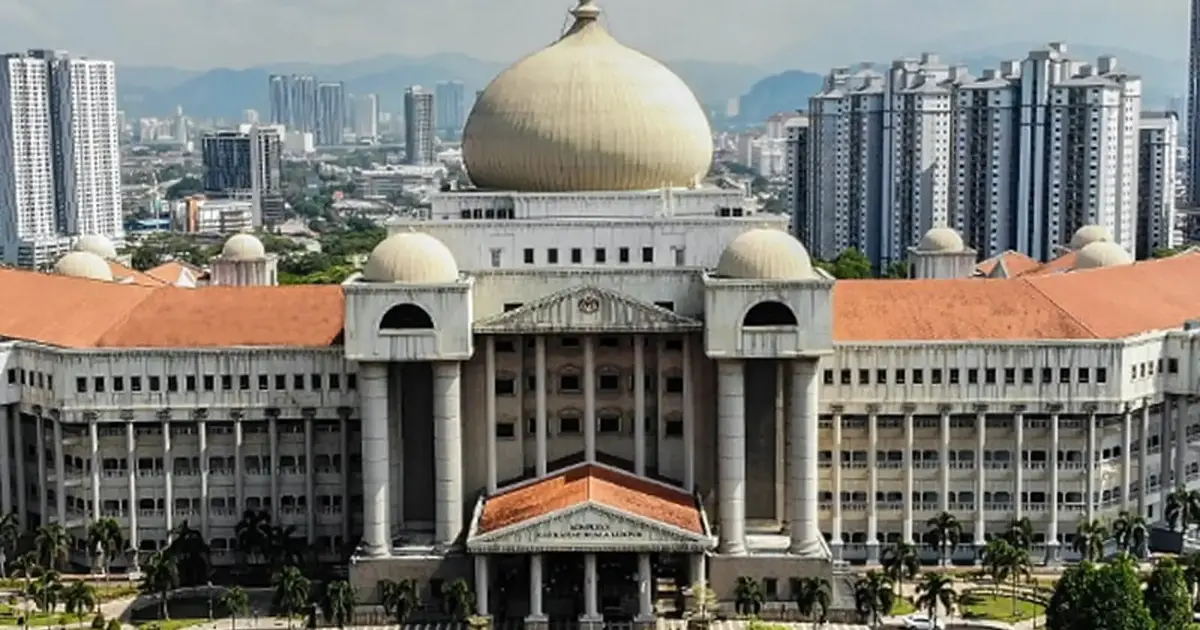
The Malaysian High Court has delivered a significant ruling that shields the prime minister from testifying in a RM30 million civil lawsuit, determining that he does not qualify as a material witness in the proceedings. The court's decision to invalidate the subpoena marks an important clarification of the circumstances under which sitting heads of government can be required to give evidence in litigation, particularly in cases where their direct involvement in the disputed facts is limited or non-existent.
The case represents one of several recent instances in which Malaysian courts have grappled with the intersection of executive immunity and judicial process. While prime ministers and other senior officials cannot claim absolute protection from the legal system, courts have increasingly recognised that their time and constitutional functions must be safeguarded from routine participation in private disputes. This judgment reflects international jurisprudence on the matter, where many democracies have established that sitting heads of government need not attend court unless their testimony is genuinely indispensable to resolving core factual questions.
The High Court's reasoning centred on the distinction between a witness whose evidence is essential to the case and one whose involvement is peripheral or circumstantial. By ruling that the prime minister was not a material witness, the judges effectively concluded that other available evidence and testimony could adequately address the central issues in dispute without requiring his personal appearance. This principle protects the executive from undue disruption while maintaining the integrity of the judicial process through alternative means of establishing relevant facts.
Material witness status in Malaysian law typically requires demonstrating that a person has direct, first-hand knowledge of events central to the litigation and that their account cannot be satisfactorily replaced by documentary evidence, testimony from other witnesses, or expert analysis. The court appears to have found that the RM30 million dispute did not meet this threshold when it came to the prime minister's involvement, suggesting the litigation concerns transactions, agreements, or events to which he was not a direct party or immediate observer.
For Malaysian constitutional practice, the judgment carries implications beyond the immediate case. It establishes that while no one in the country stands above the law, pragmatic limits exist on how the legal system can deploy its compulsory processes against those holding the highest offices. Such boundaries are essential to preserve the functioning of government and prevent frivolous or vexatious attempts to distract the prime minister through court appearances that yield marginal evidentiary value. The ruling thus balances competing imperatives: access to justice and the integrity of proceedings on one hand, and effective governance on the other.
The RM30 million amount in dispute suggests a significant commercial or property matter, though the precise nature of the litigation was not detailed in available accounts. Disputes of this magnitude typically involve multiple parties, documented transactions, and professional advisers whose evidence can establish relevant facts. Courts routinely determine that documentary evidence, together with testimony from those directly involved in negotiating or executing agreements, suffices to illuminate contested issues without requiring intervention from parties whose role was tangential or supervisory.
This judgment may influence how future litigants approach the question of compelling statements from senior government figures. Legal practitioners will likely scrutinise more carefully whether a prime minister's testimony is genuinely irreplaceable or whether the substance of their potential evidence can be adequately conveyed through other means. The decision effectively raises the bar for subpoenaing sitting prime ministers, requiring plaintiffs and defendants to demonstrate not merely that such a person has some knowledge of events, but that their sworn testimony is truly essential to resolving disputed facts that cannot otherwise be adequately proven.
The ruling also reflects evolving international standards on executive accountability. Many Commonwealth nations and democracies worldwide have developed frameworks recognising that while executives remain subject to law, the proper functioning of courts does not require summoning them for testimony in every case where they might possess relevant information. The Malaysian High Court appears to have aligned itself with this approach, acknowledging that judicial authority does not extend to unlimited power to compel the time and attention of those bearing heavy constitutional responsibilities.
Practically speaking, the decision reduces the potential for litigation to become a tool for harassment or distraction of the prime minister through strategic subpoenas. It prevents the courts from becoming entangled in matters where their primary role should be to resolve disputes between private parties or state entities, rather than to extract testimony from the sitting head of government on matters peripheral to his core involvement. This distinction protects both the independence of the judiciary and the capacity of the executive to function unimpeded.
The High Court's approach suggests a measured understanding of institutional balance. Malaysia's legal system maintains robust mechanisms for holding government accountable—through parliamentary processes, the courts' own jurisdiction over administrative action, and ordinary litigation where state entities are proper parties. The judgment recognises that compelling prime ministerial testimony in tangential disputes would not materially strengthen these accountability mechanisms while potentially imposing real costs on governance and governmental efficiency. For the litigants involved, the ruling clarifies that their case must proceed on the basis of evidence from those more directly implicated in the disputed transactions or events, a principle that serves the interests of judicial economy and coherent fact-finding.


%22%2F%3E%3C%2Fpattern%3E%3C%2Fdefs%3E%3Crect%20width%3D%22100%25%22%20height%3D%22100%25%22%20fill%3D%22url(%23ph2fjo2g)%22%2F%3E%3Crect%20width%3D%22100%25%22%20height%3D%22100%25%22%20fill%3D%22url(%23ph2fjo2p)%22%2F%3E%3Ctext%20x%3D%2250%25%22%20y%3D%2250%25%22%20text-anchor%3D%22middle%22%20dominant-baseline%3D%22central%22%20fill%3D%22rgba(255%2C255%2C255%2C0.95)%22%20font-family%3D%22Georgia%2C%20'Times%20New%20Roman'%2C%20serif%22%20font-weight%3D%22700%22%20font-size%3D%22194%22%20letter-spacing%3D%22-0.02em%22%3ETeacher%3C%2Ftext%3E%3C%2Fsvg%3E)