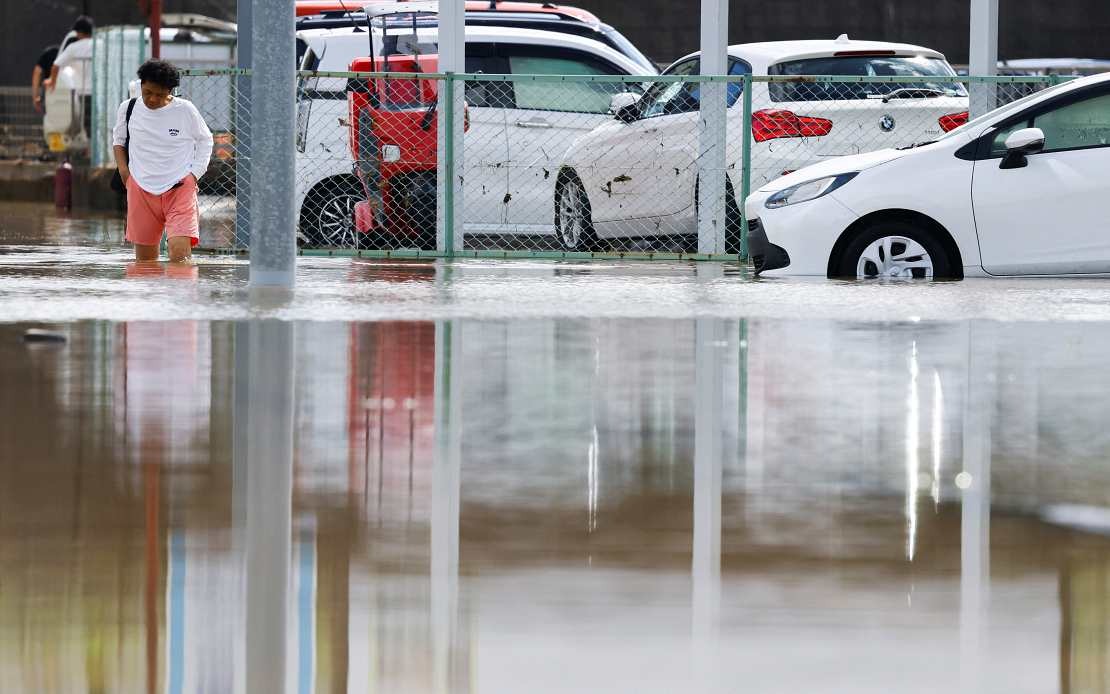
The Malaysian Embassy in Tokyo has issued an urgent advisory to Malaysian nationals residing in or visiting Japan, urging them to refrain from unnecessary travel and maintain heightened vigilance as the Kanto region grapples with unprecedented rainfall and catastrophic flooding. The warning comes as weather conditions in Chiba Prefecture and surrounding areas continue to deteriorate, with the Japan Meteorological Agency escalating its response to the highest alert level across more than a third of municipalities in the prefecture.
Transport infrastructure across eastern Japan has sustained substantial damage, leaving critical networks severely compromised. Rail and road corridors that normally facilitate the movement of millions of passengers have been rendered partially or completely impassable, creating significant logistical challenges for both residents and international travellers. The disruption has left an estimated 7,000 people stranded at Narita International Airport alone, one of Asia's busiest aviation hubs, as airport ground operations and connecting transport services have been hampered by the flooding.
The fatality toll from the severe weather has reached at least eight confirmed deaths according to Kyodo News, with the loss of life underscoring the intensity and danger posed by the current meteorological conditions. The scale of the natural disaster has prompted Japanese authorities to issue evacuation orders affecting more than 400,000 residents at various points, as communities in low-lying and flood-prone areas have been instructed to leave their homes and seek safety in designated shelters and higher ground.
For Malaysian citizens caught in the affected regions, the embassy's guidance emphasises the critical importance of relocating away from areas vulnerable to inundation, including flood zones and naturally depressed terrain where water accumulation is likely. The advisory stresses the need for continuous monitoring of official information channels, particularly evacuation instructions and transport updates disseminated by Japanese government agencies and local authorities. Malaysian nationals are being encouraged to maintain situational awareness and avoid complacency, given the unpredictable nature of severe weather events and their potential to escalate further.
The Japan Meteorological Agency's highest-level rain warning designation reflects the extraordinary nature of the rainfall event and signals to the public that conditions are at their most dangerous threshold. Such warnings are rarely issued and indicate meteorological conditions that pose an extreme and imminent threat to public safety. The geographic scope of the warning—covering more than one-third of Chiba Prefecture's municipalities—demonstrates the scale of the crisis and the widespread nature of the risk facing the region.
For Malaysian travellers stranded overnight at Narita International Airport, the situation highlights the vulnerability of international hub operations to severe weather disruption. The airport's role as a primary gateway for travellers connecting to Malaysia and the wider Southeast Asia region means that transport delays cascade through regional networks, affecting passenger schedules and logistics across multiple countries. The flooding has fundamentally disrupted the normal flow of passengers and cargo through one of the world's major aviation junctions.
The embassy has directed Malaysians to consult the Japan Meteorological Agency's English-language website at www.jma.go.jp/jma/indexe.html for real-time weather updates, warnings and technical advisories. This resource provides detailed meteorological information, rainfall forecasts and hazard assessments that can assist Malaysian nationals in making informed decisions about their movements and safety planning. Regular consultation of such official sources is essential given the fluid nature of weather conditions and the frequency with which forecasts may be updated.
For Malaysian citizens requiring assistance or facing emergency situations, the Malaysian Embassy in Tokyo has established multiple points of contact. During standard office hours, nationals can reach the embassy at the telephone number +81-3-3476-3840. Outside working hours, an emergency hotline operates at +81-70-1471-9756 to ensure that Malaysian nationals can access support regardless of the time of day. The embassy has also designated email addresses—[email protected] and [email protected]—through which nationals can submit inquiries and requests for assistance.
The flooding in Chiba Prefecture serves as a reminder of Japan's vulnerability to extreme weather events, driven by climate patterns and geographic factors that have historically produced severe precipitation. The Kanto region, which encompasses Tokyo and its surrounding prefectures, has experienced multiple significant flooding events in recent years, prompting continued investment in resilience infrastructure and emergency response systems. However, the unprecedented nature of this rainfall event has tested the capacity of local authorities and infrastructure networks to respond effectively.
For Malaysian expatriates and business communities operating in the affected areas, the disruption carries broader economic implications. Supply chain disruptions, transport delays and potential infrastructure damage may affect commercial operations and regional trade flows. Malaysian companies with operations or personnel in Chiba Prefecture and the surrounding Kanto region should evaluate contingency plans and ensure that staff members are following official safety guidance. The flooding also underscores the importance of robust business continuity and emergency response protocols for international enterprises operating in Japan.
The incident highlights the relevance of regional cooperation and information-sharing mechanisms during cross-border natural disasters. Malaysian diplomatic missions throughout the Asia-Pacific region have established relationships with host governments and local authorities to facilitate rapid communication and coordination when emergencies affect their nationals. The Malaysian Embassy's prompt issuance of this advisory reflects standard protocols for protecting citizens abroad during natural disasters and public safety emergencies.
As weather conditions continue to develop, Malaysian nationals in Japan are encouraged to maintain regular contact with the embassy and to monitor official Japanese government communications. The decision to avoid unnecessary travel reflects a precautionary approach aimed at minimising exposure to hazardous conditions and reducing the risk of individuals becoming stranded or requiring emergency assistance in flooded areas. Residents and visitors alike should expect continued transport disruptions and should plan their movements accordingly, prioritising safety over scheduling considerations.

