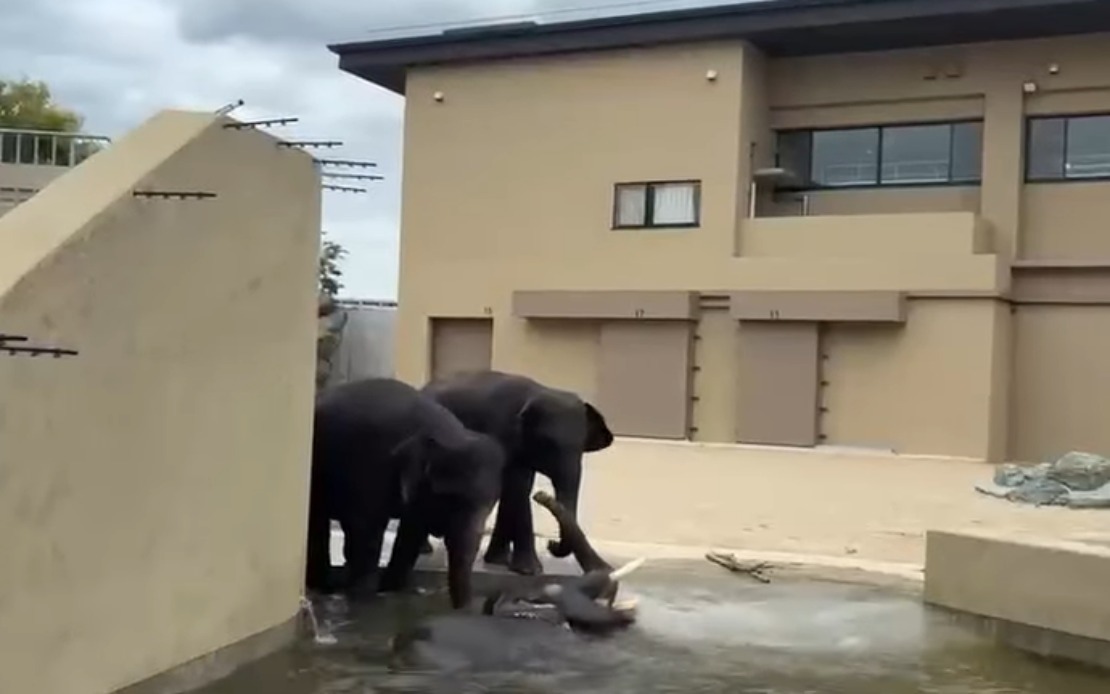
Three female elephants from Malaysia are demonstrating encouraging health improvements during their stay at Tennoji Zoo in Osaka, Japan, according to officials from the Taiping Municipal Council. The three animals—Dara, Amoi and Kelat, collectively known as DAK—have recorded substantial weight increases since arriving at the facility, signalling their successful adaptation to their new environment and management regime.
Mohamed Akmal Dahalan, president of Taiping Municipal Council (MPT), disclosed that the most recent veterinary assessment from Tennoji Zoo showed Kelat had gained 260 kilogrammes, representing the most dramatic improvement among the trio. Dara and Amoi recorded more modest but still significant gains of 35 kilogrammes and 30 kilogrammes respectively. These measurements demonstrate that the elephants are responding positively to their new surroundings, though such variations in weight gain across individuals are typical when large animals transition between facilities with different climates, housing designs and management practices.
The nutritional programme underpinning these gains reflects a carefully structured approach to elephant care developed by Tennoji Zoo's animal husbandry team. Mohamed Akmal emphasised that the daily diet provided to the three females has been formulated to meet the specific physiological requirements of the species, incorporating diverse forage sources that mirror what elephants would encounter in natural conditions. The diet framework combines hay as the primary fibre source—essential for maintaining healthy digestive function—with supplementary feeds including bamboo shoots, fresh vegetables such as cabbage, and specialised pellets manufactured to precise nutritional specifications.
The welfare oversight extending beyond Tennoji Zoo's direct operations reflects Malaysia's commitment to ensuring accountability in international animal exchange programmes. Taiping Municipal Council has positioned itself as an active monitor rather than a passive stakeholder, maintaining ongoing collaboration with the Department of Wildlife and National Parks (Perhilitan) Peninsular Malaysia to verify that management standards remain consistently high. This dual-layer supervision model demonstrates how Malaysian authorities are attempting to balance the benefits of international cooperation with domestic responsibility for animals temporarily residing abroad.
The arrangement housing the three elephants in Japan operates under a formal international cooperation agreement originally executed between Tennoji Zoo and Zoo Taiping & Night Safari, with MPT as the legal representative for the Malaysian institution. The partnership was formalised through successive agreements signed in May and October 2022, establishing a framework intended to operate for 25 years. Such extended bilateral agreements in wildlife management typically encompass breeding programmes, research collaboration, genetic diversity initiatives and public education efforts, though the specific objectives of this arrangement have not been detailed publicly.
Malaysia's willingness to participate in long-term international elephant exchange programmes reflects the country's broader position within global wildlife conservation networks. Southeast Asia, including Malaysia, hosts significant wild elephant populations whose conservation depends increasingly on scientific knowledge derived from managed populations in zoos and sanctuaries worldwide. The Tennoji Zoo arrangement can be understood as part of this knowledge-sharing ecosystem, where data on elephant health, behaviour and reproduction gathered in carefully controlled overseas environments contributes to understanding species biology.
Criticism of international animal transfers has intensified globally over recent years, with animal welfare advocates questioning whether elephants adapt effectively to captive environments far removed from their native habitats. Mohamed Akmal's statement acknowledging public concerns while defending the programme's legitimacy suggests that Malaysian authorities anticipated—and continue to encounter—scepticism from domestic constituencies worried about the elephants' psychological wellbeing. His emphasis on factual, professionally-verified assessments rather than allegations reflects an attempt to ground the debate in veterinary evidence rather than emotional appeals.
The transparency commitment explicitly outlined by the Taiping Municipal Council president appears designed to preempt accusations of opacity that have characterised some international animal relocations. By declaring MPT's readiness to cooperate with reviews and investigations, the council positions itself as welcoming scrutiny—a posture that depends upon the actual health data continuing to support positive findings. Should weight gains reverse or health indicators deteriorate, such openness could quickly become a liability, making the councils current positive reporting especially significant.
The broader context for Malaysia's participation in these arrangements involves the country's dual identity as a source of tropical wildlife expertise and a developing economy seeking partnership opportunities with technologically advanced nations. Japanese zoos, particularly those associated with research institutions, represent centres of excellence in exotic animal management. Partnerships with such facilities enhance Malaysia's international standing while potentially providing Malaysian researchers access to advanced veterinary and behavioural data that might not otherwise be available domestically.
From a Southeast Asian perspective, the arrangement between Taiping and Tennoji also exemplifies how regional countries are engaging with non-regional powers in wildlife management—a trend that reflects shifting conservation paradigms. Rather than viewing elephant welfare as exclusively a Malaysian concern, the partnership framework treats it as a shared responsibility spanning national boundaries. This approach aligns with international conservation governance models that have become increasingly prevalent as species management transcends purely domestic regulatory frameworks.
Mohamed Akmal's explicit appeal for public confidence in international conservation cooperation suggests underlying concerns that negative narratives about the elephant transfer could undermine Malaysia's ability to participate in future international programmes. This dynamic reflects how individual animal welfare situations can acquire political significance when they raise broader questions about national sovereignty, institutional competence and environmental ethics. The council's effort to establish narrative control over the elephants' condition thus extends beyond animal care into the domain of national reputation management.
Moving forward, the continued health monitoring of Dara, Amoi and Kelat will likely serve as a test case influencing Malaysian policymakers' willingness to enter similar international arrangements. The scale of Kelat's weight gain particularly will require explanation, as such substantial increases can sometimes indicate metabolic issues rather than simple healthy adaptation. The veterinary profession's ability to transparently communicate findings—positive or concerning—will ultimately determine whether this 25-year partnership strengthens or strains Malaysia's international conservation credentials.

