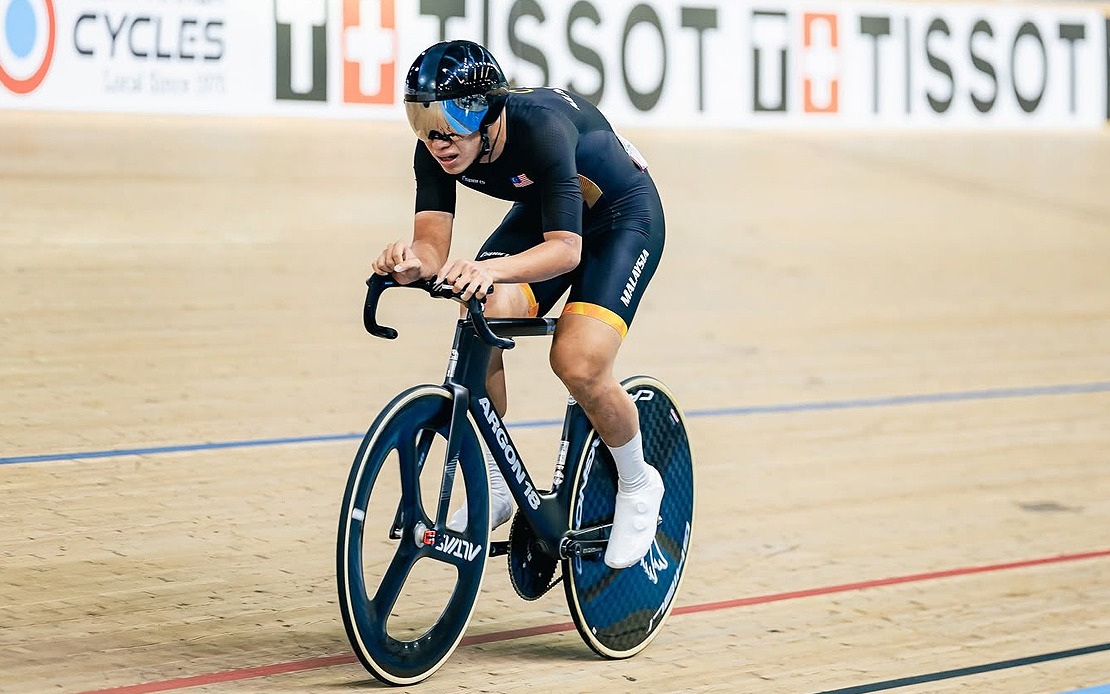
Malaysian track cyclist Lau New Joe is recovering well after a dramatic crash during the men's 10-kilometre scratch race final at the 2026 Glasgow Commonwealth Games, with medical authorities confirming he has been cleared to fly home after undergoing emergency treatment and specialist assessment in Scotland.
The collision, involving nine riders shortly before the final lap at Sir Chris Hoy Velodrome on Saturday, left New Joe requiring immediate medical intervention and subsequent hospitalisation. Dr Kamarul Hashimy Hussein, the chief medical officer for the Malaysian contingent, provided detailed updates on the athlete's condition and treatment protocol, indicating that despite the severity of the incident, New Joe's prognosis remains positive. The cyclist appeared to lose consciousness temporarily following the impact but responded well to emergency care.
Upon arrival at Queen Elizabeth University Hospital's emergency department, New Joe underwent comprehensive diagnostic procedures including computed tomography scans and full-body X-rays to assess the extent of his injuries. The CT scan, critically, revealed no internal bleeding or damage to the brain despite the forceful nature of the crash. However, doctors identified minor fractures to several facial bones, prompting referral to maxillofacial specialists who worked through the night providing treatment from approximately 9 pm until 1 am.
Beyond the skeletal injuries, New Joe sustained significant dental damage that will require extended treatment and multiple follow-up sessions with maxillofacial specialists. The fractured teeth and associated oral injuries necessitate a phased rehabilitation approach rather than immediate comprehensive repair. This means the 22-year-old athlete faces an extended recovery timeline that could impact his competition schedule over the coming months.
The rapid coordination between emergency physicians and specialist teams exemplified the medical infrastructure available at Glasgow 2026. Dr Kamarul emphasised the thorough approach taken, noting that New Joe was discharged from hospital and returned to the Malaysian team hotel following the overnight treatment sessions. This relatively swift discharge, made possible by the absence of internal injuries, suggests that New Joe's injuries, while serious, do not pose systemic threats to his long-term health.
The National Sports Institute will assume primary responsibility for New Joe's ongoing care upon his return to Malaysia, overseeing both physical rehabilitation and psychological support. Medical authorities have flagged the importance of mental health intervention given the traumatic nature of the incident and the athlete's forced absence from competition. However, Dr Kamarul noted that New Joe possesses a strong mentality and competitive drive, suggesting that psychological resilience may aid his recovery process.
Physical rehabilitation will focus on restoring fitness metrics including stamina and muscle endurance, essential components for a track cyclist competing at elite Commonwealth Games level. The NSI's monitoring protocols will ensure that clearance to return to competitive training occurs only when medical assessment confirms that New Joe has regained sufficient physiological capacity. This measured approach reflects best practices in sports medicine, balancing the athlete's obvious eagerness to return with clinical prudence.
Dr Kamarul indicated hope that, subject to satisfactory recovery, New Joe could potentially compete at the Asian Games scheduled for 19 September to 4 October. However, this timeline remains conditional on the pace of his recovery and the complexity of dental and facial bone healing. The compressed timeframe between Glasgow in August and September's Asian Games means that New Joe's medical team faces significant pressure to facilitate rapid but safe rehabilitation.
New Joe's Commonwealth Games debut was curtailed by the crash, and he was listed as "Did Not Finish" in the official results. The incident marked a challenging introduction to the sport's highest multi-sport stage, raising questions about track cycling safety protocols, particularly in the scratch race discipline where intense final-lap sprinting creates conditions conducive to collisions. The involvement of nine riders in the crash suggests systemic factors beyond individual error.
The athlete's clearance to fly home with the national contingent on 3 August indicates that medical authorities found no contraindications to air travel, suggesting that while his injuries require specialist attention, they do not pose acute complications. This decision enables New Joe to continue his recovery in Malaysia's healthcare system, where he has access to his established medical team and the support infrastructure of the National Sports Institute.
For Malaysian cycling, the incident highlights both the risks inherent in track cycling competition and the importance of comprehensive medical coverage at major sporting events. The Malaysian contingent's medical team demonstrated effective crisis management and coordination with local healthcare providers, ensuring that despite the incident occurring in Scotland, New Joe received timely, expert care. The case also underscores the physical toll that elite cycling competition exacts on athletes, particularly in sprint-finish scenarios where marginal positioning errors can precipitate mass crashes.

