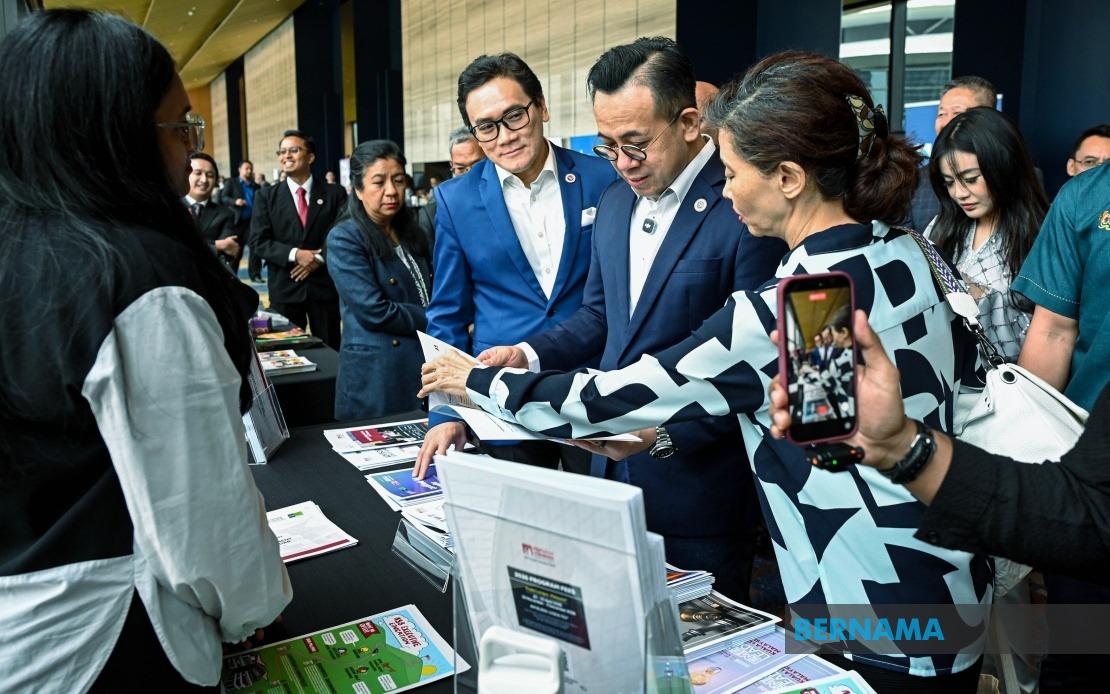
Malaysia's government is pushing local companies toward a fundamental reimagining of their role in the global economy. Speaking at the BrandQuest 2026 programme and National Mark of Malaysian Brand Appreciation Ceremony in Kuala Lumpur, Entrepreneur and Cooperatives Development Minister Steven Sim outlined a strategic pivot that reflects broader aspirations to elevate the nation's industrial reputation beyond low-cost manufacturing.
The minister's central message centres on repositioning the Malaysian commercial landscape through three interconnected pillars: emphasising genuine value creation over mere price competition, fostering authentic innovation rather than copying existing designs, and anchoring all production in rigorous safety, health, and quality standards. This framework responds to increasingly crowded global markets where price-based competition alone proves insufficient for sustainable growth and margin improvement. Sim's remarks signal recognition that Malaysia's traditional comparative advantage in labour costs faces erosion from competitors across Southeast Asia and South Asia willing to operate at even lower overheads.
The philosophical shift Sim articulated represents a significant departure from Malaysia's post-independence industrial model. For decades, the "Made in Malaysia" branding emphasised manufacturing capacity—the ability to produce goods within Malaysian borders, often under licence or contract arrangements with multinational corporations and foreign brand owners. This model generated employment and foreign exchange but ceded design authority, brand ownership, and premium pricing to international companies. The proposed evolution toward "Made by Malaysia" inverts this hierarchy. Products would originate from Malaysian research and development, embodied Malaysian intellectual property, and reflect distinctly Malaysian competitive advantages in materials science, engineering, cultural understanding, or market insight.
The practical mechanisms supporting this transition remain vital to assessment. The government has allocated RM230,000 through SME Corp to assist between 40 micro, small and medium enterprises in securing National Mark of Malaysian Brand certification during 2025 and 2026. While this figure reflects genuine policy commitment, the per-enterprise subsidy suggests targeted support for selected high-potential ventures rather than blanket assistance across the broader entrepreneurial ecosystem. Sim indicated openness to increasing these allocations subject to demonstrated impact, signalling that resource levels remain contingent on measurable outcomes in domestic and international market penetration.
Broader financing initiatives complement brand certification efforts. The Power Up 10K programme has already channelled RM9 billion across 250,000 entrepreneurs nationwide as of July, progressing toward a RM15 billion target for the calendar year. These figures represent substantial capital mobilisation, though their distribution across manufacturing, services, and technology sectors remains opaque. Malaysian entrepreneurs seeking to transition toward innovation-led models require not only financing but also technical support, market intelligence, and regulatory frameworks conducive to experimentation and risk-taking.
The National Mark of Malaysian Brand Heritage Award recipients selected for recognition at the ceremony—Seasonings Specialties Sdn Bhd, Passive Fire Protection Sdn Bhd, Goodnite Sdn Bhd, Halagel (M) Sdn Bhd, and Sydney Cake House Sdn Bhd—span diverse sectors from food production and protective services to hospitality. This sectoral diversity underscores that the innovation agenda encompasses both traditional industries and emerging segments, though the award mechanism itself operates selectively, honouring exemplars rather than catalysing sector-wide transformation.
For Malaysian manufacturers currently embedded in supply chains dominated by foreign multinationals, the transition poses complex strategic questions. Developing proprietary products requires sustained investment in research capacity, design talent, and market development during extended periods before revenue materialises. Withdrawing from established contract manufacturing relationships risks immediate cash flow disruption. This dynamic particularly affects small and medium enterprises with limited balance sheet flexibility, suggesting that government support mechanisms must address not only final product certification but also the intermediate funding and technical guidance required during transition phases.
The regional context amplifies both opportunity and urgency. Vietnam, Thailand, and Indonesia have pursued similar strategies to move beyond commodity production and low-skill manufacturing. Vietnam's success in positioning itself as a competitive alternative to China across electronics, textiles, and automotive components demonstrates that Asian economies can break from price-based competition through deliberate policy support and sustained private sector investment. However, these competitors now occupy increasingly attractive positions for multinational corporations seeking to diversify supply sources away from China, potentially creating windows for Malaysian firms to capture higher-value manufacturing roles before those opportunities consolidate elsewhere.
Singapore offers another instructive precedent. The city-state leveraged small geographic constraints to develop knowledge-intensive industries in petrochemicals, pharmaceuticals, financial services, and engineering rather than competing on labour costs. Malaysian policymakers clearly study this model, though Malaysia's larger territory, diverse resource base, and substantial labour force enable different strategic pathways. Leveraging agricultural heritage sectors like palm oil derivatives, rubber compounds, or tropical specialty products through innovation and premium branding represents one promising direction, as does capitalising on manufacturing expertise to serve rising regional demand from ASEAN neighbours.
The psychological and cultural dimensions of this transition deserve attention alongside economic metrics. Shifting from "Made in Malaysia" to "Made by Malaysia" reflects aspirational repositioning of Malaysian identity within global commerce. This carries implications for worker morale, consumer self-perception, and investor confidence in Malaysian enterprises. When a Malaysian company successfully positions a product as distinctly Malaysian in origin and design while commanding premium pricing, downstream effects ripple through supply chains and labour markets, signalling that production and innovation within Malaysia warrant higher compensation and investment than contract manufacturing roles.
Minister Sim's emphasis on making "Malaysian businesses great" speaks to this identity dimension. The rhetoric carries nationalist undertones and reflects broader Southeast Asian trends toward greater economic self-determination and reduced dependence on foreign capital and expertise. However, the practical implementation requires balancing nationalist aspiration with pragmatic openness to foreign partnerships, technologies, and capital that might accelerate transition timelines. South Korean and Taiwanese experiences demonstrate that developing indigenous innovation capacity need not mean rejecting international collaboration; rather, it means progressively capturing higher value-adding roles within collaborative arrangements.
The road ahead demands sustained attention to several enabling factors. Educational institutions must generate sufficient design, engineering, and advanced manufacturing talent to support innovation-led enterprises. Intellectual property frameworks require strengthening to protect Malaysian innovations and incentivise their development. International trade negotiations must address tariff and non-tariff barriers that might disadvantage Malaysian startups competing against established global players. Supply chain infrastructure—logistics, power, telecommunications, financial services—must support rapid scaling of successful innovations from prototype to mass market. Without these foundational elements, exhortations toward innovation and value creation, however well-intentioned, risk remaining rhetoric disconnected from ground-level feasibility.

