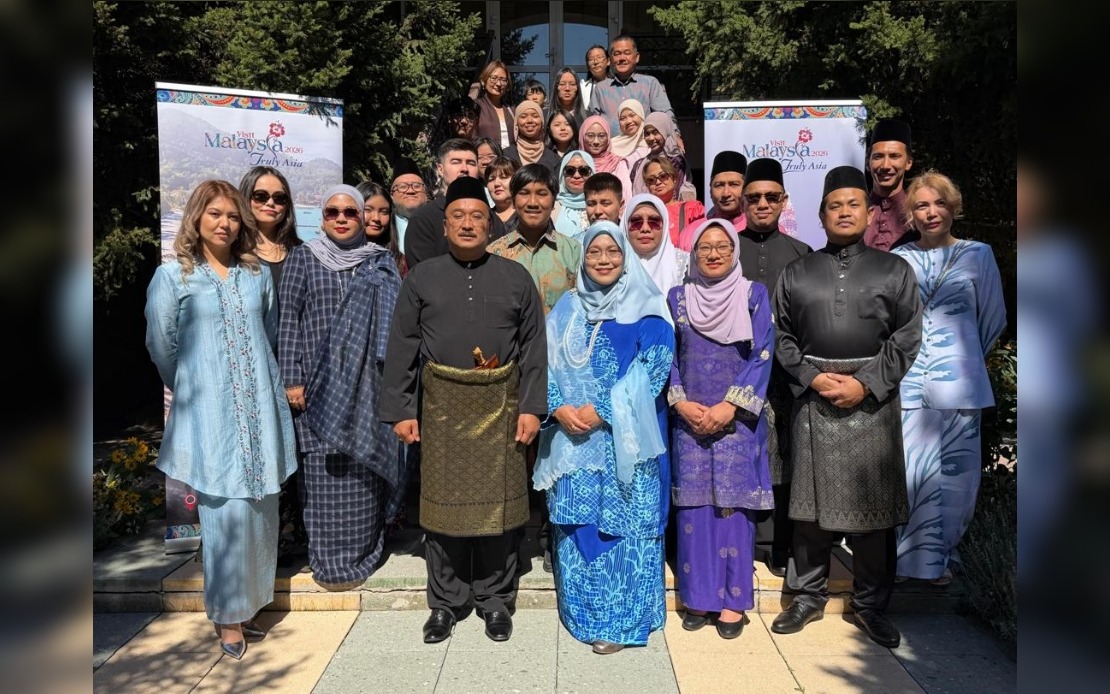
The Malaysian community scattered across Kazakhstan demonstrated its deep-rooted patriotism on Saturday when the Embassy in Astana organised a flag-raising ceremony and National Day reception at Malaysia House. The occasion marked the nation's 69th year of independence, observed thousands of kilometres from home yet resonating with the same ceremonial dignity that characterises such observances throughout Malaysia's diplomatic network worldwide. The gathering brought together not only embassy personnel but also the broader Malaysian presence in Central Asia—students pursuing education, alumni of bilateral cooperation programmes, and individuals connected to Malaysia's development initiatives in the region.
The centrepiece of the ceremony involved the formal raising of the Jalur Gemilang, Malaysia's national flag, accompanied by the singing of Negaraku and the recitation of the Rukun Negara. These ritualistic elements, replicated across Malaysian missions globally, serve a dual purpose: they reinforce national identity among citizens abroad while simultaneously projecting Malaysian values to host communities. For a nation like Malaysia whose diaspora spans continents, such ceremonies function as anchoring points for collective memory and shared purpose, particularly significant when celebrated in countries with which Malaysia maintains developing bilateral relationships.
Ambassador Mohd Adli Abdullah used the platform to elaborate on the Malaysia MADANI theme governing this year's National Day celebrations. His interpretation proved particularly instructive: he emphasised that national advancement cannot be reduced to mere economic metrics or infrastructure accumulation. Instead, the framework requires assessing development through the lens of equitable distribution—whether prosperity reaches all layers of society comprehensively and fairly rather than concentrating among privileged segments. This ideological positioning reflects Malaysia's pivot toward addressing income inequality and ensuring marginalised communities participate meaningfully in economic gains, concerns that resonate throughout Southeast Asia as nations grapple with inclusive growth.
The Ambassador's exhortation to the Malaysian community in Kazakhstan carried implications extending beyond ceremonial pleasantries. He positioned each Malaysian abroad as an unofficial ambassador, tasked with embodying values such as integrity, discipline, courtesy and mutual cooperation. This framing acknowledges a reality often overlooked in diplomatic discourse: expatriate communities substantially influence perceptions of their home nations. Malaysian professionals, academics and students in Kazakhstan interact daily with local counterparts, potentially shaping how Central Asians perceive Malaysia's character, work ethic and cultural values. In this sense, individual conduct abroad constitutes soft power projection, making the Ambassador's emphasis on personal conduct strategically astute.
The gathering coincided with the Malaysia Technical Cooperation Programme Alumni Get-Together 2026, a deliberate pairing highlighting Malaysia's development assistance framework. The MTCP, established in 1980, represents Malaysia's commitment to South-South cooperation—a principle whereby developing nations share expertise and resources with counterparts facing similar challenges. This programme structure distinguishes Malaysia from traditional development aid models dominated by wealthy nations. Instead, Malaysian technical expertise in specific sectors transfers to countries navigating comparable developmental trajectories, creating bonds rooted in shared experience rather than dependency dynamics.
Kazakhstan represents a significant beneficiary of MTCP initiatives. As of 2025, the programme had channelled capacity-building opportunities to 196 Kazakh officials across various sectors. These figures, while numerical abstractions, represent human connections forged through training exchanges, knowledge transfer and professional relationship-building. Each alumni participant carries forward technical competencies gained through Malaysian institutions while maintaining networks linking them to Malaysia. Such graduates often become Malaysia's advocates within their home administrations, facilitating bilateral cooperation rooted in personal familiarity and professional respect rather than transactional government-to-government dealings.
The strategic dimensions of Malaysia-Kazakhstan relations merit closer examination. Kazakhstan, Central Asia's largest economy and a former Soviet republic navigating post-independence nation-building challenges, shares certain development preoccupations with Malaysia. Both nations grapple with resource management, diversification imperatives and regional positioning. Kazakhstan's economic transformation under President Nursultan Nazarbayev and subsequent leadership provides instructive parallels for Malaysia's own reinvention narratives. The MTCP framework thus facilitates not merely unidirectional knowledge transfer but rather mutual learning between nations confronting comparable circumstances, lending the programme greater substantive value than conventional aid mechanisms.
For Malaysian readers, Kazakhstan's trajectory holds particular relevance. As China's Belt and Road Initiative reshapes Central Asia's geopolitical landscape, Kazakhstan emerges as crucial to regional connectivity and economic integration. Malaysia's deliberate cultivation of relationships with Central Asian republics, manifested through programmes like MTCP and missions like the Astana embassy, positions Southeast Asia to participate in emerging continental partnerships. The National Day celebration in Kazakhstan, seemingly a routine diplomatic ceremony, thereby acquires broader strategic significance as Malaysia reinforces presence in regions increasingly central to global economic and geopolitical reconfigurations.
The Malaysia MADANI framework articulated by Ambassador Adli carries resonance beyond ceremonial contexts. The emphasis on inclusive prosperity addresses criticisms levelled against conventional development models that prioritise growth metrics while marginalising equity considerations. For Southeast Asian nations, where income disparities and regional imbalances persist despite decades of economic expansion, Malaysia's ideological repositioning toward MADANI principles offers intellectual scaffolding for reconceptualising development priorities. This philosophical reorientation, communicated through National Day ceremonies in distant capitals, gradually influences policy discourse across the region.
Moreover, the gathering illustrated how Malaysian diplomatic missions function as cultural anchors for expatriate communities. Malaysia House in Astana serves purposes extending beyond official government business—it operates as a space where Malaysian culture, values and identity remain tangible and celebrated. For students facing homesickness and professionals navigating cross-cultural adaptation, such spaces provide psychological continuity with home. They facilitate community formation among Malaysians in foreign environments, reducing isolation while strengthening collective identity. This pastoral function of diplomatic missions, often underappreciated, substantially contributes to diaspora retention and emotional investment in Malaysia.
The statement issued subsequently by the embassy underscored commitment to expanding Malaysia-Kazakhstan relations through multiple channels: governmental cooperation, people-to-people engagement, and expertise-sharing mechanisms. This multi-pronged approach acknowledges that durable bilateral relationships require cultivation across diverse domains rather than relying solely on high-level diplomatic encounters. Student exchanges, alumni networks and professional partnerships create dense webs of connection making bilateral relationships resilient against diplomatic fluctuations. By hosting the MTCP alumni gathering alongside National Day celebrations, the embassy deliberately reinforced these connective tissues.
Looking forward, the significance of such celebrations extends beyond immediate participants. They communicate to host governments Malaysia's seriousness about sustained engagement, demonstrate the vitality of Malaysian communities abroad, and reinforce the nation's commitment to development cooperation and regional partnership. For Kazakhstan, Malaysia's National Day observance and MTCP initiatives signal a Southeast Asian nation willing to invest in relationship-building beyond commercial transactions. Conversely, for Malaysian stakeholders, such ceremonies affirm that the nation's diplomatic footprint reaches increasingly diverse regions, building partnerships that may prove strategically crucial as global configurations shift.

