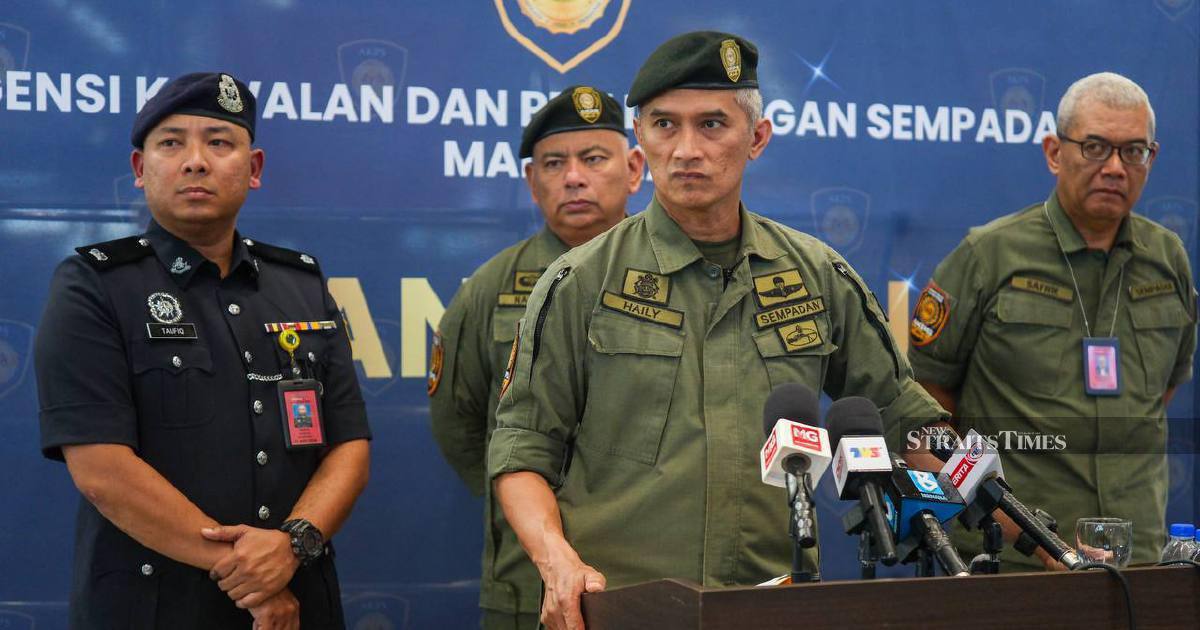
Malaysia's border enforcement authorities have publicly reaffirmed their position that comprehensive scanning procedures and established security protocols were meticulously observed during the routine screening of a Malaysia Airlines pilot at Sepang, even though the same individual was subsequently arrested by Indonesian authorities on allegations related to an attempted drug importation across international borders.
The Malaysian Customs Brokers Association statement comes amid scrutiny following the pilot's detention in Indonesia on charges involving the transportation of narcotics. Rather than indicating operational shortcomings, the authority's clarification emphasises that the absence of any alert or flag from the AI-assisted scanning technology deployed at the border reflects the system's proper functioning during that particular screening event. The distinction between what scanners detected at Malaysia's checkpoint and what Indonesian officials later discovered underscores the complexity of cross-border enforcement operations and the varying capabilities of different national systems.
The deployment of artificial intelligence-integrated scanning equipment represents a significant technological advancement in border security infrastructure throughout Southeast Asia. These systems are engineered to identify contraband and restricted substances through sophisticated pattern recognition and material analysis, yet no screening mechanism operates with absolute certainty. The fact that no alert was triggered at Sepang does not necessarily indicate a systemic failure but rather reflects the specific parameters and calibration of the equipment used at that particular checkpoint on that specific occasion.
From a Malaysian enforcement perspective, the incident highlights the challenge facing all nations attempting to interdict illegal drug trafficking through major transportation hubs. Malaysia's position as a significant aviation centre, with Sepang serving as a critical international gateway, places considerable responsibility on border agencies to maintain vigilant screening while processing substantial daily passenger volumes. The tension between security thoroughness and operational efficiency remains an ongoing concern for authorities managing major airports throughout the region.
The Indonesian discovery of narcotics following the pilot's arrival in their jurisdiction raises broader questions about the coordination and intelligence-sharing mechanisms between ASEAN nations' customs and law enforcement agencies. While each country maintains independent screening and detection systems, greater harmonisation of protocols and real-time information exchange could potentially enhance regional interdiction capabilities. The Association of Southeast Asian Nations has long recognised that transnational drug trafficking requires coordinated responses that transcend individual national borders.
For Malaysia's aviation industry and international carriers operating through Malaysian airports, such incidents present reputational and operational challenges. Malaysia Airlines, as the nation's flag carrier, faces questions about personnel security vetting and internal compliance mechanisms, though these represent separate concerns from border screening effectiveness. The intersection of commercial aviation operations and law enforcement creates multifaceted accountability considerations for all stakeholders involved.
The statement from Malaysian authorities also carries implications for public confidence in the nation's border security infrastructure. Technological solutions, particularly those incorporating artificial intelligence, are increasingly presented as comprehensive answers to security challenges. However, the Sepang screening case demonstrates that technology deployment must be understood within realistic operational contexts, where false negatives occasionally occur despite properly functioning systems. Public understanding of these limitations remains important for maintaining reasonable expectations about what border security can realistically achieve.
Regional security experts have long acknowledged that sophisticated smuggling operations often employ countermeasures designed to evade detection systems. The methods used in attempted drug importation continue evolving as enforcement capabilities improve, creating ongoing challenges for border authorities across Southeast Asia. Malaysia's commitment to maintaining and upgrading its screening infrastructure reflects broader regional trends toward enhanced technological investment in security apparatus.
The incident also underscores the importance of international cooperation extending beyond equipment deployment to include intelligence sharing, suspect identification, and coordinated enforcement operations. Indonesian authorities' discovery and subsequent action demonstrate that multiple layers of security across different jurisdictions can collectively provide protection even when individual screening points fail to detect contraband. This complementary approach, where different nations' enforcement efforts reinforce one another, remains a cornerstone of regional drug control strategy.
Looking forward, Malaysian authorities will likely continue evaluating screening protocols and technological capabilities at major borders. The lessons emerging from this case, while involving a specific operational failure by Indonesian rather than Malaysian systems, contribute to ongoing regional discussions about border security enhancement. Continuous improvement cycles, incorporating both technological upgrades and procedural refinements, represent the standard approach taken by sophisticated border management agencies throughout Southeast Asia.
For travellers and commercial operators utilising Malaysian airports, the incident serves as a reminder that border security involves multiple verification layers and that individual screening events, while important, represent only components within broader compliance frameworks. The Malaysian authorities' emphasis on procedural compliance reflects their confidence in operational standards while acknowledging the inherent challenges facing all nations confronting transnational drug smuggling through modern transportation networks.

