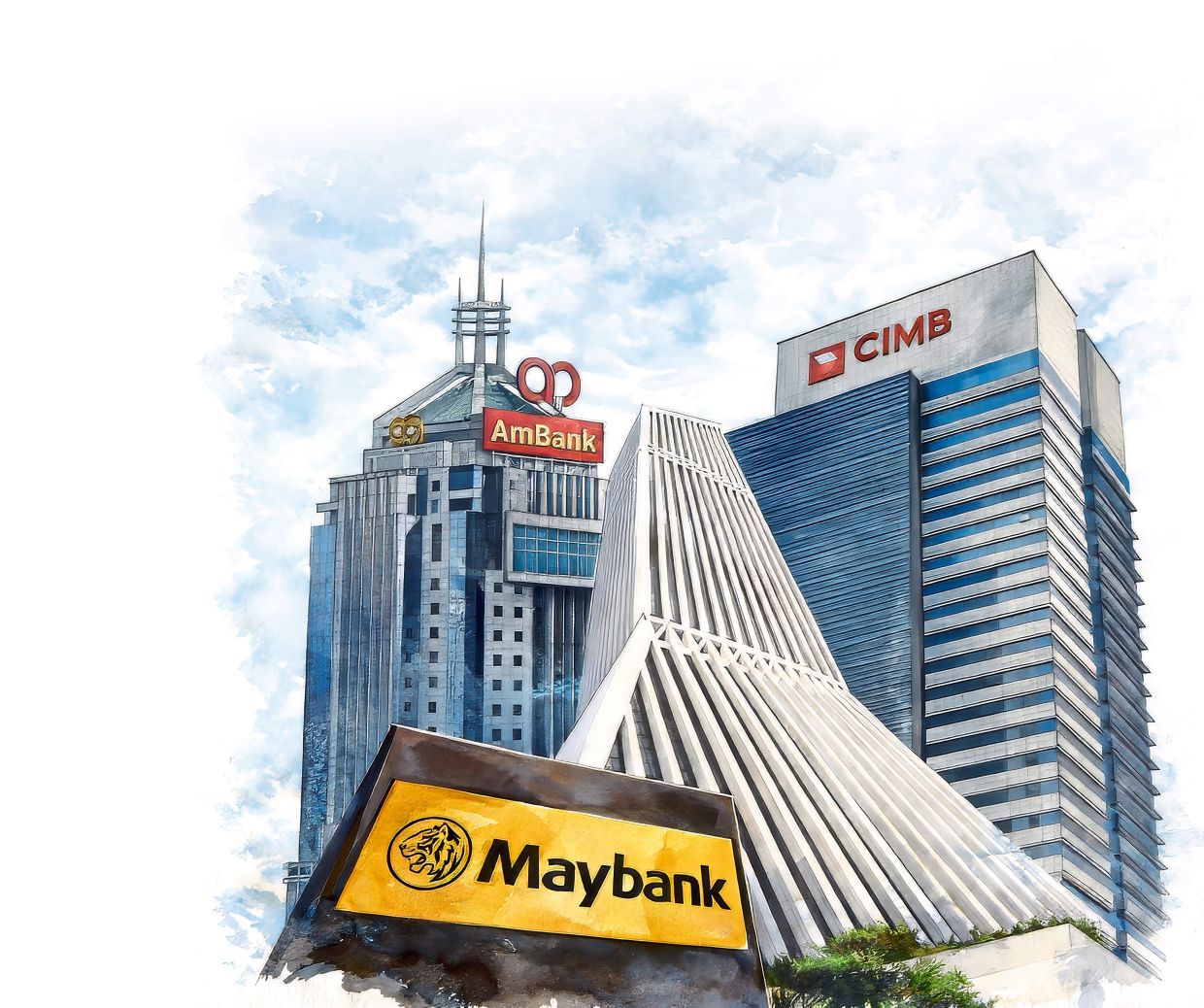
Malaysia's banking sector is poised for a pivotal transition in the second half of 2026, with industry watchers divided on whether easing geopolitical tensions will outweigh pressure from persistently elevated global interest rates. After years of benefiting from rising rate environments and steady economic expansion, regional lenders have recently faced headwinds from international conflict and geopolitical uncertainty that have dented investor confidence and eroded the defensive appeal traditionally associated with bank stocks. The latest round of US-Iran de-escalation has prompted some analysts to reconsider their outlook, though significant uncertainty remains about the actual impact on the sector's trajectory.
Malaysia's banking earnings in recent quarters have demonstrated underlying resilience even as lenders navigated mounting external pressures that trimmed profitability. The combination of international tensions and broader macroeconomic headwinds has weighed on results, prompting investors to pare back their holdings across the sector. This sell-off reflects broader unease about the operating environment for financial institutions, a sentiment that has rippled across multiple banking systems in the region. The divergence between banks' operational strength and market sentiment underscores investor concerns about forward-looking challenges that may not yet be fully reflected in current financial metrics.
CIMB Research banking analyst Ei Leen Tan argues that the intersection of de-escalating geopolitical risk and a more hawkish stance by the United States Federal Reserve will fundamentally reshape the Malaysian banking landscape in the latter half of 2026. Rather than providing straightforward relief, this combination introduces what Tan characterizes as tail risks stemming from sustained higher interest rates. The shift away from acute geopolitical shock concerns toward structural monetary policy challenges represents a material recalibration of the risk environment, requiring investors and lenders to focus on different sets of vulnerabilities and opportunities.
OCBC Bank (M) Bhd's managing director and head of consumer financial services Sammeer Sharma offers a more optimistic near-term assessment, noting that his institution's latest house view suggests interest rates are likely to stabilize rather than rise further in the months ahead. Sharma emphasizes that Malaysia's distinct position in having not participated in the aggressive rate hiking cycles pursued globally since 2022 means the domestic banking sector has been partially insulated from margin compression that has afflicted peers elsewhere. He specifically contrasts Malaysia's experience with Singapore's synchronized movement alongside global monetary tightening, highlighting how different regional policy choices have created divergent operating conditions for lenders.
The Omani-headquartered bank has experienced only negligible direct impact from Middle Eastern geopolitical turbulence, a situation Sharma attributes to OCBC's fortunate geographic positioning. However, he cautions that indirect and delayed effects remain a serious possibility, with supply chain disruptions, sectoral impacts, and inflationary pressures potentially cascading through the Malaysian economy over subsequent quarters. The possibility of lagged transmission effects means that current apparent stability in earnings may mask challenges that will only become evident as economic data from coming quarters accumulates. This temporal dimension adds complexity to any forward-looking assessment of the sector's health.
A market analyst consulted by this publication cautioned against premature conclusions about 2H26 performance, noting that both global and domestic economic trajectories remain genuinely uncertain at this juncture. The precise fallout from earlier energy shocks in the first quarter will typically take one to two quarters to fully percolate through economic layers, potentially triggering cost-push inflation that could squeeze small and medium enterprises. These businesses, which form the backbone of credit demand across Malaysian banks' portfolios, may find themselves increasingly pressured by rising input costs and operational expenses, ultimately affecting their capacity to service borrowed funds.
The analyst emphasized that a comprehensive assessment of credit trends will only emerge following disclosure of second-quarter results, particularly whether banks provide forward guidance suggesting asset quality deterioration. Until that evidence materializes, forecasts remain speculative and subject to revision. This methodological caution reflects the genuine difficulty of modeling complex economic relationships when foundational assumptions remain contested. The interaction between geopolitical stability, monetary policy stance, inflation dynamics, and credit behavior creates multiple plausible scenarios with substantially different implications for bank profitability and risk profiles.
Tan's broader analytical framework positions the easing of geopolitical tensions as having meaningfully reduced the likelihood of a severe, prolonged credit cycle triggered by an oil-price shock. This development shifts investor focus away from asset quality deterioration risks and redirects attention toward earnings fundamentals and dividend potential. Nevertheless, the simultaneous emergence of a higher-for-longer rate environment introduces distinct challenges through elevated bond yield volatility, foreign-exchange turbulence, constrained liquidity conditions, and uneven distribution of capital flows across markets. These risks are primarily market-related rather than credit-related, suggesting they command lower risk premiums from sophisticated investors compared to potential credit cycle deterioration.
The CIMB Research analyst maintains her core thesis that Malaysian banks are entering this phase with meaningful capital buffers, dividend flexibility, and resilience grounded in incremental net interest margin expansion alongside controlled credit costs. Current asset quality metrics provide supportive evidence for this optimistic positioning, validating the assessment that lenders possess substantial cushions to absorb adverse shocks. The thickness of these buffers—both in terms of capital adequacy and loan loss provisions—distinguishes Malaysian banks from more vulnerable peers and provides a foundation for weathering elevated rate uncertainty.
Tan acknowledges that the Federal Reserve's increasingly hawkish rhetoric does introduce tail risks associated with a prolonged environment of elevated rates, but she argues that current conditions do not suggest an imminent banking crisis trajectory. The distinction between manageable tail risks and systemic instability is crucial, as it implies that stress would likely manifest through margin compression, earnings volatility, and potential dividend adjustments rather than solvency crises or credit collapses. This framing suggests Malaysian banks face a period of managed difficulty rather than existential threat, conditional on geopolitical stability persisting and economic growth remaining within reasonable parameters.
Looking ahead to the crucial second half of 2026, Malaysian banking sector performance will hinge on multiple interconnected variables that remain partially outside management control. The resolution of geopolitical tensions appears to be proceeding favorably for now, reducing one major source of uncertainty. However, the apparent permanence of higher global interest rates introduces a different category of challenge that requires careful navigation of margin pressures, asset quality evolution, and investor expectations about capital deployment. Banks that can demonstrate resilience in earnings despite rate headwinds, coupled with prudent credit risk management through potential economic slowdowns, should maintain investor confidence and shareholder value creation capacity.
For Malaysian investors and policymakers, the second-half outlook underscores the importance of monitoring banks' quarterly disclosures closely for early signals of credit deterioration or margin compression. The lag between geopolitical shocks and full economic transmission means vigilance through coming quarters remains essential. Regional banks have historically proven resilient through cycles, supported by their crucial economic function and fundamental demand for financial intermediation. The current environment tests their ability to navigate simultaneous challenges rather than isolated headwinds, but available evidence suggests Malaysian institutions possess adequate defenses, provided macroeconomic conditions do not deteriorate sharply from current expectations.

