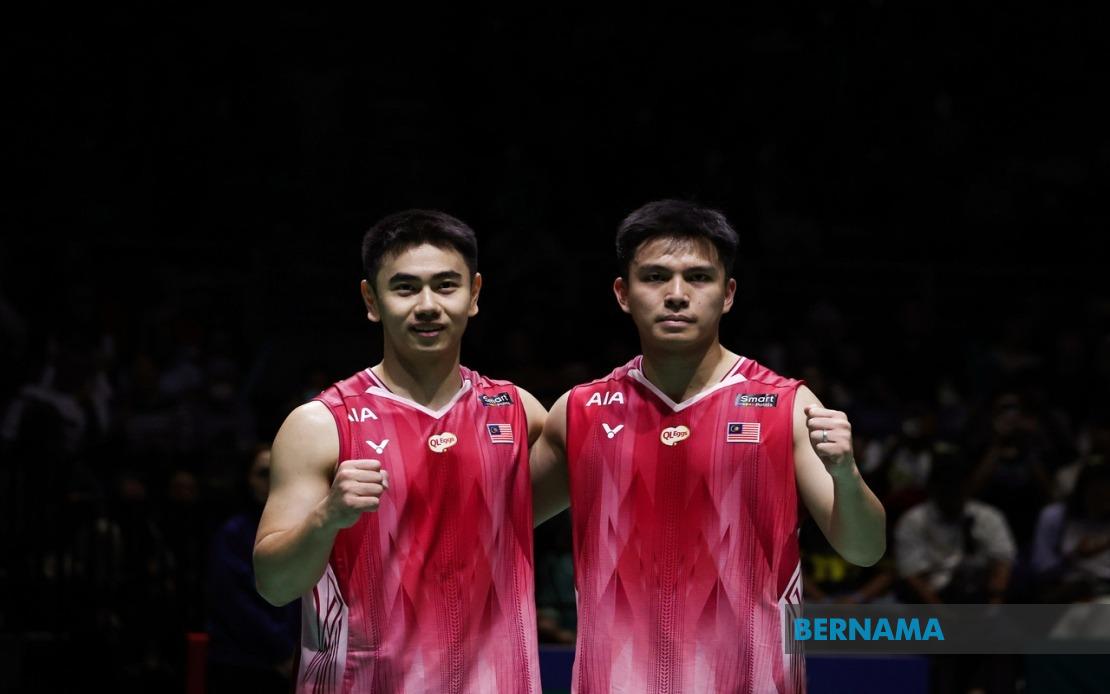
Malaysia's badminton contingent continued its strong showing at the Japan Open 2026 as two pairs secured places in the semifinals in Tokyo. The unseeded mixed doubles combination of Jimmy Wong-Cheng Su Yin produced one of the day's standout performances by stunning the tournament's third-seeded Danish pair Mathias Christiansen-Alexandra Boje. The Malaysians exhibited controlled intensity throughout their encounter, dispatching their higher-ranked opponents 21-17, 21-17 in just 39 minutes of play. This victory proved particularly significant as it leveled the head-to-head record between the two teams at 1-1, suggesting the Malaysians have developed an effective game plan against the Scandinavian combination.
The upset victory underscored Malaysia's growing competitive depth in mixed doubles, a category where Southeast Asian representation has traditionally struggled against European powerhouses. Jimmy Wong-Cheng Su Yin will now face a fresh challenge in the semifinals against Hong Kong's seventh-seeded pair Tang Chun Man-Tse Ying Suet, a matchup that carries additional regional significance as both teams represent neighboring badminton-obsessed jurisdictions competing for continental prestige.
In the men's doubles category, Goh Sze Fei-Nur Izzuddin Rumsani earned their semifinal berth through a grittier three-set encounter against the United States pair Chen Zhi Yi-Presley Smith. The Malaysian fifth seeds required the full 50 minutes to secure a 21-18, 15-21, 21-13 triumph, demonstrating both resilience and tactical adjustment when facing a competitive American combination. This victory marked their fourth consecutive win against the American duo, suggesting the Malaysians have identified and exploited specific weaknesses in their opponents' approach.
The men's doubles trajectory mirrors Malaysia's broader success in international tournament seeding, where consistent performances have elevated the country's ranking status. The third-set dominance proved decisive, with Sze Fei-Izzuddin imposing their pace and precision when it mattered most. Such clutch performances, particularly in deciding sets, often separate championship contenders from merely competitive participants.
However, the Malaysian pairing faces an exceptionally stern challenge in the semifinals against South Korea's top-seeded men's doubles combination Kim Won Ho-Seo Seung Jae. The head-to-head record between the two pairs currently stands locked at 2-2, providing neither team with psychological advantage heading into their semifinal clash. Notably, the Malaysians secured a recent victory over the world number one pair at the Indonesia Open 2026, evidence that Sze Fei-Izzuddin possess both the technical and tactical tools necessary to compete at badminton's highest tier.
The Korean partnership represents one of the world's most formidable men's doubles combinations, known for their explosive pace and intricate court positioning. Sze Fei-Izzuddin will require near-perfect execution and tactical discipline to advance past the seeded Koreans, particularly given the high-pressure environment of a major international tournament semifinal. The 2-2 record suggests that individual matches turn on fine margins—perhaps a single critical rally or a momentary lapse in concentration.
Earlier in the day's proceedings, the dominant South Korean men's doubles seeds had already eliminated another Malaysian pairing by dispatching Kang Khai Xing-Aaron Tai with devastating efficiency. The straight-sets victory of 21-13, 21-10 highlighted the Korean top seeds' ability to assert their superiority early and maintain unrelenting pressure throughout matches. This result, while disappointing for Kang-Aaron Tai, emphasizes the gap separating Malaysia's second-tier men's doubles combinations from the world's elite pairings.
Malaysia's presence of two pairs in the Japan Open 2026 semifinals reflects the country's sustained investment in badminton development and the emergence of a broader player pool capable of competing internationally. The presence of unseeded and fifth-seeded Malaysian combinations advancing through strong quarterfinal opposition suggests depth rather than reliance on a single exceptional pairing. This breadth of competitive capability strengthens Malaysia's position within regional badminton rankings.
The Japan Open ranks among badminton's most prestigious tournaments, traditionally attracting the world's highest-ranked players and serving as a crucial barometer for form and trajectory heading into major championship seasons. Malaysian success at this level carries implications beyond individual tournaments, signaling to national coaching structures that their training methodologies and player development pathways produce internationally competitive athletes. For Jimmy Wong-Cheng Su Yin, the progression through a prestigious seeded pairing suggests that unconventional partnerships can flourish when chemistry and tactical understanding align properly.
Looking ahead, the Malaysian pairings' semifinal performances will significantly influence their seeding positions and rankings heading into subsequent international tournaments. A victory for Sze Fei-Izzuddin against the Korean top seeds would resonate throughout the badminton world, confirming Malaysia's capacity to defeat the sport's highest-ranked combination. Similarly, a positive result for the mixed doubles combination would strengthen Malaysia's international standing in a category where continental representation remains competitive but not yet dominant.

