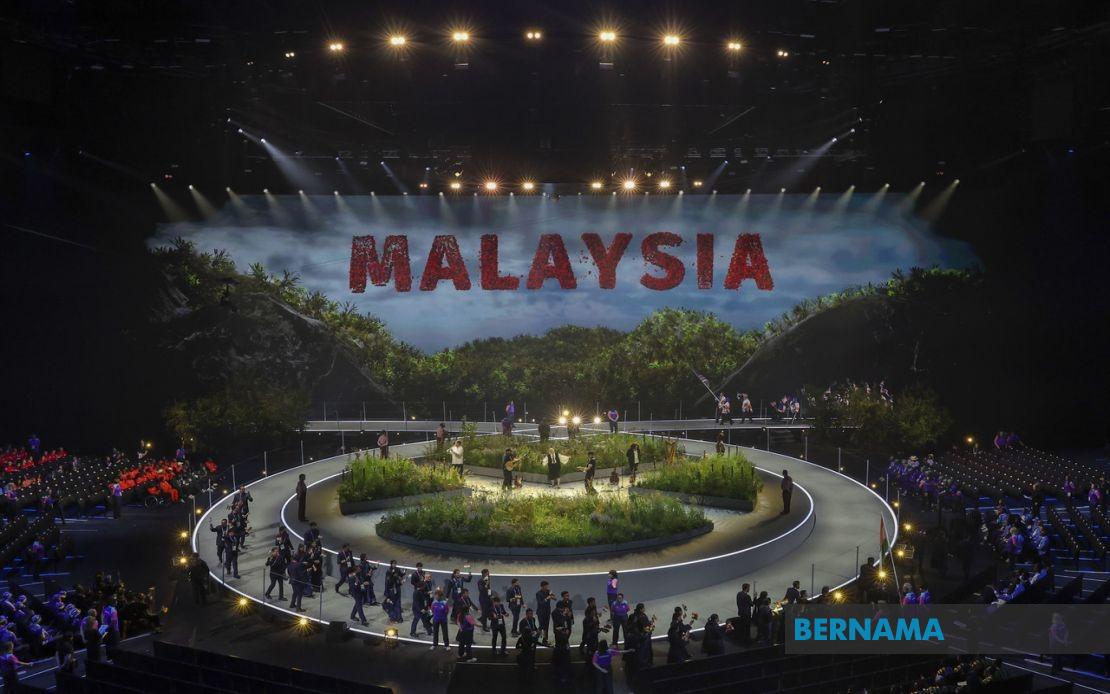
Malaysia's sports delegation at the Glasgow 2026 Commonwealth Games has delivered a performance that has captured the attention of the highest levels of government, with the Cabinet formally acknowledging the achievement during a meeting in Putrajaya on Tuesday. Communications Minister Datuk Seri Fahmi Fadzil, who serves as spokesperson for the MADANI Government, conveyed the collective praise of the Cabinet, noting that the contingent's results represent a significant milestone for Malaysian athletics on the international platform.
The delegation's haul of eight gold medals, three silver medals and five bronze medals substantially exceeded the original target of five gold medals, demonstrating the depth of talent available within the national sporting system. This performance marks a watershed moment for Malaysian Commonwealth Games participation, as it represents the strongest showing since New Delhi 2010, when the nation captured twelve gold medals. The fact that the current contingent came relatively close to matching that historic standard—achieved sixteen years ago—underscores the quality of preparation and athletic development that has preceded this competition.
The government's recognition goes beyond ceremonial acknowledgment. Through the Sports Victory Incentive Scheme, or SHAKAM, authorities have allocated RM1.1 million in financial rewards distributed among the athletes who contributed to exceeding performance benchmarks. This direct financial commitment reflects official understanding that international sporting success requires sustained investment and demonstrates willingness to back achievement with tangible resources. Such schemes serve multiple purposes: they reward individual dedication and sacrifice, but equally they signal to the broader athlete community that national accomplishment carries recognition and material support.
Fahmi articulated the Cabinet's perspective that these achievements extend beyond medals and statistics. The success, he suggested, carries inspirational weight for Malaysia's upcoming generation of athletes who will represent the nation in future international competitions. This framing acknowledges a psychological dimension to sporting success—the notion that visible achievement at elite levels motivates younger athletes to pursue excellence and pursue athletic pathways with greater determination. For a nation competing internationally against better-resourced sporting programs, this multiplier effect of inspiration becomes strategically important.
The Commonwealth Games context itself merits consideration. As a competition bringing together former and current British Commonwealth nations, these Games occupy a particular niche within the international sporting calendar. Malaysia's strong performance here positions the country as a regional sporting power within this specific framework, complementing performances at other major competitions such as the Southeast Asian Games and the Asian Games. The Glasgow staging also meant that Malaysian athletes faced competition from established Commonwealth nations with longer sporting traditions and deeper institutional resources.
The sixteen-year gap since the New Delhi 2010 peak of twelve gold medals had represented something of a plateau in Malaysian Commonwealth Games performance. Analysts and sports administrators had questioned whether that standard might prove difficult to sustain given shifting global athletic patterns and competitive pressures. The Glasgow 2026 results suggest that Malaysia has arrested any decline and begun moving in a positive trajectory once more. This reversal carries implications for how the nation approaches preparation for future major competitions, including the Paris Olympics and subsequent Games cycles.
From a regional perspective, Malaysia's Commonwealth Games success reinforces the Southeast Asian region's sporting capabilities and diversity. While Southeast Asia often commands attention for success in specific sports—badminton, weightlifting, table tennis—the Commonwealth Games provide a broader canvas across multiple disciplines. Malaysian achievement here demonstrates that the region's athleticism extends across numerous sporting domains, contributing to a more comprehensive picture of regional sporting prowess.
The financial mechanism underpinning the reward scheme also illustrates broader thinking about sports economics. Rather than treating athletic performance as purely a matter of national pride, the government apparatus has embedded incentives that acknowledge the financial opportunity costs athletes face when pursuing elite competition. For many athletes from middle-income nations, the ability to access training facilities, coaching, and nutritional support requires institutional backing. Reward schemes like SHAKAM serve as partial compensation for these systemic demands.
Looking ahead, the Cabinet's affirmation creates momentum for Malaysia's sporting agenda. With the government explicitly endorsing the current trajectory and committing financial resources, sports administrators gain political capital to pursue further investment in talent development infrastructure. The recognition also provides context for justifying budgetary allocations toward sporting initiatives in subsequent government cycles, as demonstrated success becomes the foundation for continued or expanded support.
The implications extend to Malaysia's soft power considerations as well. International sporting success generates positive international attention and enhances national prestige within competitive diplomatic contexts. For a nation seeking to strengthen its position within various international forums and regional groupings, the capacity to succeed in high-profile sporting competitions contributes to broader national brand positioning. The Glasgow 2026 results thus represent an asset that transcends the sporting realm itself.

