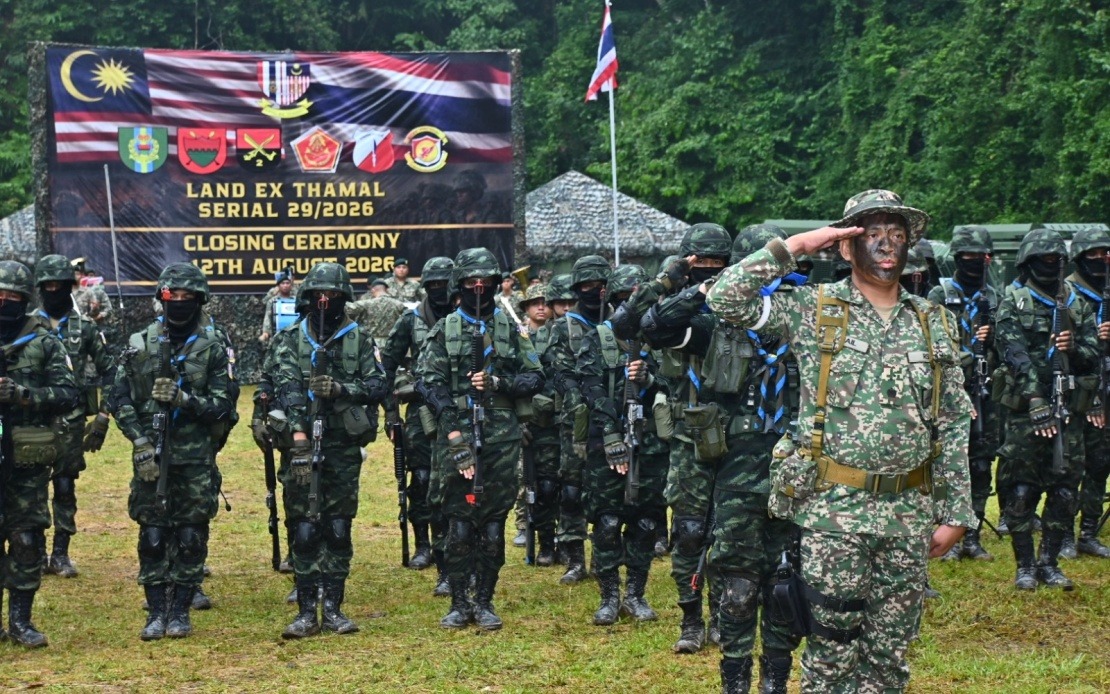
A combined force of 252 military personnel from Malaysia and Thailand has been engaged in intensive training operations in Gerik since early August, marking the latest iteration of a recurring bilateral exercise designed to deepen defence cooperation and operational readiness between the two Southeast Asian nations. The Exercise LAND THAMAL Series 29/2026 brings together 197 officers and personnel from the Malaysian Army with 55 counterparts from the Royal Thai Army, providing both forces with a practical opportunity to refine their ability to work seamlessly in joint operations while building stronger professional relationships across the border.
The 2nd Malaysian Infantry Division has framed this training initiative as a comprehensive platform for knowledge exchange and capability development. Rather than a simple routine drill, the exercise functions as a substantive mechanism through which both militaries can expose their personnel to each other's tactical doctrines, operational philosophies, and procedural standards. This exposure proves particularly valuable in a region where cross-border security challenges—ranging from transnational crime to environmental disasters—often require coordinated responses that demand seamless interoperability between allied forces.
The exercise unfolds across three distinct phases, each designed to build progressively on the lessons learned. The Cross Training Exercise phase allows personnel to familiarise themselves with each other's equipment, command structures, and communication protocols in a controlled setting. This foundation then supports the Field Training Exercise phase, where both contingents engage in the demanding work of tactical operations in realistic terrain. The final component, the Combined Military Civil Action programme branded as Jiwa Murni, extends the exercise beyond purely military dimensions by incorporating community engagement activities, including work conducted at Sekolah Menengah Kebangsaan Sultan Idris Shah II in Gerik.
The field training component exposes participating soldiers to a diverse range of tactical scenarios that reflect the complex operational environments they may encounter. Personnel practise obstacle crossing, base establishment, reconnaissance patrolling, defensive ambush techniques, and offensive operations against simulated enemy positions. These practical exercises move beyond classroom instruction to embed muscle memory and instinctive responses in personnel from both nations, creating a shared language of tactical behaviour that becomes invaluable should genuine crises demand rapid joint action.
Official statements emphasise that the exercise transcends narrow military objectives. Senior Colonel Taweeporn Kanatong, commander of the 5th Infantry Brigade of the Royal Thai Army, underscored during the opening ceremony at Gerik Airstrip on August 5 that LAND THAMAL serves as an instrument for strengthening bilateral relations while simultaneously building capacity to address multifaceted regional challenges. These challenges extend well beyond traditional military conflict to encompass natural disasters, transnational security threats, and the broader architecture of regional stability that affects civilian populations across both nations.
The ceremony itself, jointly officiated by Brigadier General Datuk Mohd Zaini Hashim of the 30th Malaysian Infantry Brigade and Senior Colonel Taweeporn, symbolised the formal commitment of both militaries to sustained cooperation. Such high-level participation signals that this exercise reflects genuine strategic priorities rather than routine schedule-filling activities. For Malaysia, strengthening the defence relationship with Thailand addresses practical concerns about maritime security, transnational crime networks, and the maintenance of stable borders in a region experiencing evolving security pressures.
From a broader Southeast Asian perspective, the Malaysia-Thailand defence relationship carries significance extending beyond bilateral dimensions. The two nations share complex border dynamics, including contested maritime zones and areas where irregular migration and smuggling networks operate with relative impunity. When Malaysian and Thai forces develop genuine interoperability through sustained exercises like LAND THAMAL, they create operational capacity that contributes to regional security architecture. This matters not only for Kuala Lumpur and Bangkok but for neighbouring countries that benefit from a stable, secure Thailand-Malaysia border zone.
The emphasis on trust-building and mutual understanding reflects a sophisticated understanding of what genuine military cooperation requires. Shared tactical knowledge proves valuable only when personnel from different nations trust each other's competence and commitment. The exercise structure, which deliberately creates opportunities for officers and soldiers to work alongside counterparts over extended periods, builds the personal relationships and professional respect that underpin effective coordination during actual crises. These human connections often prove more durable than formal agreements when urgent situations demand rapid improvisation and mutual support.
The inclusion of the Jiwa Murni Programme, which directs military personnel toward community service activities, serves an important function in demonstrating that defence cooperation yields tangible benefits beyond military-to-military relations. When Thai and Malaysian soldiers work together on school projects and community initiatives in Gerik, they reinforce locally that bilateral defence partnerships contribute to civilian welfare. This helps counter narratives that portray military cooperation as threatening or destabilising, instead framing defence ties as instruments of constructive regional engagement.
The structural commitment to continuing LAND THAMAL as a recurring series indicates that both nations view this exercise as foundational rather than episodic. By institutionalising the exercise as a regular event, Malaysia and Thailand establish a predictable rhythm of engagement that allows for progressive deepening of cooperation over successive iterations. Personnel who participate in earlier years can return in subsequent series to mentor newer arrivals, creating an accumulated body of experience within both armies about how to work effectively with the partner nation.
For Malaysian defence planners, the exercise aligns with broader strategic objectives around maritime security and border management in an era of rising transnational challenges. Thailand faces pressure from similar concerns, making the partnership mutually beneficial rather than asymmetrical. Both nations occupy strategically important positions in Southeast Asia, and their ability to coordinate responses to regional security challenges enhances the stability of the wider zone, with implications for shipping lanes, fishing industries, and the movement of legitimate commerce that Malaysian businesses depend upon.
The success of Exercise LAND THAMAL Series 29/2026 ultimately reflects recognition among both militaries that regional security in Southeast Asia increasingly demands collaborative rather than purely national responses. The 252 personnel who participated in Gerik returned to their units with enhanced capabilities, expanded professional networks, and practical experience of how joint operations function. These individual experiences, multiplied across hundreds of personnel over successive exercises, gradually reshape institutional cultures within both armies, making cooperation more intuitive and natural when real crises demand immediate coordination.

