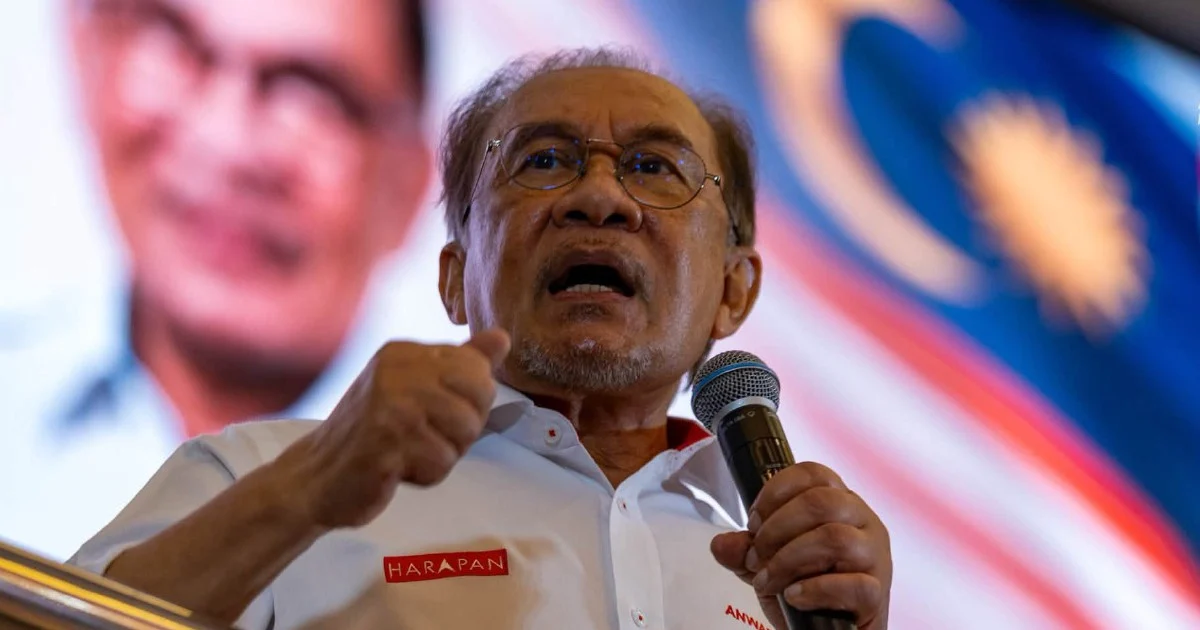
Prime Minister Datuk Seri Anwar Ibrahim has confirmed that the government will not request Singapore's assistance in enabling Malaysians employed across the Causeway to participate in voting during the upcoming Johor state election on July 11. The clarification addresses questions about how the estimated tens of thousands of Malaysian commuters working in Singapore's economy would manage their electoral participation during a key state poll.
Anwar's statement reflects the practical complexities inherent in conducting elections when significant portions of a state's electorate work in a neighbouring country. Johor's economic interdependence with Singapore means a substantial workforce commutes daily or maintains employment arrangements across the border, raising logistical questions about voter accessibility during polling days. The cross-border labour dynamics between Malaysia's southern gateway and the city-state have long presented administrative challenges for electoral management.
The decision to proceed without seeking external facilitation suggests the Election Commission intends to manage the voting process through established domestic mechanisms. Malaysian election law typically requires voters to cast ballots in their registered constituencies, a system that, while clear in principle, can impose considerable hardship on workers whose daily routines place them in another country. Without special arrangements, employed Malaysians face the choice between maintaining their jobs or returning home to vote—a tension that election authorities have grappled with in previous polls.
Johor's political significance makes the electoral process particularly consequential. As Malaysia's third-largest state economy and a long-time Barisan Nasional stronghold, Johor's election carries implications beyond its borders, influencing perceptions of political momentum and factional strength within major coalitions. The July 11 poll will test voter sentiment amid economic pressures and shifting political alignments that have characterised Malaysian politics over recent years. High turnout efforts become critical when electoral outcomes could reshape state administration and legislative dynamics.
The absence of cross-border voting facilities may affect overall participation rates, particularly if commuters choose employment stability over voting. Historical polling data across Southeast Asia demonstrates that structural barriers to voting—whether distance, cost, or inflexibility in work arrangements—disproportionately depress participation among younger, mobile workforces. In Johor's case, this could skew electoral representation toward less mobile demographic groups, potentially affecting policy priorities concerning labour mobility and economic integration.
Singapore's role in regional economic matters has occasionally involved bilateral coordination on issues affecting their shared populations. However, voting remains fundamentally a matter of national sovereignty, and Malaysia's decision reflects the principle that electoral administration should remain within domestic jurisdiction. Inviting foreign government involvement in voter facilitation, even on a practical level, would set a precedent with complex implications for future elections and interstate relations.
The Election Commission would need to publicise alternative arrangements through which Johor-based workers could still participate. Some may choose to take leave, while others might utilise postal voting if such provisions exist under Malaysian electoral regulations. The government has not detailed whether enhanced postal voting systems or extended polling arrangements have been implemented specifically for this election, leaving questions about what options will actually be available to cross-border workers.
From a bilateral perspective, Anwar's position maintains Malaysia's traditional stance on electoral independence while acknowledging Singapore's role as an important economic partner. The two governments have established working relationships on various shared challenges, including security cooperation, maritime management, and trade facilitation. However, electoral matters have typically remained compartmentalised, with each nation preferring to manage its own citizen participation without external infrastructure support.
The broader pattern of Malaysian electoral challenges extends beyond Johor's immediate context. Across the country, workers in urban centres often struggle to vote in constituencies far from their workplaces, affecting turnout particularly in growing semi-urban and rural areas experiencing outmigration. The July 11 election presents an opportunity to assess whether domestic solutions adequately address these gaps or whether future electoral reforms might systematically address commuter voter participation.
Anwar's clarification closes one chapter of speculation while opening others about how effectively the Election Commission will accommodate Johor's distinctive demographic profile. The decision to pursue internal solutions exclusively suggests confidence in existing mechanisms, yet the practical challenges remain substantial. As Malaysia continues refining its electoral framework, balancing accessibility with administrative efficiency remains an ongoing tension—one that this Johor election will help illuminate.

