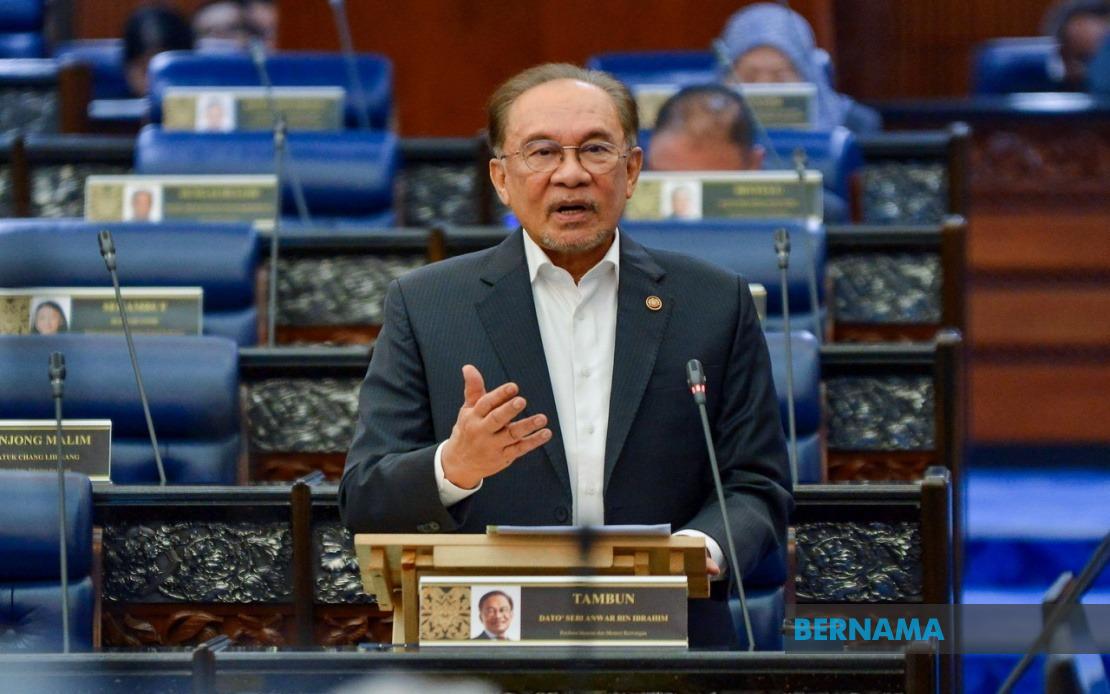
The Malaysian government intends to maintain its commitment to placing locals in available positions while methodically assessing which sectors genuinely require foreign labour, according to Prime Minister Datuk Seri Anwar Ibrahim. Speaking in Parliament on July 14, Anwar outlined an approach that seeks to reconcile competing demands: the operational needs of small and medium enterprises facing staffing challenges against the aspirations of young Malaysians seeking employment. The position reflects the administration's recognition that labour policy must navigate complex economic realities without abandoning principles of national workforce development.
Anwar acknowledged that several industries continue to depend on foreign workers to function effectively, yet stressed that any new hiring must follow stringent procedures and regulatory oversight. The government recognises that Malaysia already hosts millions of foreign workers, many operating through established channels. Before bringing in additional overseas labour, existing foreign workers legally present in the country should be given opportunities to fill vacancies, he explained. This sequencing approach aims to reduce unnecessary recruitment while ensuring available talent, whether local or already-residing foreign workers, is deployed efficiently across the economy.
The remarks responded directly to concerns raised by Khoo Poay Tiong, the Member of Parliament for Kota Melaka, who highlighted the acute labour shortages affecting SMEs and the parallel challenge of creating meaningful employment for Malaysian youth. These twin pressures have created tension within the policy debate, with business interests advocating for easier foreign worker access while employment advocates push for greater opportunities for citizens. Anwar's response attempts to chart middle ground by promising coordinated examination of sectoral needs without wholesale liberalisation of foreign labour entry.
The Prime Minister was candid about longstanding problems within the foreign worker system itself. He pointed to the proliferation of labour syndicates operating across Malaysia as a substantial concern, noting that such networks have perpetuated for decades while enabling certain individuals to accumulate wealth at workers' expense. This acknowledgment indicates government awareness that foreign labour challenges extend beyond simple supply-and-demand dynamics. Corruption, exploitation, and organised trafficking represent systemic issues that complicate policy implementation and demand attention alongside legitimate sectoral labour needs.
Governance of this complex terrain will require coordination between multiple government agencies. Anwar indicated that both the Ministry of Human Resources and the Ministry of Home Affairs must jointly evaluate which sectors warrant increased foreign worker allocations, with security considerations forming part of the assessment framework. This inter-ministerial approach recognises that labour policy intersects with border management, national security, and social cohesion concerns. Such coordination mechanisms, when functioning effectively, can prevent ad hoc decisions that satisfy short-term business pressure while creating longer-term complications for governance and community stability.
Enforcement represents another critical dimension of the government's strategy. Anwar committed to intensified action against foreign workers who contravene regulations, regardless of their nationality or ethnic background. This pledge explicitly encompasses Rohingya workers, whose status in Malaysia remains deeply contentious. The emphasis on impartial enforcement suggests the government seeks to de-politicise compliance issues whilst maintaining legal order. Workers who observe established rules, whether Malaysian citizens or foreign nationals, will receive protection; those who breach requirements will face consequences including business closure and prosecution.
A particular concern centres on the abuse of professional worker visa categories. Anwar revealed that some companies have exploited expert worker approvals by recruiting individuals who do not actually perform the specialised roles for which they received clearance. In one example, firms sought approval to import artificial intelligence specialists but then assigned these workers to unrelated tasks. Such misuse undermines the entire regulatory framework and wastes opportunity to genuinely develop local expertise in emerging fields. Tightening entry requirements for professional workers aims to prevent employers from gaming the system and ensures that overseas recruitment genuinely addresses skill gaps rather than functioning as a backdoor for general labour migration.
For Malaysia's youth employment challenge, the government is betting that stricter professional worker controls will create space for local talent development. By preventing employers from hiring foreign specialists to perform routine work, the policy theoretically redirects recruitment toward Malaysian citizens or ensures that approved overseas experts actually contribute to knowledge transfer and skill development. This approach recognises that sustainable youth employment depends partly on employers investing in local workforce training rather than defaulting to imported labour.
The foreign worker debate carries particular weight for Malaysia's economic competitiveness and social stability. Southeast Asian economies increasingly compete for the same pools of migrant labour, and restrictive policies risk disadvantaging Malaysian employers relative to regional competitors offering easier access. Conversely, uncontrolled foreign worker growth can suppress local wages, fuel social tensions, and create governance challenges that become exponentially harder to manage. Anwar's measured approach attempts to position Malaysia as a nation capable of balancing legitimate business needs against citizen interests and rule-of-law standards.
For small and medium enterprises, the government's commitment to studying sectoral needs offers some reassurance that genuine labour shortages will be addressed rather than dismissed ideologically. However, bureaucratic coordination between multiple ministries and enforcement agencies often moves slowly, meaning SMEs facing immediate hiring pressures may experience delays in obtaining approvals. The government's challenge will be converting stated principles into timely administrative decisions that allow businesses to operate effectively without dismantling local employment protections.
The regional context also shapes Malaysian policy calculations. Neighbouring countries have adopted varying approaches to foreign labour, from Singapore's highly managed systems to Thailand's significant informal migrant populations. As ASEAN economies compete for investment and labour productivity, Malaysia must position itself as business-friendly without abandoning social commitments that distinguish it from less regulated markets. This balance, Anwar's remarks suggest, will be found through rigorous sectoral analysis, coordinated governance, and consistent enforcement rather than blanket liberalisation or wholesale restriction.

