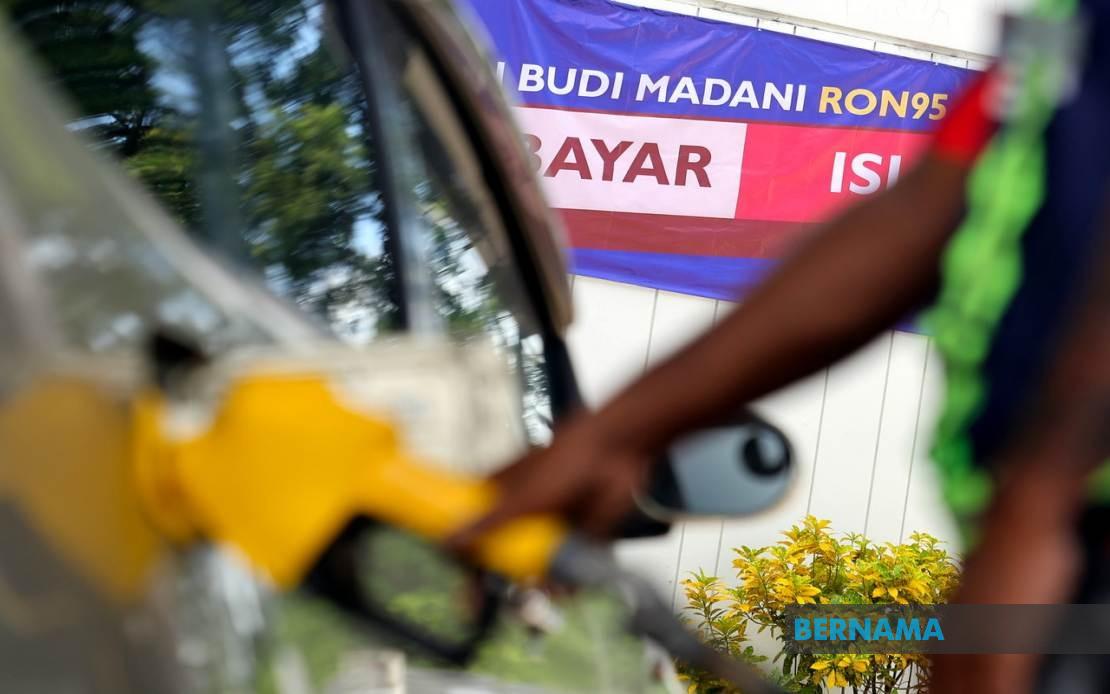
The Malaysian government has reaffirmed its commitment to maintaining current welfare programmes and subsidies even as petroleum product support costs threaten to reach almost RM40 billion this financial year, driven by geopolitical tensions in West Asia. Deputy Finance Minister Liew Chin Tong made this declaration in Parliament, emphasizing that the administration remains resolved to protect the purchasing power of ordinary Malaysians through multiple intervention channels.
The petroleum subsidy burden looming over federal finances represents a significant fiscal constraint. With crude oil prices remaining volatile due to regional conflicts, the government's decision to shield domestic fuel prices from international market fluctuations has created substantial budgetary pressure. However, Liew indicated that policymakers have concluded that withdrawing support now would inflict hardship on households and workers already navigating economic headwinds, making the subsidy commitment a deliberate trade-off despite its budgetary implications.
At the heart of this strategy lies the BUDI MADANI RON95 programme, introduced in September of the previous year. This initiative establishes a fixed petrol price while simultaneously imposing volume caps per consumer. The mechanism functioned as intended during the peak crisis months of March and April, when international crude oil prices surged to approximately RM5 per litre. Throughout that turbulent period, Malaysian motorists continued purchasing fuel at the controlled rate of RM1.99 per litre, insulating them from the shocks reverberating through global energy markets.
The programme's dual-benefit structure addresses two critical concerns simultaneously. First, it provides price certainty for household budgeting and business planning by removing the monthly volatility that traders and economists typically debate in regional forums. Second, it guarantees supply continuity, preventing the fuel queues and distribution chaos that occasionally plague neighbouring countries during supply shocks. For Malaysian drivers accustomed to reliable access to competitively priced petrol, this represents a tangible advantage compared to regional peers facing different policy frameworks.
Liew's parliamentary response directly addressed concerns that escalating petroleum subsidies might force the government into difficult trade-offs with other social spending. Mohd Sany Hamzan, representing the Hulu Langat constituency under the Pakatan Harapan coalition, specifically questioned whether ballooning fuel subsidies would necessitate reductions in food assistance, the Sumbangan Tunai Rahmah cash transfer programme, the Sumbangan Asas Rahmah basic assistance scheme, or school support initiatives. The deputy minister's answer—that no such cuts are contemplated—represents a definitive policy stance that social programmes will not bear the adjustment burden imposed by petroleum price support.
The government's decision to absorb petroleum subsidies rather than passing costs to consumers reflects particular political and social calculations. Malaysia's middle and working classes have grown accustomed to fuel price stability as an implicit social contract component. Unlike some neighbouring economies that employ more frequent price adjustment mechanisms tied to international benchmarks, Malaysia has chosen a different path emphasizing insulation and predictability. This approach recognises that rapid fuel price increases can trigger wage pressures, transport cost inflation cascading through supply chains, and erosion of real incomes for fixed-wage earners including government employees and retirees.
The West Asia security situation that precipitated these subsidy burdens remains fluid and unpredictable. Energy markets have grown sensitive to geopolitical developments in the region given the Strait of Hormuz's criticality to global oil flows. Malaysian policymakers must maintain contingency planning while hoping that diplomatic developments ease tensions. The RM40 billion projection itself carries uncertainty bands; further escalation could push costs higher, whilst de-escalation might provide relief. Under these circumstances, committing to maintenance of existing assistance demonstrates confidence in managing the fiscal challenge even under adverse scenarios.
The BUDI95 framework's effectiveness during March and April tested the programme's design and execution. Supply chains remained intact, distribution networks functioned without breakdown, and retail stations maintained adequate inventory despite the price differential between domestic and international markets. This operational success validates the programme's architects' assumptions and provides confidence that continued operation remains feasible even if international prices remain elevated or spike further. The absence of fuel shortages or significant black market activity suggests that the quota and pricing mechanisms have achieved reasonable equilibrium between affordability and supply sustainability.
For Malaysian businesses and consumers, the government's stance carries implications beyond the immediate fuel pump. Stable petrol prices reduce operational uncertainty for transport operators, logistics companies, and delivery services. Predictable fuel costs allow restaurants, manufacturers, and retailers to price goods with greater confidence. The knock-on effects of fuel price stability extend through the economy, supporting consumer confidence and business planning horizons. From a macroeconomic perspective, this counter-cyclical subsidy policy during a period of global uncertainty may cushion Malaysia against steeper domestic recession than might otherwise occur.
The regional dimension also warrants consideration. Several Southeast Asian economies employ different subsidy and pricing approaches, creating divergent outcomes for their citizens and businesses. Malaysia's choice to maintain protective mechanisms while absorbing costs positions it distinctly within the ASEAN context. Neighbouring countries monitoring Malaysia's approach may face domestic pressure to emulate these policies, though budgetary constraints vary. The Malaysian government's explicit reaffirmation that multiple assistance channels will remain intact signals to voters and businesses alike that policy stability will prevail despite external shocks.
Looking forward, the government faces the perpetual challenge of balancing fiscal sustainability against social protection. The RM40 billion petroleum subsidy figure itself represents a substantial allocation that could theoretically fund alternative development priorities. However, Liew's emphasis on the programme's role in maintaining supply and price certainty suggests that policymakers view this spending as essential infrastructure support rather than discretionary welfare. The broader question facing Malaysian fiscal managers concerns whether this level of subsidy commitment remains sustainable across multiple years, or whether the West Asia situation must stabilise to allow eventual normalisation of budget allocations.

