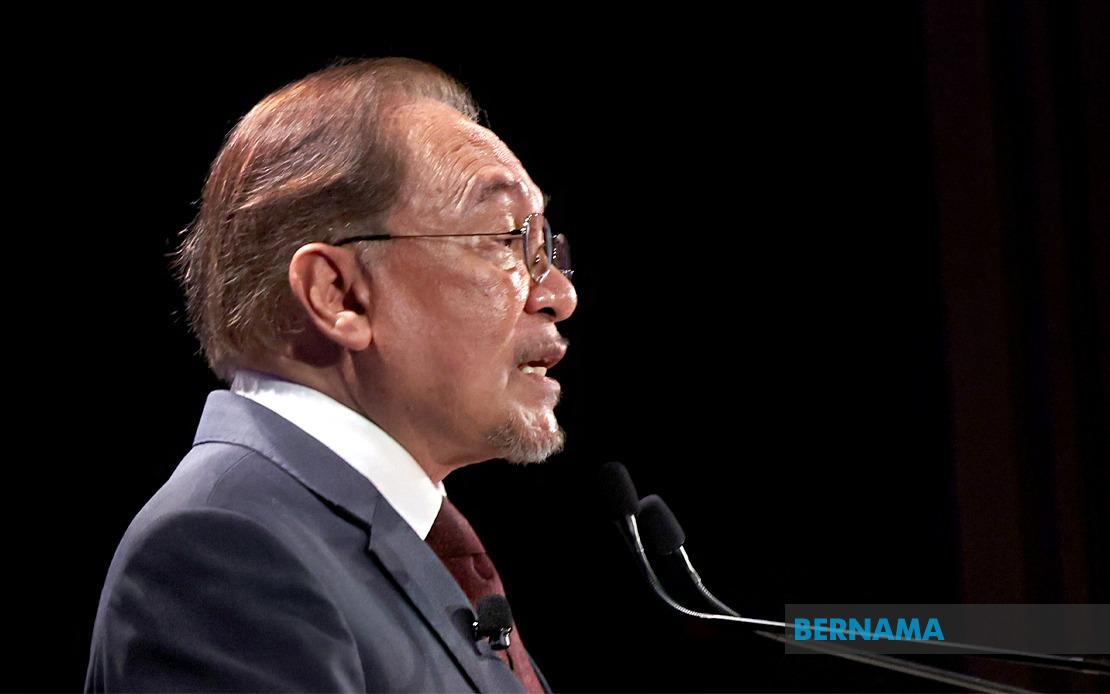
Malaysia has thrown its backing behind the nascent agreement between the United States and Iran designed to defuse escalating tensions in the Middle East, though officials in Kuala Lumpur have struck a notably cautious tone about the sustainability of such arrangements. Prime Minister Datuk Seri Anwar Ibrahim articulated the country's measured optimism while delivering a keynote speech at the 39th Asia-Pacific Roundtable, a prestigious three-day forum conducted by the Institute of Strategic and International Studies (ISIS) Malaysia that concluded on July 2.
The premier's position reflects a broader Southeast Asian pragmatism regarding great-power diplomacy in the Middle East. Rather than celebrating the apparent breakthrough unconditionally, Anwar emphasised the fragility inherent in any ceasefire achieved through indirect negotiations. His language suggested an appreciation for the diplomatic scaffolding that had enabled the talks while remaining alert to the numerous ways such agreements can unravel. Malaysia, as a Muslim-majority nation with interests spanning both the Islamic world and Western-aligned trading partners, occupies a unique position where maintaining equilibrium between competing interests carries tangible domestic and economic implications.
The Malaysian government has specifically acknowledged the mediating efforts undertaken by Gulf states, Türkiye, Pakistan and other regional actors who helped broker the memorandum of understanding. This recognition underscores Southeast Asian awareness that durable peace arrangements in the Middle East depend not solely on bilateral US-Iran negotiations but on the sustained engagement of neighbouring powers with genuine stakes in regional stability. By naming these intermediaries, Malaysia has implicitly endorsed a model of conflict resolution that emphasises multilateral facilitation over unilateral imposition.
Central to Anwar's remarks was the insistence that strict compliance with all ceasefire provisions now represents an urgent requirement for all parties. The Strait of Hormuz, a waterway of fundamental importance to global energy markets, featured prominently in his analysis. Prior to recent hostilities, this chokepoint had accommodated approximately one-fifth of the world's oil traffic, making its accessibility a matter of planetary economic consequence. Qatar had reported that indirect talks between the two nations concluded on Wednesday had yielded what officials characterised as positive progress on this critical corridor.
The Prime Minister connected the abstract mechanics of geopolitical dispute settlement to concrete human welfare outcomes. He highlighted how elevated food and energy prices stemming from Middle Eastern instability have cascaded through the global economy, forcing countries into expensive scrambles for supply security. This framing resonates particularly with Malaysian audiences familiar with how petroleum price fluctuations affect national budgets and consumer purchasing power. The billions of dollars diverted toward securing essential commodities represent capital that governments might otherwise deploy for education, healthcare, infrastructure and poverty alleviation programmes.
Anwar's assertion that "these are not mere statistics on paper; they impact livelihoods" represents an attempt to anchor abstract international relations discourse in the lived experience of ordinary citizens. For Malaysia, a net energy importer whose economy depends on stable access to global markets, instability in the Middle East translates directly into household-level consequences. Workers in manufacturing sectors face potential job losses if energy costs surge too dramatically. Traders reliant on predictable shipping routes through contested waters confront unexpected complications. This human-centred perspective distinguishes Malaysian diplomatic messaging from purely strategic calculations.
The timing of Anwar's comments within the Asia-Pacific Roundtable context amplified their regional significance. The forum gathers policymakers, academics and analysts across the Indo-Pacific, a geography increasingly conscious of its dependence on stable Middle Eastern energy supplies and concerned about great-power competition extending into this zone. Malaysia's measured endorsement of the US-Iran understanding, coupled with its emphasis on sustained implementation, positions the nation as a voice for pragmatic multilateralism rather than ideological alignment.
However, the Malaysian government's cautionary language suggests limited confidence in the permanence of recent developments. The characterisation of peace prospects as "fragile and vulnerable to sabotage" acknowledges the numerous actors—whether hardline factions within Iran or US political constituencies—who harbour interests in derailing agreements. By publicly raising these concerns, Anwar has effectively set modest expectations among domestic audiences while signalling to international partners that Malaysia views the situation as requiring sustained diplomatic attention rather than celebration of resolution.
The reopening of the Strait of Hormuz to unrestricted international shipping emerges as the critical test case for genuine de-escalation. If vessels resume normal transit patterns without interdiction or threat, regional actors including Malaysia can pursue economic normalisation. Conversely, any resumption of restrictions or confrontational posturing would vindicate scepticism about the agreement's durability. Malaysia's stakes in this outcome remain substantial given its position as both an oil importer and a maritime trading nation whose prosperity depends on unobstructed sea lanes.
From a Southeast Asian strategic perspective, stability in the Middle East remains preferable to renewed confrontation, regardless of which powers dominate the region. Malaysian foreign policy has traditionally resisted being drawn into zero-sum competitions between external powers. Instead, the country has sought to maintain pragmatic relationships with diverse actors while minimising exposure to proxy conflicts. Anwar's articulated support for the US-Iran understanding aligns with this established orientation, extending diplomatic recognition to progress while withholding endorsement of permanence until sustained behaviour validates optimism.
The economic dimensions of regional peace that Anwar stressed carry particular relevance for Southeast Asian nations implementing recovery programmes following pandemic disruptions. Elevated commodity prices, whether oil or food products, complicate fiscal planning and constrain social spending. Any mechanism that reduces global energy price volatility and restores predictability to shipping routes advances Malaysian development objectives. From this perspective, even modest agreements between Washington and Tehran merit support on purely self-interested economic grounds, independent of broader geopolitical sympathies.

