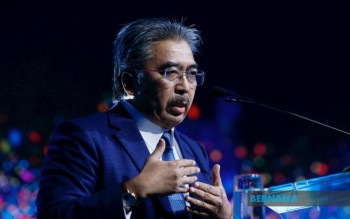
The Malaysian government is carefully examining how to finance the expansion of nationwide electric vehicle charging infrastructure without unduly burdening consumers or stifling EV adoption, according to Investment, Trade and Industry Minister Datuk Seri Johari Abdul Ghani. Speaking during a recent Dewan Negara session, Johari clarified that while authorities have not yet committed to implementing an EV levy, they are actively assessing various mechanisms to secure sustainable funding for what has become a critical bottleneck in Malaysia's automotive transition.
The minister's comments reflect a delicate policy balancing act. On one hand, the government recognises that adequate public charging infrastructure is essential to encourage the broader adoption of electric vehicles and meet climate commitments. On the other hand, Malaysia faces significant fiscal constraints that limit its capacity to fund such large-scale infrastructure projects from general government revenue. This tension mirrors challenges faced by developing and middle-income nations across Southeast Asia, where rapid EV uptake has outpaced the development of supporting ecosystems.
Johari acknowledged that any costs imposed on vehicle manufacturers would inevitably be passed along to end consumers through higher purchase prices. This pass-through effect complicates the calculus for policymakers, who must weigh the benefits of accelerating EV infrastructure development against the risk of pricing out middle-income Malaysian buyers from the EV market. The question of at what level charges should be pitched—and how such revenue would be calculated and collected—remains unresolved pending further technical and economic analysis by relevant agencies.
Central to the government's consideration is Malaysia's current energy generation profile and the broader fiscal position. Unlike fully developed economies or resource-rich nations, Malaysia remains heavily dependent on gas and coal-fired power plants, meaning the environmental benefits of mass EV adoption are tempered by the carbon intensity of the electricity grid itself. As Johari noted, the government must weigh the real costs of electricity supply, infrastructure investment, and fuel subsidies that have been provided historically. These interconnected spending commitments create pressure on the fiscal deficit, forcing difficult trade-offs between competing policy objectives.
The minister's reference to China's charging infrastructure scale underscores the magnitude of the investment gap. China has deployed millions of public and private charging points through state coordination and sustained government investment, creating a virtuous cycle where charging availability encourages vehicle purchases, which in turn justifies further infrastructure expansion. Malaysia's smaller market size and more constrained budget make replicating such a model extremely challenging without innovative financing mechanisms. A dedicated levy-funded vehicle charging network could help bridge this gap by creating a ringfenced revenue stream insulated from competing budgetary demands.
Under one proposed approach that Johari outlined, a modest levy imposed on every electric vehicle sold would be channelled into a dedicated fund exclusively reserved for building public charging stations. This structure offers several potential advantages: it ties funding directly to EV adoption rates, ensuring that infrastructure investment scales with market growth; it creates a transparent, dedicated revenue source that cannot be redirected to other government priorities; and it distributes the cost across all EV purchasers rather than concentrating it on early adopters or specific consumer segments.
Yet significant design challenges remain unresolved. Policymakers must determine the optimal levy rate—high enough to meaningfully fund infrastructure but not so steep as to render EVs unaffordable or uncompetitive against traditional combustion vehicles. They must also consider whether a per-vehicle levy should be flat or tiered based on vehicle class, and how the fund should be governed to ensure efficient deployment and prevent misallocation. Furthermore, the government has signalled that it cannot rely exclusively on private vehicle manufacturers or distributors to finance public charging networks, even as these companies have commercial incentives to ensure adequate charging availability for their customers.
The coexistence of internal combustion engine vehicles and electric vehicles in Malaysia's transport fleet for the foreseeable future adds another layer of complexity. Rather than viewing the transition as a simple pivot from one technology to another, Johari emphasised that the government must accommodate both types simultaneously. This dual-track approach means that spending on road fuel subsidies, refineries, and related energy infrastructure will continue for years even as charging networks are developed. Such redundancy carries obvious fiscal costs but may be necessary from an equity and energy security perspective.
For Malaysian consumers and the automotive industry, the framing of this debate carries important implications. A carefully calibrated EV levy could position Malaysia as serious about electric mobility while avoiding a sudden affordability cliff that might disproportionately harm lower and middle-income buyers. Transparency about how such a levy would be calculated and deployed—particularly assurances that revenues genuinely fund charging infrastructure rather than disappearing into general government coffers—would be crucial for public acceptance. Industry stakeholders, meanwhile, appear to be awaiting clearer signals about the government's final decision before making long-term investment plans.
The broader regional context matters as well. Several Southeast Asian nations are simultaneously grappling with similar infrastructure financing challenges, creating opportunities for knowledge-sharing and possibly coordinated approaches to shared supply chains and charging standards. Malaysia's policy choices could influence or reflect best practices emerging elsewhere in the region. International partners and development finance institutions may also have roles to play, offering technical expertise or blended finance structures that combine government funding, commercial investment, and concessional capital to accelerate infrastructure rollout.
Ultimately, Johari's remarks suggest that a decision on the EV levy mechanism remains pending further technical assessment and stakeholder consultation. The government appears to recognise that a sustainable funding model requires not just identifying a revenue source but also building public understanding of why infrastructure investment costs money and how those costs should fairly be distributed across society. The next phase of this policy discussion will likely involve more detailed modelling of levy scenarios, impact assessments on vehicle affordability, and coordination with state governments that also play roles in charging infrastructure deployment. Only after such analysis can Malaysian policymakers confidently move forward with a mechanism that genuinely balances environmental ambition with fiscal responsibility and consumer welfare.

