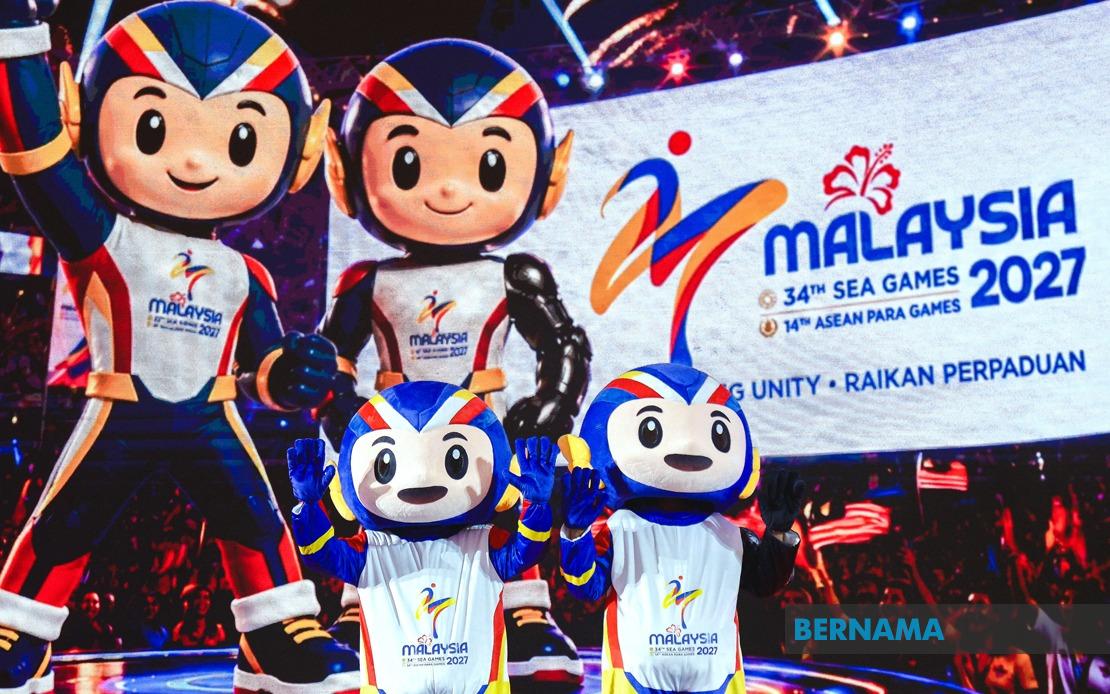
Malaysia's hosting of the 2027 SEA Games and ASEAN Para Games took on greater symbolic weight this week with the unveiling of its central theme and mascot in Putrajaya. Youth and Sports Minister Dr Mohammed Taufiq Johari presented "Celebrating Unity" as the unifying concept for what will be a landmark sporting event spanning multiple regions across the country. The thematic choice signals Malaysia's intention to position the Games not merely as a competition, but as a demonstration of regional cohesion and shared sporting values during a period when multilateral cooperation in Southeast Asia faces mounting pressures.
The selection of "Celebrating Unity" carries particular resonance given the geographic scope of the 2027 Games. Rather than concentrating all events in a single urban centre, Malaysia has distributed venues across four distinct clusters—Sarawak, Penang, Johor, and Kuala Lumpur—a logistical approach that fundamentally reshapes how host nations can organise continental sporting events. This dispersed model requires unprecedented coordination between state and federal authorities, and the thematic emphasis on unity appears designed to knit these disparate locations into a coherent narrative. For athletes and spectators, the theme transforms what might otherwise feel like fragmented competitions into a cohesive celebration of regional identity and sporting excellence.
Dr Mohammed Taufiq explained that the theme serves a dual purpose: it encapsulates the aspiration for regional harmony while simultaneously motivating participating athletes to transcend their previous limitations. This motivational dimension is particularly significant in the context of Malaysia's competitive positioning within Southeast Asia. By framing the Games around unity rather than rivalry, Malaysian officials have crafted messaging that acknowledges the importance of winning without making gold medals the sole determinant of success. The approach reflects a maturing understanding of how host nations can leverage major sporting events to advance both athletic development and broader diplomatic objectives.
The unveiled mascot, TUAH, represents a conceptual departure from previous SEA Games traditions. Rather than adopting an animal character as prior editions have done, TUAH embodies a contemporary human figure characterised as a dynamic and approachable modern hero. This humanisation of the mascot signals an intentional shift in how Malaysia wishes to present itself to the region. By centering a human figure rather than wildlife or mythological creatures, the mascot conveys accessibility and relatability—qualities particularly valuable in engaging younger audiences across Southeast Asia who may not connect with traditional symbolic representations.
Design elements of TUAH explicitly reference Malaysia's national identity through incorporation of colours from the Jalur Gemilang. This deliberate invocation of national symbolism serves multiple functions simultaneously. For Malaysian athletes, the mascot becomes a tangible reminder of representing the nation, potentially enhancing the psychological dimensions of competition. For audiences throughout Southeast Asia, the clear Malaysian iconography reinforces the host nation's presence without straying into nationalist excess. The balance between national pride and regional inclusivity embedded in the mascot's design exemplifies the careful branding work undertaken by Malaysian authorities.
Minister Dr Mohammed Taufiq expressed hope that TUAH would function as a fortunate talisman, helping Malaysia achieve the ultimate goal of emerging as overall champions when competing on home soil. This aspiration underscores the stakes Malaysia has placed on the 2027 Games beyond the immediate sporting competition. Successfully topping the medal tally would validate Malaysia's investment in developing its athletic infrastructure and talent pipeline, while demonstrating the efficacy of its broader sports development strategy to the region. The minister's framing of the mascot as a potential luck-bringer reflects both the competitive intensity surrounding these Games and the cultural significance placed on symbolic elements.
Malaysia's preparation timeline remains ambitious, with competitions scheduled for mid-to-late September 2027, followed immediately by the ASEAN Para Games in mid-to-late October. This back-to-back scheduling compresses what are typically sequential events, creating substantial logistical demands on organising authorities. The minister indicated that venue development across the four clusters is proceeding without major impediments, though the focus has now shifted toward technical coordination and timeline adherence. This phase of preparation typically determines whether theoretical planning translates into operational success.
The National Sports Council has established a target of ensuring that 70 percent of Malaysia's athletes achieve podium finishes at Asian-level competitions by year-end, a metric explicitly framed as an indicator of the nation's championship prospects for 2027. This quantified objective translates abstract aspirations into measurable outcomes, providing a concrete benchmark against which Malaysia's athletic development can be evaluated. The specificity of this target suggests confidence in Malaysia's current talent pipeline, though it also indicates awareness that sustained improvement across multiple sports disciplines remains essential for achieving the ultimate goal.
From a regional perspective, Malaysia's comprehensive approach to the 2027 Games reflects evolving expectations for host nations. Rather than concentrating resources in a single metropolitan area, the distributed model creates opportunities for sporting infrastructure development in secondary cities and regions that might otherwise receive limited investment. This geographic diversification has implications extending beyond the Games themselves, potentially accelerating economic and infrastructural development across multiple Malaysian states. For Southeast Asia more broadly, the Games represent an opportunity to demonstrate that major sporting events can proceed without the environmental and social dislocation that has accompanied some previous editions.
The competitive atmosphere surrounding the 2027 Games will inevitably intensify as the event approaches, with other Southeast Asian nations making their own preparations and targeting specific medal outcomes. Malaysia's unveiling of its theme and mascot signals the transition from planning phases into active promotional and operational modes. The psychological dimensions of hosting—athlete morale, public enthusiasm, and international perception—begin crystallizing around these symbolic elements. TUAH and the "Celebrating Unity" theme will feature prominently in all subsequent communications, gradually embedding themselves in the regional consciousness as familiar representations of the upcoming sporting spectacle.
Looking ahead, Malaysia's success in 2027 will be measured not merely in medals won but in how effectively the nation integrates its athletic ambitions with its broader diplomatic and developmental objectives. The emphasis on unity, the humanised mascot, and the dispersed venue model all suggest a host nation thinking carefully about what legacy these Games should produce. Whether the thematic commitment to unity translates into actual cooperation and goodwill among participating nations, and whether the distributed venues genuinely enhance opportunities for athletes from smaller Southeast Asian countries, will ultimately determine whether the 2027 SEA Games and ASEAN Para Games represent a meaningful evolution in how the region organises its major sporting competitions.

