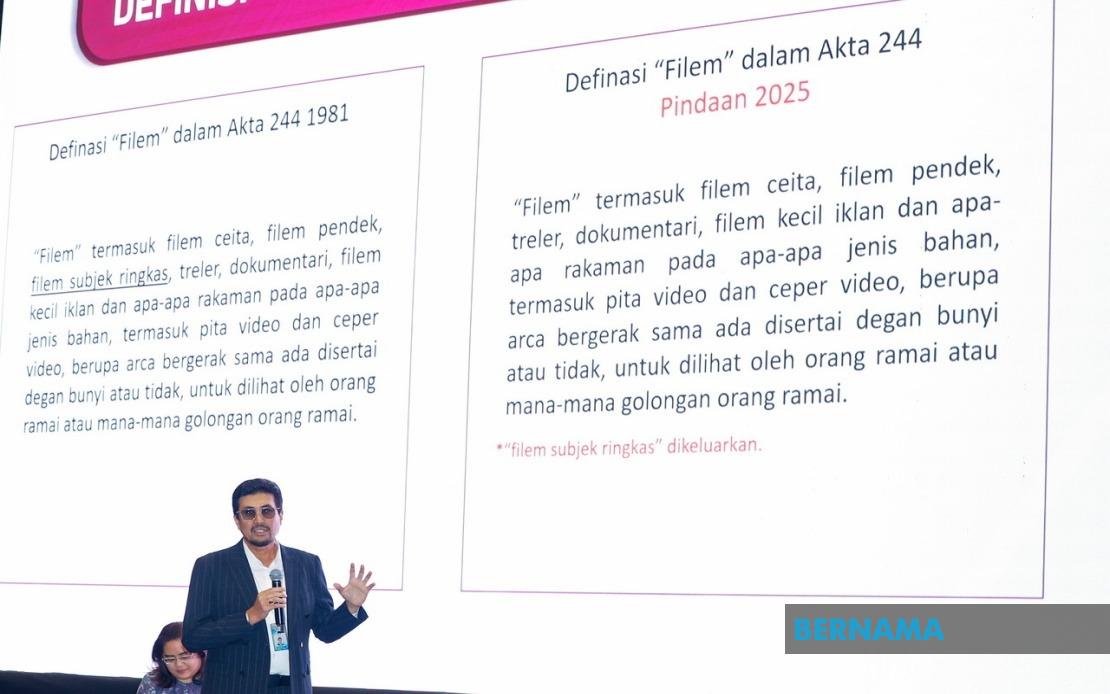
Malaysia's film industry is poised for significant transformation following the near-completion of the National Film Policy 2026-2035, a comprehensive framework designed to position cinema as a cornerstone of creative economic development. FINAS chief executive officer Datuk Azmir Saifuddin Mutalib announced that the policy, which encompasses more than 70 distinct initiatives, is expected to receive Cabinet approval and launch within the current year, marking a watershed moment for the sector after two decades since the last legislative overhaul.
The policy represents Malaysia's third major national film strategy and represents the first significant legislative update to film governance since 2005. Unlike its predecessors, the 2026-2035 framework reflects contemporary industry challenges and opportunities, incorporating emerging technologies, evolving business models, and the realities of global content distribution. The scope of the initiative underscores recognition at the highest levels of government that Malaysia's film sector requires structural modernisation to remain competitive within Southeast Asia's increasingly dynamic creative economy.
At its foundation, the policy rests upon five interconnected pillars designed to address different dimensions of industry development. Financing and Investment forms the cornerstone, with particular emphasis on cultivating alternative funding mechanisms beyond traditional avenues. Marketing and Promotion initiatives aim to strengthen both domestic consumption and international visibility for Malaysian productions. Industry Collaboration and Technology represents a forward-looking commitment to integrating artificial intelligence and digital tools throughout production pipelines. Human Capital Development addresses workforce skills and professional certification to ensure the industry attracts and retains talent capable of competing globally. Finally, Governance and Legislation establishes the regulatory framework necessary to protect intellectual property and ensure sustainable development.
The inclusion of artificial intelligence and advanced technology adoption signals a deliberate pivot toward modernisation. Rather than viewing AI as a threat to traditional filmmaking practices, the policy framework positions automation and digital innovation as enablers of efficiency and creative possibility. For Malaysian producers operating within budget constraints common to Southeast Asian cinemas, such technological integration could significantly reduce production costs whilst maintaining artistic quality. This approach acknowledges that Malaysian filmmakers must leverage technological advantages to punch above their weight in increasingly crowded global markets.
Alternative financing models constitute another critical focus area, reflecting the reality that traditional funding mechanisms have proven insufficient to sustain a vibrant, commercially viable industry. The policy development process deliberately consulted extensively with industry players, government agencies, and relevant ministries to identify gaps in current funding infrastructure. Potential mechanisms under consideration likely include tax incentives, public-private partnerships, co-production frameworks, and venture capital structures adapted specifically for creative industries. For Malaysia, where government support has historically been episodic rather than systematic, establishing reliable financing pathways could unlock latent creative potential currently constrained by capital limitations.
Market expansion provisions address both domestic and international dimensions. Domestically, initiatives seek to reinvigorate cinema audiences through strategic marketing and content programming. Internationally, the framework positions Malaysian films for greater prominence in regional and global distribution networks. This dual approach recognises that sustainable industry growth requires simultaneous investment in local audience development and international market penetration. For Southeast Asian audiences, increased Malaysian film prominence could broaden the region's cinematic profile beyond the dominant influence of Korean and Hollywood productions.
The policy's emphasis on intellectual property protection carries particular significance for developing creative sectors vulnerable to unauthorised reproduction. Strengthened legal frameworks and enforcement mechanisms provide creators with greater security and incentive to invest substantial resources into ambitious projects. This protection extends beyond theatrical films to encompass digital content, streaming properties, and ancillary intellectual property derived from film narratives. For Malaysian rights holders operating across multiple distribution platforms, robust protection mechanisms enable more sophisticated monetisation strategies.
The development process itself warrants examination as a model for policy formulation in creative industries. Rather than imposing top-down directives, FINAS conducted extensive stakeholder engagement across government, industry associations, academic institutions including Universiti Teknologi MARA and the National Academy of Arts, Culture and Heritage, and individual practitioners. This consultative approach generated feedback that refined individual initiatives and clarified cooperation frameworks. Stakeholders specifically requested greater detail regarding FINAS-industry association collaboration mechanisms, a refinement that could substantially improve policy implementation efficacy.
The policy's articulation of core philosophy deserves particular attention. By explicitly positioning the film industry as accessible to the public, fostering inclusivity, promoting Malaysia's multicultural identity, and strengthening national unity, policymakers have established clear social objectives alongside economic goals. This framework contrasts with purely commercial cinema policies that prioritise box office returns above cultural considerations. For a nation as demographically diverse as Malaysia, cinema's role in reflecting and reinforcing multicultural identity carries meaningful political significance beyond entertainment metrics.
Implementation challenges remain substantial, despite policy comprehensiveness. Converting seventy initiatives into concrete, funded programmes requires sustained political commitment and adequate resource allocation. Coordination across multiple government ministries and agencies necessitates clear accountability structures and conflict resolution mechanisms. International market penetration demands strategic positioning and potentially government-backed promotional activities. These challenges explain why FINAS is currently engaged in final editorial refinement and formal documentation before Cabinet submission.
The timing of this policy framework reflects broader regional trends toward creative economy development. Neighbouring countries including Thailand, Indonesia, and the Philippines have prioritised film and content industries as growth engines. Malaysia's delayed policy update creates both vulnerability and opportunity. Vulnerability emerges from competitive disadvantage as neighbouring countries implement more developed creative sector strategies. Opportunity lies in learning from international best practices and potentially leapfrogging to more sophisticated policy frameworks than those initially adopted by regional peers.
For Malaysian audiences, producers, investors, and policymakers, the 2026-2035 National Film Policy represents a critical juncture. The framework's success ultimately depends not merely upon policy sophistication but upon genuine implementation commitment and adequate resourcing. If successfully executed, the policy could catalyse substantial industry expansion, enriching Malaysia's cultural landscape whilst generating meaningful economic activity and employment. The coming months will determine whether Cabinet approval materialises as anticipated, launching this ambitious vision into execution.

