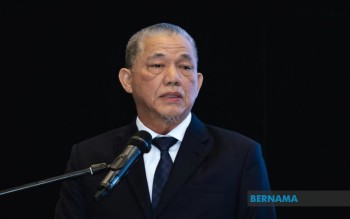
Deputy Prime Minister Datuk Seri Fadillah Yusof has unveiled an ambitious plan to breathe new economic life into Malaysia's retiring coal-fired power stations by repurposing them as centres for renewable energy generation and battery storage. Announced at the World Economic Forum's closing ceremony on Malaysia's energy future in Kuala Lumpur on July 2, the National Coal Site Repurposing Framework represents a strategic shift in how the government views the end of coal's dominance in the nation's electricity system. Rather than abandoning these locations once their coal operations cease, the framework treats them as valuable assets that can anchor the country's clean energy transition while sustaining local communities and workforce development.
The rationale behind this approach reflects both pragmatism and opportunity. Malaysia's existing coal infrastructure has accumulated significant national value over decades, encompassing well-established transmission networks, industrial facilities, and land parcels situated in locations chosen specifically for power generation logistics. Allowing these sites to fall into disuse would represent a substantial economic loss, with productive land and infrastructure becoming stranded assets. Fadillah emphasised that policymakers should instead recognise the latent potential embedded in these locations—the grid connections, transportation links, and engineering expertise—to underpin an entirely different energy paradigm than coal combustion.
The transformation into renewable energy hubs and battery energy storage systems offers multiple layers of economic value creation. Beyond generating clean electricity, these repurposed sites can become focal points for new manufacturing industries, supply chain development, and technical employment as Malaysia builds out its renewable sector. The framework document, developed in partnership with the World Economic Forum and outlined in the paper "Beyond Coal: Building a Flexible, Resilient and Clean Power System for Malaysia," provides the institutional scaffolding for coordinating action among government agencies, energy regulators, utility companies, investors, and local communities. This multi-stakeholder engagement is crucial, as successful repurposing depends on aligning the interests of profit-seeking enterprises, government decarbonisation goals, and the economic security of workers and regions dependent on coal operations.
Malaysia's commitment to this pathway sits within a broader energy timeline that carries significant weight across Southeast Asia. The government has pledged not to construct any new coal-fired power plants, to retire all coal-based electricity generation by 2044, and to reach 70 percent renewable energy in installed capacity by 2050. These targets are ambitious by regional standards, positioning Malaysia as a potential leader in power sector decarbonisation in ASEAN. However, Fadillah's remarks revealed an underlying anxiety that shapes this entire transition strategy: the danger of merely swapping one external fuel dependency for another.
Here lies a critical strategic insight that has profound implications for Malaysia and the broader region. Fadillah cautioned that if renewable energy deployment does not accelerate sufficiently to match the pace of coal retirement, Malaysia risks replacing coal reliance with expanded dependence on imported liquefied natural gas. This substitution would superficially appear to reduce emissions but would perpetuate Malaysia's structural vulnerability to global commodity prices and geopolitical disruptions beyond its control. The vision is therefore not simply decarbonisation in the abstract, but genuine energy autonomy—a power system increasingly anchored in domestically available resources like solar radiation rather than imported fuels subject to price shocks and supply chain manipulation. This framing appeals particularly to Southeast Asian policymakers concerned with energy security amid rising tensions over regional trade routes and resources.
To realise this vision, the Ministry of Energy Transition and Water Transformation is mobilising multiple tools simultaneously. Large-scale solar deployment remains the priority, given Malaysia's equatorial location and abundant sunshine. The Corporate Renewable Energy Supply Scheme enables major industrial consumers to procure clean power directly, creating market dynamics that encourage private investment in distributed generation. Battery energy storage systems address the intermittency challenges inherent in solar and wind power, allowing renewable generators to serve demand at times when the sun is not shining. Meanwhile, smart grid modernisation—digital systems that optimise power flows and balance supply with demand in real time—becomes increasingly essential as the proportion of variable renewable sources rises.
Regional integration forms another pillar of Malaysia's energy strategy. The ASEAN Power Grid initiative aims to interconnect national electrical systems across Southeast Asia, enabling countries to share electricity across borders and balance generation across the region's varied weather patterns and demand cycles. By facilitating cross-border electricity trade, this infrastructure could allow Malaysia to export renewable energy to neighbours during periods of surplus generation while importing power when local supply runs short. For a region vulnerable to supply disruptions and exposed to climate variability, this interconnectedness provides insurance and efficiency gains that individual national systems cannot achieve alone.
Beyond solar and storage, Malaysia is also exploring what Fadillah termed "long-term low-carbon energy options," explicitly naming advanced nuclear technologies and small modular reactors. This aspect of the energy roadmap reflects recognition that even aggressive renewable deployment may not be sufficient to decarbonise all end-uses by 2050, particularly in sectors like heavy industry and aviation where electricity alone proves inadequate. However, Fadillah stressed that any nuclear pathway must clear extraordinarily high bars: uncompromising safety standards, robust governance structures, demonstrated regulatory readiness, and genuine public confidence. These conditions are not trivial in the Malaysian context, where nuclear energy has historically faced public scepticism and where governance capacity for highly technical regulation remains contested.
The coal site repurposing framework thus emerges not as a peripheral element of energy transition management, but as central to Malaysia's effort to decouple economic development from imported fuel dependence while creating employment opportunities in new sectors. For Malaysian readers, the significance extends beyond energy markets into questions of long-term national resilience, workforce transitions in coal-dependent communities, and positioning within regional energy architectures. The success or failure of this framework will reveal whether Malaysia can manage one of the defining economic transformations of the coming decades—a lesson that neighbouring countries will watch closely as they confront their own coal retirement timelines.

