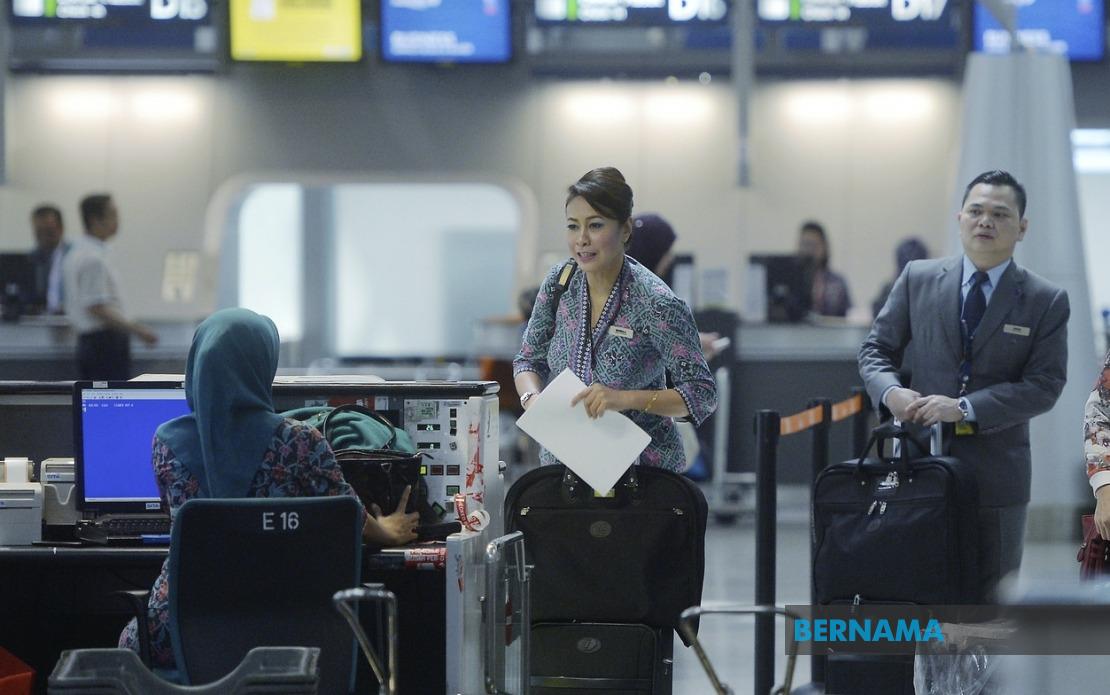
Malaysian aviation authorities have committed to overhauling security screening procedures for pilots and flight crew across the nation's airports, a move prompted by the recent arrest of a Malaysian pilot in Indonesia on allegations of attempting to smuggle narcotics. Datuk Seri Mohd Shuhaily Mohd Zain, director-general of the Malaysian Border Control and Protection Agency (AKPS), disclosed the enhanced measures following a high-level meeting convened by the Transport Ministry at Kuala Lumpur International Airport on August 3.
The inter-agency meeting, chaired by Transport Ministry secretary-general Datuk Seri Jana Santhiran Muniayan, brought together representatives from AKPS, the Royal Malaysia Police (PDRM), and Malaysia Aviation Group (MAG) to review and strengthen existing airport security frameworks. The gathering underscored the serious concerns within Malaysia's aviation sector regarding a security lapse that allowed a pilot to carry illicit substances through one of Southeast Asia's busiest international hubs. Mohd Shuhaily stressed that all relevant agencies are treating the incident with considerable gravity and are committed to implementing substantive improvements to current protocols.
The incident that triggered this review occurred on July 29 when a 39-year-old Malaysian pilot was apprehended at Soekarno-Hatta International Airport in Jakarta shortly after arriving on an international passenger flight originating from Kuala Lumpur. Indonesian customs authorities allegedly discovered approximately 25 kilogrammes of ecstasy, valued at roughly Rp60 billion (equivalent to approximately RM13.5 million), concealed in the pilot's luggage. The arrest marked a significant breach in air transport security, as the individual had successfully navigated screening procedures at Malaysia's primary international gateway before departing the country on July 28.
What has particularly concerned security officials is that the suspect passed routine baggage screening at KLIA without detection. Scanner imagery produced during standard security protocols failed to identify any suspicious items or contents within the pilot's luggage, permitting him to clear all checkpoint procedures and proceed to his flight. This failure represents a critical vulnerability in the existing security apparatus, especially given that pilots and crew members enjoy certain procedural advantages due to their operational necessity within airport environments. The fact that such a substantial quantity of controlled substances escaped detection through advanced scanning technology has prompted urgent calls for procedural revision.
Mohd Shuhaily indicated that authorities are still gathering information from PDRM investigations to understand precisely how the screening systems failed to detect the contraband. This forensic examination of existing procedures will form the basis for designing more robust detection mechanisms and verification protocols. The AKPS director-general confirmed that comprehensive reviews are underway to identify weaknesses in current equipment, procedures, and personnel training that may have contributed to the security breach.
The enhanced screening regimen will impose more extensive vetting requirements on all pilots, flight crew members, and airport staff with access to secure zones. Rather than relying solely on baggage scanners and routine checks, the revised framework will incorporate additional verification layers designed to catch sophisticated smuggling attempts. Authorities have not specified whether this will involve personal interviews, background checks, or deployment of additional detection technologies, though Mohd Shuhaily's emphasis on "comprehensive screening" suggests a multi-faceted approach beyond current standard procedures.
Malaysia Aviation Group's prominent involvement in the review process indicates serious commitment from the aviation industry itself to prevent future security incidents that could damage the reputation and operational integrity of the country's airlines. MAG, which operates major Malaysian carriers, recognises that security breaches involving its personnel pose substantial reputational and operational risks. The group's engagement suggests that enhanced screening procedures may ultimately extend to private airline-level protocols rather than remain exclusively a border control function.
This development carries significant implications for regional aviation security standards. Malaysia's response to the incident will likely influence how other Southeast Asian nations approach crew screening, particularly as air traffic continues to expand throughout the region. Indonesia's successful interception of the contraband demonstrates the effectiveness of destination-end security procedures, yet it also highlights the importance of preventing such incidents at point of departure. Countries across ASEAN are increasingly coordinating on aviation security matters, and Malaysia's experience will inform regional best practices.
The incident also raises questions about the adequacy of existing technological infrastructure at Malaysian airports. If advanced scanning equipment proved insufficient to detect 25 kilogrammes of controlled substances, authorities may need to reassess equipment specifications, calibration procedures, and operator training protocols. This could necessitate significant capital investment in upgraded systems or complementary detection technologies such as advanced trace detection or canine units specifically trained for narcotics identification among crew members.
Beyond technical measures, the enhanced screening framework will likely address procedural aspects such as random verification sampling, cross-checking of crew credentials against international databases, and coordination with law enforcement agencies during shift changes or operational transitions. The involvement of PDRM in the review process suggests that criminal intelligence gathering and risk profiling may become integral components of crew screening, moving beyond passive scanning toward active intelligence-led security practices.
For Malaysian aviation workers, the enhanced screening represents both a security necessity and a potential operational inconvenience. Pilots and crew members may face extended processing times as additional verification procedures take effect, though authorities will need to balance security imperatives with the operational efficiency requirements of commercial aviation. The industry will need clear guidance on how enhanced procedures translate into practical checkpoint operations without disrupting flight schedules or crew rotations.
The Transport Ministry's direct involvement in coordinating this response signals government-level recognition that aviation security is a critical national priority requiring sustained attention. Beyond this immediate incident, the enhanced screening framework may catalyse broader modernisation of airport security systems, including expanded international cooperation with regional and international aviation security bodies. Malaysia's proactive approach to addressing the breach demonstrates commitment to maintaining the integrity and reputation of its aviation infrastructure within a competitive regional market.
Authorities have indicated that implementation of the enhanced procedures will occur in the near term, though specific timelines and detailed operational parameters have not yet been publicly disclosed. The meeting outcomes suggest that a comprehensive protocol revision is underway, likely to be rolled out progressively across Malaysian airports to ensure consistent application and adequate training of personnel responsible for enforcement.

