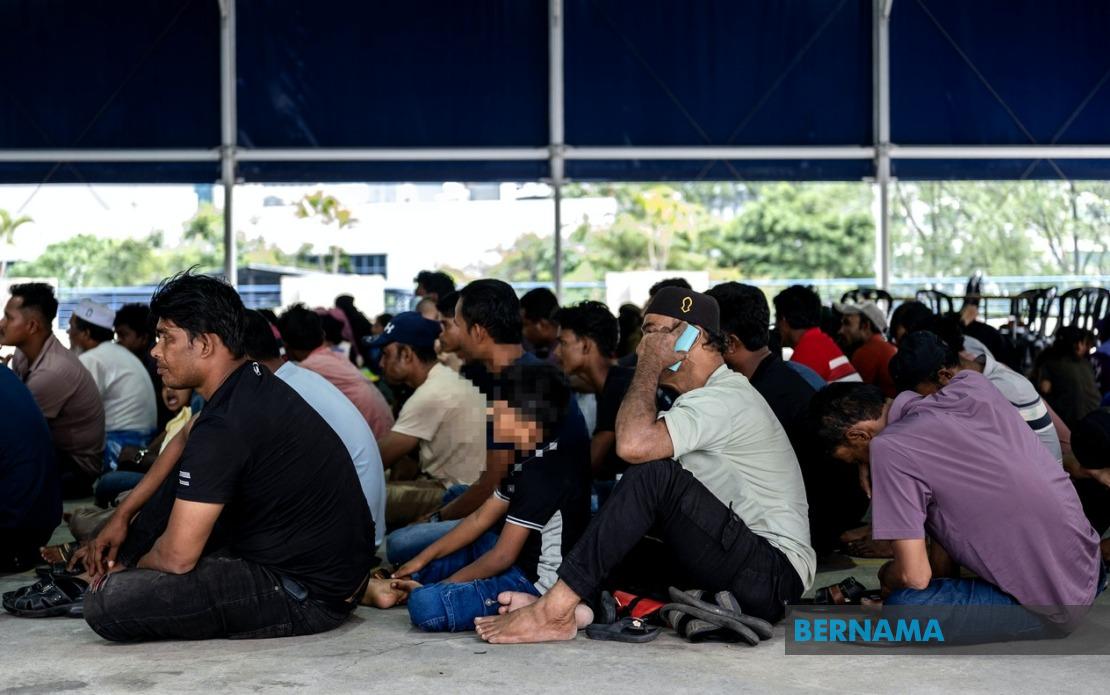
Malaysia will compile and present preliminary figures on Myanmar refugees currently registered under its identification system before the year concludes, according to Home Minister Datuk Seri Saifuddin Nasution Ismail. The announcement came during a public engagement in Putrajaya on Friday, where the minister indicated that the Immigration Department has been actively gathering comprehensive information on this vulnerable population with assistance from relevant government agencies and international partners.
The registration initiative, formally known as the Refugee Registration Document (DPP) programme, represents a systematic approach to cataloguing individuals who have fled conflict and persecution in Myanmar and sought refuge within Malaysian borders. By establishing verifiable records through biometric data collection and identity verification processes, the government aims to distinguish between those with genuine refugee claims and others who may lack legitimate status. This distinction has become increasingly important as Malaysia manages significant displacement pressures from neighbouring countries.
The data compilation effort aligns with National Security Council Directive No. 23 (Revision 2023), which sets the policy framework for managing foreign nationals claiming refugee protection. Officials have stressed that the registration programme serves multiple purposes: it allows the government to maintain accurate population statistics, enhances national security by identifying individuals within the country, and creates the administrative foundation necessary for considering repatriation or resettlement options. The Home Ministry has positioned this as a necessary step toward addressing what remains a complex humanitarian and administrative challenge.
Saifuddin Nasution emphasised that individuals formally recognised as refugees through the verification process will receive priority consideration for repatriation efforts coordinated by Malaysia's Foreign Ministry, known locally as Wisma Putra. This commitment signals that the government views the registration programme not as an indefinite solution but as a transitional measure enabling eventual return to Myanmar or resettlement in third countries. The repatriation pathway will depend on developments within Myanmar itself, particularly whether conditions permit safe and voluntary return of displaced persons.
The registration process requires active participation from the refugee population, who must come forward to provide information and submit to biometric recording. This creates a practical challenge, as many individuals living in informal settlements or marginalised communities may be unaware of the programme or reluctant to engage with government authorities due to fears about immigration enforcement or legal status. The Home Ministry has indicated plans to conduct outreach and public communication campaigns to encourage participation and explain the programme's benefits.
It remains notable that the DPP programme encompasses all refugees currently in Malaysia, not exclusively those from Myanmar. While Myanmar nationals constitute the largest refugee population in the country, other communities including those fleeing conflict in Afghanistan, Syria, and the Rohingya crisis in Bangladesh also fall under this registration framework. By treating refugee management as a unified system rather than country-specific responses, Malaysia positions itself as applying consistent principles to all displacement situations.
The fourth-quarter data release will provide Malaysian policymakers, regional partners, and international humanitarian organisations with concrete figures on refugee populations, enabling more informed policy discussions. Current estimates suggest tens of thousands of Myanmar nationals are present in Malaysia, though precise numbers remain uncertain. Once verified data becomes available, it will help clarify the scale of the humanitarian responsibility Malaysia has assumed and inform discussions about burden-sharing with ASEAN partners and international resettlement countries.
For Myanmar refugees themselves, the registration programme represents both opportunity and uncertainty. Recognition as a legitimate refugee offers potential pathways toward longer-term solutions, whether through repatriation once conditions improve in Myanmar or through third-country resettlement. However, the process also creates pressure points, as documented status makes individuals more visible to authorities and potentially subject to immigration enforcement if they remain unregistered or if their claims are denied.
Regional implications extend beyond Malaysia's borders, as other Southeast Asian nations monitor how Kuala Lumpur manages this situation. Thailand, which hosts significantly larger refugee populations, and Indonesia, which has experienced increasing refugee arrivals, will observe how Malaysia's registration approach balances humanitarian obligations with national security concerns. The data Malaysia releases could influence how other nations in the region approach similar challenges and shape discussions within ASEAN about collective responsibility for managing regional displacement.

