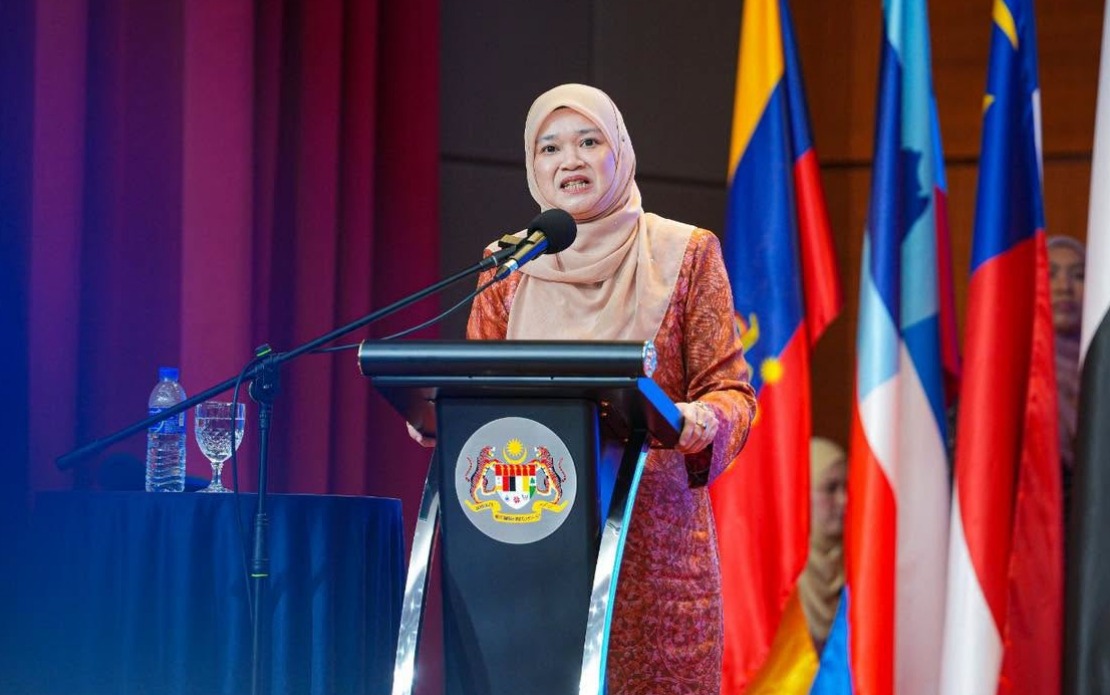
The Education Ministry is charting a new direction in educational inclusivity by formally recognising the co-curricular achievements of students studying within Malaysia's prison institutions, paving wider pathways to tertiary education. Education Minister Fadhlina Sidek announced the initiative while closing the 17th Hijrah Kasih Programme in Kajang, a collaborative effort between the ministry and the Malaysian Prison Department aimed at fostering educational and moral development among incarcerated youth. This move represents a significant shift in how the system views educational merit, signalling that accomplishment and personal growth should not be constrained by institutional boundaries.
The recognition framework extends beyond traditional academic performance to encompass participation in sports and other co-curricular activities, reflecting a holistic understanding of student development. Students who excel in these areas will have their achievements formally considered during university application reviews, creating tangible incentives for engagement and skill-building during their time in prison institutions. This approach acknowledges that young people in custody can develop leadership, discipline, and resilience through extracurricular pursuits—qualities that universities increasingly value in their admission processes. The move simultaneously demonstrates confidence in these students' capacity for rehabilitation and reintegration into society through higher education.
To operationalise this framework, the Physical, Sports and Co-curricular Assessment, or PAJSK, has become central to the ministry's strategy. Deputy director-general of Education Datuk Zainal Abas disclosed that the ministry aims to secure formal recognition of PAJSK scores this year, with implementation expected to benefit SPM candidates from 2027 onwards. Once approved, students from prison institutions will receive a 10 per cent merit boost in their university applications—a meaningful advantage that could determine admission outcomes, particularly in competitive fields. This timeline allows schools within prisons adequate preparation and ensures quality assurance across the assessment process.
Beyond sports and co-curricular activities, the ministry is simultaneously exploring vocational pathways for students in custody. The Technical and Vocational Education and Training division is examining the feasibility of awarding recognised skills certificates to students who complete training programmes while incarcerated. Many students acquire practical capabilities in areas such as sewing and food preparation, competencies that hold genuine market value upon release. Formalising these achievements through certificates creates tangible credentials that enhance employability prospects, addressing a critical challenge facing returning citizens who often struggle with labour market integration. This dual approach—academic merit recognition and vocational certification—offers multiple trajectories for educational and economic advancement.
The educational outcomes from prison institutions themselves have already provided compelling justification for these expansion efforts. Students at prison schools have achieved a 100 per cent pass rate in the Sijil Pelajaran Malaysia examination for two consecutive years, a performance that challenges prevailing stereotypes about incarcerated youth and their educational capacity. Fadhlina emphasised that this success fundamentally reflects individual determination rather than circumstance or location, noting that achievement depends on personal resolve rather than the physical environment in which learning occurs. These results offer policymakers clear evidence that investing in education for incarcerated youth yields measurable returns and demonstrates the fallacy of writing off any cohort as educationally unredeemable.
Digital learning has emerged as another critical frontier in bridging educational disparities between prison institutions and conventional schools. The ministry is working to extend access to DELIMa, the Digital Educational Learning Initiative Malaysia platform, to both teachers at integrity schools and Henry Gurney schools nationwide, as well as students themselves within controlled parameters. This initiative directly addresses concerns that incarcerated students might fall behind in curriculum innovation and contemporary teaching methodologies. By providing comparable digital learning infrastructure and access to online educational materials, the ministry seeks to ensure that geographic and institutional boundaries do not translate into educational disadvantage. The challenge lies in implementing secure access arrangements that maintain institutional safeguards while maximising pedagogical benefit.
The broader policy shift reflects recognition that higher education represents a powerful mechanism for social reintegration and crime prevention. When young people in custody can envision concrete pathways to university admission and stable careers, the incentive structure shifts toward rehabilitation and personal investment in futures outside the criminal system. Research internationally has consistently shown that education significantly reduces recidivism rates, making educational access during incarceration an investment in public safety as much as individual opportunity. Malaysia's approach acknowledges that removing barriers to educational advancement for this vulnerable population ultimately benefits broader society through reduced recidivism and enhanced human capital.
Parental engagement has been identified as another essential ingredient in this equation. Fadhlina highlighted that continued family support during imprisonment represents a critical protective factor, particularly during the most challenging periods of a young person's life. Parents who maintain regular contact, express belief in their child's potential, and encourage academic engagement substantially improve outcomes across multiple dimensions—from mental health to educational attainment. The ministry's messaging to parents recognises that family involvement need not cease at prison gates; rather, it must adapt and persist in new forms. This perspective potentially strengthens family relationships that might otherwise deteriorate under the stresses of incarceration.
For Malaysia's broader education sector, these initiatives signal an institutional commitment to educational equity that transcends traditional demographic categories. The prison student population, though numerically small, represents an important test case for inclusive policies and systemic reform. If the ministry successfully implements co-curricular merit recognition and vocational certification for prison students, similar frameworks might be adapted for other marginalised groups facing barriers to conventional educational pathways. The outcomes and implementation lessons will likely inform future policy conversations about how education systems can accommodate diverse student populations and create genuine second chances through formal credentials and university access.
The timeline ahead requires careful coordination across multiple ministry divisions and with Malaysian Prison Department stakeholders. Securing formal recognition for PAJSK scores, establishing vocational certification frameworks, rolling out DELIMa access, and building institutional capacity at prison schools all demand substantial implementation effort. Success depends on adequate resource allocation, staff training, and sustained political commitment beyond the current policy announcement phase. For young people currently studying within Malaysia's prison institutions, however, these developments represent a tangible expansion of hope—the prospect that their present circumstances need not permanently foreclose their educational futures or limit their contributions to society.

