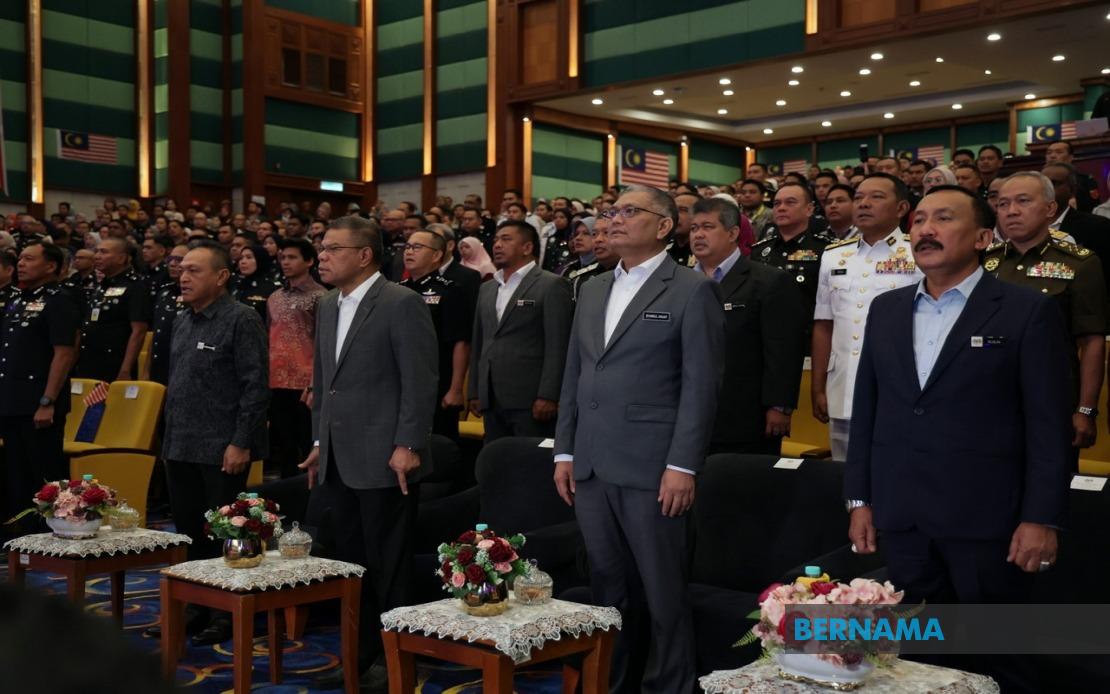
Malaysia is set to unveil a sweeping security overhaul at its international entry points, with Home Minister Datuk Seri Saifuddin Nasution Ismail announcing that a comprehensive plan will be tabled before Cabinet. The initiative, to be jointly presented with Transport Minister Anthony Loke, represents a coordinated government response to mounting concerns about vulnerabilities in border control mechanisms that have recently drawn public attention and criticism.
The blueprint was developed with remarkable urgency, compiled within a two-week timeframe following explicit Cabinet instructions to fortify controls across the nation's ports of entry. This accelerated timeline underscores the seriousness with which the government views recent security lapses, particularly incidents that have raised questions about the efficacy of screening procedures and inter-agency coordination at critical infrastructure points.
The catalyst for this initiative centres on a high-profile case involving a Malaysian pilot detained at Soekarno-Hatta International Airport in Indonesia after 25 kilogrammes of MDMA were discovered in his possession. The incident triggered immediate government concern about potential reputational damage and exposed what officials characterise as systemic weaknesses in border security protocols. Such breaches have intensified scrutiny of airport operations and prompted reassessment of how Malaysia safeguards its international gateways against smuggling operations.
A fundamental principle underlying the new approach is the elimination of what Saifuddin Nasution describes as "silo" operations—the fragmented institutional approach where different agencies operate independently rather than in coordinated fashion. The plan specifically emphasises strengthened coordination mechanisms among multiple governmental bodies, recognising that effective border security depends on seamless information-sharing and unified operational standards rather than disconnected departmental efforts.
The security enhancement strategy encompasses several technical and human resource dimensions. Improvements to personnel competency and training regimens feature prominently, alongside infrastructure modernisation. The plan addresses surveillance capabilities through enhanced closed-circuit television systems and the procurement or upgrading of scanning machinery. Officials have committed to conducting comprehensive assessments of current facilities to identify which areas require immediate investment and technological advancement.
For Malaysian readers concerned about airport operations and national security, this initiative signals heightened attention to a vulnerability that impacts both departure and arrival experiences. The involvement of both the Home Ministry and Transport Ministry ensures that security considerations integrate with operational logistics rather than functioning as purely investigative functions. This institutional alignment carries particular significance for Southeast Asia's aviation sector, where coordinated standards strengthen regional security architecture.
The investigation into the pilot's detention has yielded productive cooperation between Malaysian and Indonesian authorities, providing insights into the potential scope of smuggling operations. Police have conducted interviews with the suspect and are examining whether the incident represents isolated criminal conduct or indicates involvement with larger international trafficking networks. This investigative thread will inform understanding of whether security gaps at Malaysian entry points are being systematically exploited by organized operations.
The government's response reflects awareness that security incidents create perceptual consequences extending beyond immediate law enforcement dimensions. International travellers, aviation businesses, and diplomatic partners evaluate their engagement with Malaysia partly through assessment of border integrity and professional airport operations. A series of smuggling discoveries generates questions about operational standards that extend beyond the specific incidents themselves, making comprehensive security reform a matter of institutional credibility.
The coordinated nature of the plan—integrating expertise from Home Ministry agencies, Transport Ministry officials, and other relevant bodies—suggests recognition that border security requires multi-disciplinary approach. Different entry points present distinct security challenges requiring customised solutions; seaports, airports, and land crossings demand different surveillance technologies, screening protocols, and staffing configurations.
For Malaysia's trading partners and the regional business community, reliable border security constitutes critical infrastructure supporting commerce and tourism. Enhanced entry point controls, when implemented efficiently, can paradoxically facilitate legitimate travel and trade by reducing friction from necessary security measures. Modern scanning technology and trained personnel can screen passengers and cargo more rapidly while maintaining rigorous security standards.
The Cabinet presentation tomorrow will mark a formal institutional commitment to addressing the security deficiencies that recent incidents have highlighted. Implementation timelines, budgetary allocations, and specific operational benchmarks will likely follow, translating the strategic framework into concrete reforms. The quality of this implementation will substantially determine whether the plan achieves its objectives of preventing recurrence of smuggling incidents and restoring public and international confidence in Malaysia's border control systems.
As Southeast Asia navigates complex security challenges spanning transnational crime, terrorism risks, and trafficking operations, Malaysia's efforts to strengthen entry point controls contribute to broader regional security resilience. The comprehensive approach outlined by officials suggests policymakers recognise that effective border security requires sustained investment in technology, personnel, training, and inter-agency coordination—elements that demand ongoing resource commitment beyond initial reforms.

