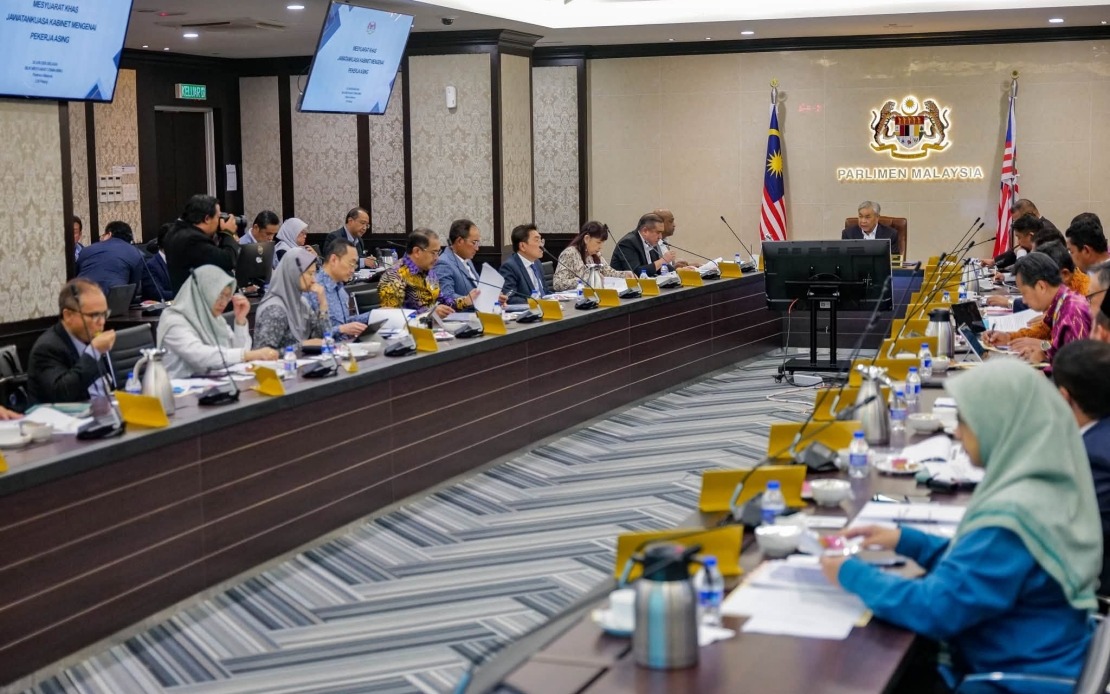
Malaysia's government plans a comprehensive restructuring of how it manages its foreign workforce, according to an announcement by Deputy Prime Minister Datuk Seri Dr Ahmad Zahid Hamidi following deliberations at Parliament. The overhaul aims to create a system that operates with greater coherence across agencies, delivers faster processing, and better aligns labour importation with what businesses actually require rather than historical patterns or outdated assumptions.
The Cabinet Committee on Foreign Workers, chaired by Ahmad Zahid, convened specially to chart this new direction. The gathering produced several significant decisions that will reshape institutional arrangements governing the roughly 1.9 million migrant workers currently employed across Malaysia's economy. The meeting addressed foundational matters including the composition of the committee itself and the operational guidelines that will govern its work going forward, signalling that the restructuring is intended to be fundamental rather than cosmetic.
Central to the reform agenda is the relocation of the One Stop Centre for Foreign Worker Management under the administrative umbrella of the Ministry of Human Resources. Previously, oversight of this facility—which serves as the primary interface between employers seeking foreign labour and the state apparatus controlling entry—was fragmented across multiple agencies. Consolidating responsibility within a single ministry reflects a recognition that coordination failures have created inefficiencies, delays, and opportunities for corruption.
Ahmad Zahid articulated the government's triple objective through his public statement: constructing a system simultaneously more efficient in its operations, more resistant to graft and malpractice, and better calibrated to national priorities. Those priorities encompass protecting domestic employment opportunities for Malaysians, preserving national security by knowing who is working where, and supporting industrial competitiveness. These aims can sometimes pull in different directions, yet the Deputy Prime Minister framed them as complementary rather than contradictory.
The government has committed to conducting a more rigorous assessment of labour market needs going forward. Rather than approving foreign worker quotas based on lobbying pressure or historical precedent, ministries will examine specific sectoral demands. This analytical approach should theoretically reduce the tendency to approve more migrant workers than industries genuinely require, a practice that has occasionally contributed to unemployment or underemployment among some categories of Malaysian workers while simultaneously creating overcrowding in certain migrant communities.
Paralleling these changes is a renewed emphasis on reducing Malaysia's structural dependence on imported labour. The government intends to accomplish this through three interconnected strategies: boosting local participation in the workforce by addressing barriers that keep Malaysians, particularly young people and women, outside employment; investing in skills training so that Malaysian workers can fill positions currently staffed by foreigners; and facilitating industrial modernisation through automation and technology adoption. These efforts will require investment and coordination between human resources agencies, education institutions, and industry bodies.
The timing of this restructuring reflects broader trends in the region and globally. Neighbouring countries including Thailand, Singapore, and Indonesia have grappled with similar challenges around foreign worker management—balancing employer demand for labour with concerns about job displacement, wage suppression, irregular migration, and worker exploitation. Malaysia's initiative suggests policymakers recognise that ad-hoc, fragmented approaches generate problems that eventually demand comprehensive intervention.
The announcement also signals an implicit acknowledgement that the previous system harboured structural problems. Complaints from civil society organisations, labour advocates, and foreign worker support groups have long documented bottlenecks at processing centres, inconsistent enforcement of regulations across states, and cases where foreign workers lacked proper contracts or fell victim to trafficking or wage theft. Consolidating the One Stop Centre under Human Resources Ministry oversight aims to establish clearer lines of accountability and more standardised practices.
For Malaysian employers, particularly those in construction, hospitality, agriculture, and domestic work, the restructuring carries both opportunities and risks. Streamlined processing could reduce hiring timelines and administrative burdens, but stricter assessment of actual labour needs might tighten quotas in sectors accustomed to relying heavily on migrant workers. Companies will need to adjust recruitment strategies and potentially invest in automation or training programmes to offset any reduction in foreign workers approved.
The restructuring also carries implications for Malaysia's international relationships. Several countries, including Bangladesh, Indonesia, and the Philippines, supply significant numbers of workers to Malaysia. Changes to recruitment practices, wage standards, or worker protections will inevitably affect these labour-exporting nations and may become subject to diplomatic discussions. Malaysia will need to balance domestic political imperatives with maintaining goodwill in labour-supplying countries.
Implementation of these reforms will demand coordination across multiple agencies including the Ministry of Human Resources, the Immigration Department, the Labour Department, and state governments, which retain certain powers over foreign worker permits. Creating seamless processes across this fragmented institutional landscape will prove challenging and will require clear directives, adequate resourcing, and accountability mechanisms to prevent backsliding into previous patterns.
The success of this restructuring will ultimately be measured by concrete outcomes: faster processing times, reduced irregular migration and trafficking, better matching of approved workers to genuine employer needs, and increased labour market opportunities for Malaysians. Ahmad Zahid's framing suggests the government recognises that managing foreign labour is not merely an administrative matter but a strategic issue affecting national development, social cohesion, and prosperity.

