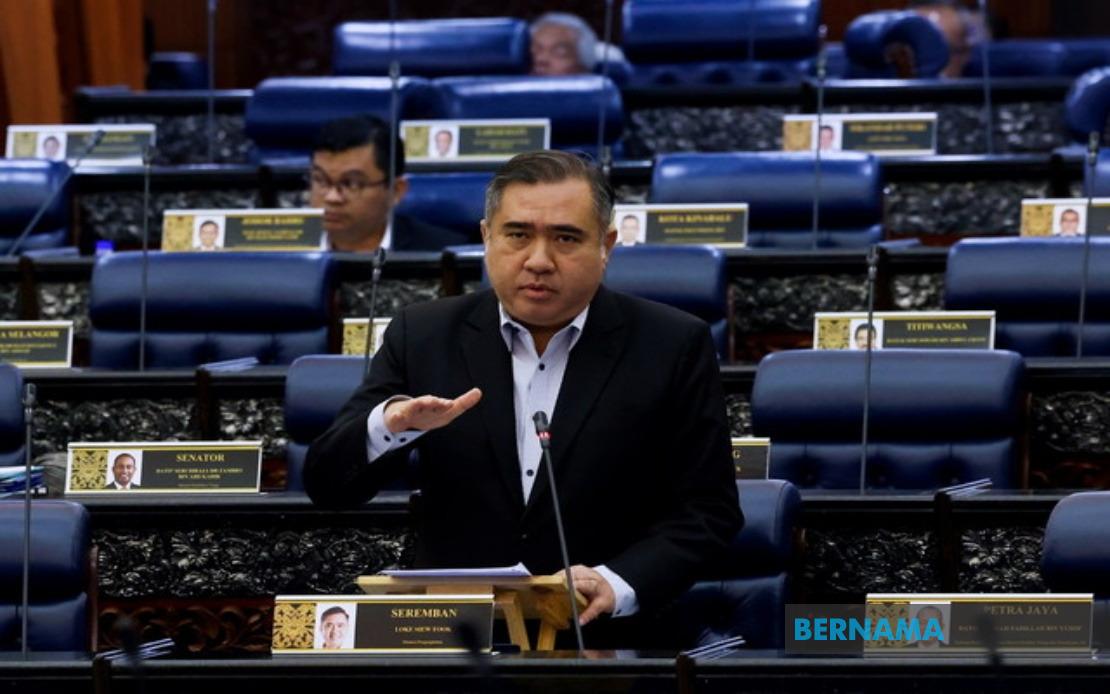
The Transport Ministry has unveiled plans to fundamentally reshape how the Malaysian legal system addresses the human cost of road accidents through a new compensation framework. Minister Anthony Loke announced in Parliament that proposed amendments to the Road Transport Act 1987 would empower courts to order individuals convicted of serious driving offences to compensate victims or their families based on case-specific circumstances. This legislative shift signals a departure from treating dangerous drivers as conventional traffic violators, instead positioning them within a framework that recognises the profound loss experienced by victims and their dependents.
Under the proposed mechanism, judicial officers will consider multiple factors when determining compensation awards, including the severity of injuries sustained or fatal outcomes, quantifiable losses incurred by victims' families, and the offender's financial capacity to pay. This multi-faceted assessment approach acknowledges that road accidents generate cascading economic and social consequences extending far beyond medical costs, encompassing lost income, psychological trauma, and long-term care requirements. By granting courts discretion to tailor compensation to individual circumstances rather than applying standardised penalties, the framework attempts to deliver proportionate justice while remaining sensitive to genuine financial constraints faced by some offenders.
The compensation proposal forms part of a broader legislative overhaul addressing illegal racing, a phenomenon that has claimed multiple lives and generated public outcry across Malaysia. The Road Transport (Amendment) Bill 2026, which already secured parliamentary approval, introduced a dedicated Section 42A creating a specific criminal offence for illegal racing activities. This represents a significant enforcement innovation because it enables authorities to apprehend and prosecute street racers before incidents result in casualties or property damage. Previously, the legal system could only intervene after accidents occurred, effectively treating prevention as impossible and reactive measures as the default approach.
Penalties under the new framework escalate substantially with repeat offences, reflecting legislative intent to deter persistent violators. First-time offenders face fines ranging from RM2,000 to RM10,000 or imprisonment up to two years, or both combinations. Those convicted of subsequent breaches encounter significantly harsher consequences, including fines between RM5,000 and RM20,000 coupled with potential imprisonment extending to five years. This graduated penalty structure aims to distinguish casual participants from habitual street racers, potentially targeting the organised networks that coordinate races and attract younger riders seeking thrill experiences or peer recognition.
The practical implications of this enforcement shift appeared evident in recent operations conducted by the ministry across Malaysian states. A Johor-focused enforcement drive resulted in 16 arrests and seizure of 260 motorcycles linked to illegal racing activities, demonstrating the ministry's capacity to execute sustained, intelligence-led operations against racing networks. These operations target the vehicles themselves through confiscation, removing the equipment enabling these dangerous activities and imposing direct financial penalties on participants beyond legal fines. Such multi-layered enforcement—combining criminal prosecution, vehicle seizure, and compensation orders—creates escalating consequences designed to dissuade potential participants while reassuring communities affected by illegal racing.
The legislative response gained particular urgency following a catastrophic incident on June 1 at Kilometre 27 of Jalan Renggam-Simpang Renggam in Johor that claimed five lives. The Attorney-General's Chambers directed that investigations proceed under Section 302 of the Penal Code, which addresses culpable homicide and carries potential life imprisonment, demonstrating escalating seriousness in prosecutorial approach. This departure from treating fatal racing accidents as ordinary traffic offences reflects shifting official recognition that street racing represents deliberate risk-taking with lethal consequences, deserving punishment calibrated to intentional harm rather than negligence categories.
Minister Loke emphasised that road safety requires coordination across government ministries and public institutions rather than isolated Transport Ministry efforts. This whole-of-government framing acknowledges that illegal racing flourishes within contexts shaped by youth demographics, urban infrastructure design, enforcement resource allocation, and cultural attitudes toward risk and masculinity. Addressing the phenomenon therefore demands contributions from education authorities promoting safe driving culture, urban planners designing streets discouraging high-speed racing, police forces providing consistent enforcement, and community organisations engaging young people through alternative recreational outlets. The call for cross-ministerial strategy recognises that purely legislative or enforcement responses prove insufficient without complementary investments in prevention, education, and community engagement.
Public awareness campaigns and behavioural change initiatives represent the third pillar of the ministry's articulated strategy. Malaysia's annual road fatality toll exceeds 6,000 deaths, positioning the country among globally problematic road safety jurisdictions despite economic development and infrastructure investments. These deaths concentrate among younger road users and vulnerable groups including motorcyclists and pedestrians, suggesting that technological safety advances in vehicles and road infrastructure have not adequately compensated for risky driving behaviours. Loke's emphasis on societal will rather than solely political will suggests recognition that government cannot legislate away cultural attitudes valuing speed, risk, and individual assertion over collective safety.
The proposed compensation mechanism carries particular significance for Malaysian families managing the financial devastation following fatal road accidents. In developing economies, primary earner deaths create immediate household crises as families lose income streams and accumulate unexpected medical and funeral expenses. Court-ordered compensation provides formal recognition of these losses and creates enforceable legal obligations rather than relying on insurance claims or civil suits requiring victims' families to independently navigate complex litigation. This mechanism potentially addresses gaps in Malaysia's insurance system where uninsured drivers or underinsured offenders have historically escaped accountability for genuine losses imposed on victims.
Implementing the compensation framework will test Malaysian courts' capacity to assess complex economic damages and enforce awards against offenders with limited financial means. Experience from other jurisdictions suggests that compensation ordered by courts frequently remains unpaid when offenders lack employment or assets. The Transport Ministry may need to develop mechanisms enabling victim compensation from state resources or specialised funds when offenders cannot pay, ensuring that legislation translates into tangible assistance rather than symbolic justice. Insurance-based approaches mandating coverage for uninsured driver liabilities represent potential complementary mechanisms worth considering.
The emphasis on avoiding politicisation of road safety suggests awareness that enforcement campaigns sometimes become contentious when targeting specific demographics or communities disproportionately. Street racing enforcement necessarily focuses on motorcyclists and younger urban residents, groups potentially characterised by particular ethnic, socioeconomic, or geographic concentrations. Loke's appeal for bipartisan commitment to road safety indicates concern that opposition parties might weaponise enforcement patterns or legislative approaches for political advantage rather than supporting genuinely protective measures. This concern reflects Malaysian politics' tendency toward polarisation even on ostensibly non-partisan safety matters.
The broader regulatory trajectory signals Malaysia's movement toward stricter liability frameworks and enhanced victim protections within road transport law. This parallels global trends where jurisdictions increasingly recognise that addressing road safety requires shifting liability toward drivers as decision-makers rather than accepting accidents as inevitable consequences of motorisation. The compensation mechanism, combined with enhanced criminal penalties and proactive enforcement authority, represents deliberate policy choice prioritising victim welfare and offender accountability over considerations of driver convenience or lenient treatment. Whether this legislative framework translates into measurable reductions in illegal racing and associated casualties depends substantially on enforcement consistency, court cooperation, and sustained public messaging supporting behavioural change.

