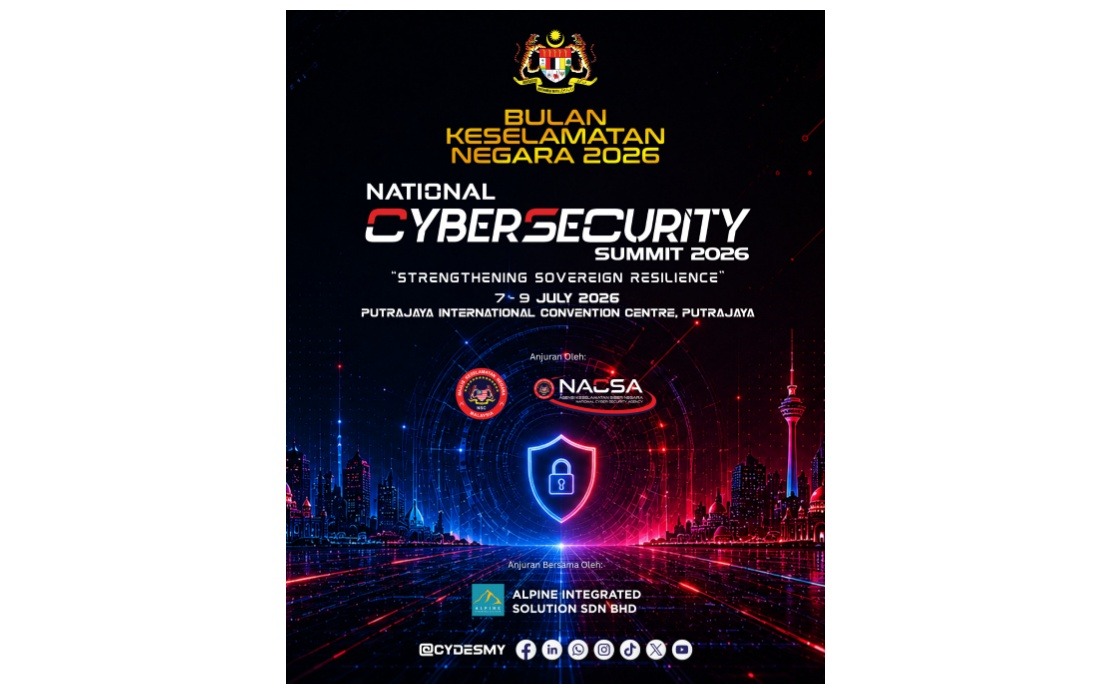
Malaysia will host the National Cyber Security Summit (NCSS) 2026 from July 7 to 9 at the Putrajaya International Convention Centre (PICC), an event organised by the National Cyber Security Agency (NACSA) operating under the National Security Council (MKN) within the Prime Minister's Department. The three-day gathering represents a significant milestone in the country's efforts to fortify its digital defences against mounting cyber threats in an increasingly interconnected world.
The timing of the summit carries particular strategic weight. The Cybercrimes Bill 2026 gained parliamentary approval from the Dewan Rakyat on July 1, just days before the summit convenes. This legislative achievement reflects years of work to establish a comprehensive legal framework addressing cyber offences. The bill represents a tangible outcome of implementing the Malaysian Cyber Security Strategy (MCSS) 2025-2030, a roadmap that guides national cyber security efforts across government and private institutions over the five-year period.
Under the banner "Strengthening Sovereign Resilience," NCSS 2026 will bring together a diverse constellation of stakeholders including government officials, corporate executives, technology practitioners and academic researchers. The summit aims to catalyse collaborative approaches to building a secure, trusted and resilient cyber ecosystem at the national level. For Malaysia, cyber security has evolved from a technical concern into a matter of strategic importance, affecting economic stability, national security and public confidence in digital services.
The scope of the summit is substantial. Organisers have programmed 41 high-impact sessions covering multiple dimensions of cyber security. These include discussion forums centred on the MCSS framework, dedicated sessions on cyber crime, conventions for information and communications technology security officers, initiatives focused on women's participation in the cyber security field, specialised KRYPTECH sessions, technical presentations and closed-door workshops. This varied programming reflects recognition that effective cyber security requires engagement across multiple professional disciplines and expertise levels.
The calibre of participation underscores the summit's significance within regional and national contexts. A roster of 96 speakers and panellists representing government agencies, private sector organisations, law enforcement bodies, technology firms and academic institutions will share expertise and insights. The event will attract 122 companies—78 from Malaysia and 44 from seven other countries—demonstrating international interest in Malaysia's cyber security trajectory. Alongside these formal participants, the summit expects to welcome approximately 250 distinguished local guests and around 3,000 attendees comprising conference delegates and trade visitors.
Three major policy initiatives will receive their formal launch during the summit, with Prime Minister Datuk Seri Anwar Ibrahim scheduled to present them. The National Security Policy (DKN) 2026-2030 will articulate Malaysia's broader security vision for the coming half-decade. The National Cryptography Policy, branded as MyKriptografi, together with its associated action plan covering 2026-2030, will establish governance frameworks for encryption and cryptographic standards—critical infrastructure for protecting sensitive communications and data. Additionally, the Artificial Intelligence Systems Cybersecurity Framework (AISCF) addresses emerging vulnerabilities associated with artificial intelligence deployment, an increasingly urgent concern as organisations integrate AI into critical operations.
The summit's integration with National Security Month (BKN) amplifies its messaging about collective responsibility for digital safety. By positioning cyber security within the broader national security conversation, policymakers are signalling that threats in cyberspace warrant the same strategic attention and coordinated response as traditional security challenges. This elevation reflects evolving threat landscapes where cyber attacks can disrupt essential services, compromise government systems and damage economic assets with consequences comparable to conventional security incidents.
For Malaysia and the Southeast Asian region, this summit exemplifies how mid-sized developing economies are moving beyond reactive responses to cyber threats toward proactive, comprehensive strategies. The involvement of international companies and delegations from multiple countries indicates that Malaysia seeks to position itself as a regional leader in cyber security governance and innovation. Regional peers are watching how Malaysia implements frameworks like AISCF and MyKriptografi, potentially learning from or adopting similar approaches.
The emphasis on cross-sector collaboration reflects pragmatic recognition that cyber security cannot be achieved through government action alone. Private companies operate the vast majority of digital infrastructure and hold critical data. Academic institutions generate research and train the next generation of specialists. Enforcement agencies detect and investigate attacks. By convening these constituencies at NCSS 2026, Malaysia aims to forge networks and mutual understanding that translate into coordinated action beyond the summit itself. Information sharing between government and industry, often hindered by confidentiality concerns or competitive dynamics, becomes more feasible when relationships have been cultivated through such forums.
The prominence accorded to women in cyber security, evidenced by dedicated programming, acknowledges both current gender disparities in the field and recognition that talent development requires inclusivity. Cybersecurity expertise shortages affect Malaysia and most other countries. By encouraging women's participation and leadership, the summit addresses both a social imperative and a pragmatic workforce development need.
Malaysia's cyber security posture has material implications for foreign direct investment, supply chain integration and digital commerce. Multinational corporations considering Malaysia as a regional hub for operations must evaluate the country's capacity to protect their systems and data. The comprehensive approach demonstrated by NCSS 2026 and the legislative and policy initiatives being launched provide assurance that Malaysia is serious about cyber governance. This institutional commitment can influence investment decisions and enhance Malaysia's competitiveness against regional alternatives.
As digital transformation accelerates across government services, financial systems, telecommunications networks and industrial operations, the sophistication of cyber threats increases correspondingly. Criminal organisations, state-sponsored actors and independent hackers continually develop new techniques to exploit vulnerabilities. NCSS 2026 provides a platform for Malaysia to assess threat landscapes, share intelligence on emerging attack vectors and collectively strengthen defences. The summit's emphasis on strategic partnerships and concerted action across sectors suggests that Malaysian leaders understand cyber security as fundamentally a coordination problem requiring sustained collaboration rather than siloed efforts by individual organisations.

