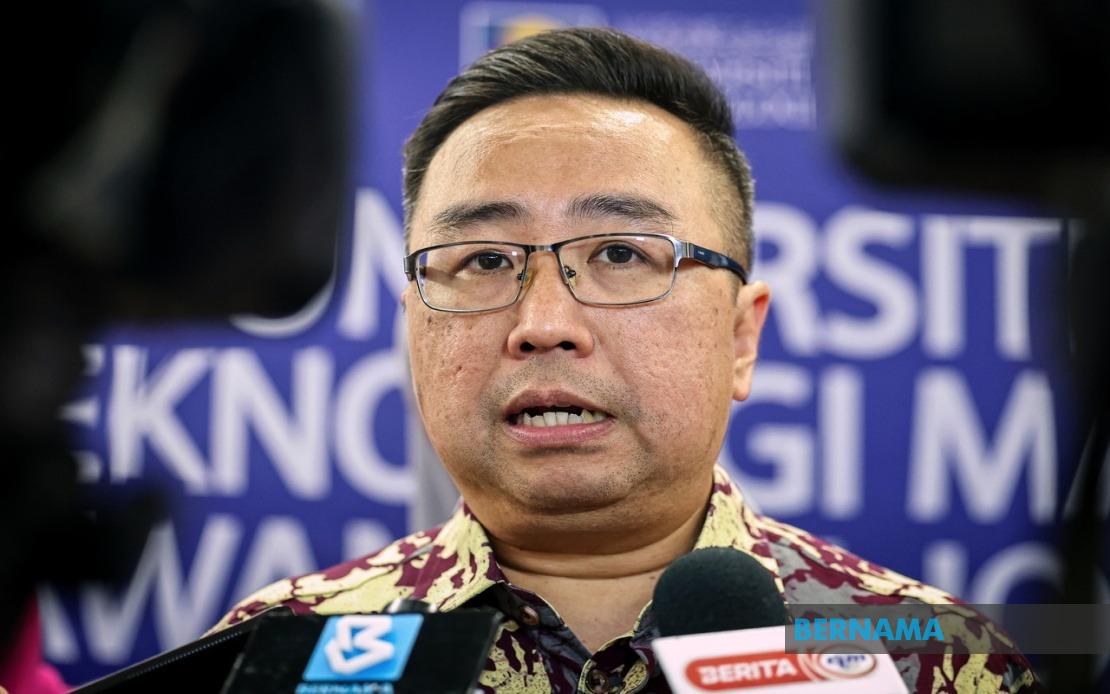
Malaysia will host the 23rd ASEAN Ministerial Meeting on Science, Technology and Innovation (AMMSTI-23) in June 2027, a significant responsibility that underscores the country's growing role in shaping the region's science and technology agenda. The Ministry of Science, Technology and Innovation (MOSTI) has signalled that this hosting duty will be coupled with an ambitious domestic focus on developing skilled talent, recognising that innovation ecosystems thrive only when supported by a capable workforce capable of driving strategic initiatives.
Datak Chang Lih Kang, the ministry's head, articulated MOSTI's multifaceted approach during remarks following the MOSTI TechTalks Series 2/2026 programme in Johor Bahru. The minister emphasised that cultivating scientific and technological talent represents a cornerstone of Malaysia's competitive positioning in an increasingly knowledge-intensive global economy. Without a robust pipeline of skilled professionals—from researchers and engineers to technicians—the nation risks squandering opportunities to capitalise on foreign direct investment in high-value manufacturing and digital industries, sectors that command premium wages and generate substantial export revenues.
Beyond talent cultivation, MOSTI has identified six priority technology domains warranting concentrated national effort: energy transition, artificial intelligence, digitalisation, advanced materials, nanotechnology including hydrogen applications, and biotechnology. This portfolio reflects both global megatrends and Malaysia's particular comparative advantages. The energy transition agenda aligns with Malaysia's commitments under various international climate accords and the imperative to decarbonise its economy whilst maintaining industrial competitiveness. Meanwhile, hydrogen and advanced materials represent adjacencies to the country's existing petrochemical and manufacturing sectors, suggesting pathways for industrial evolution rather than wholesale economic dislocation.
The inclusion of artificial intelligence and digitalisation underscores MOSTI's understanding that these technologies are no longer specialised domains but fundamental enabling platforms reshaping every sector from healthcare to agriculture to financial services. Biotechnology, meanwhile, offers Malaysia leverage in pharmaceuticals, agricultural innovation, and potentially the emerging field of synthetic biology—areas where Southeast Asia possesses biological diversity and technical capacity that wealthier nations increasingly value. This thematic coherence suggests strategic thinking rather than ad-hoc technology chasing.
Crucially, MOSTI's commitment extends beyond its immediate purview into technical and vocational education and training (TVET), an area nominally overseen by other ministries but recognised as foundational to translating scientific advances into practical economic outcomes. This cross-ministerial approach reflects an evolution in policy thinking: innovation policy divorced from workforce development yields laboratories full of discoveries that cannot be scaled or commercialised because the skilled trades lack adequate pipeline. Chang articulated a vision for TVET curricula substantially recalibrated to encompass robotics, coding, and artificial intelligence applications rather than remaining tethered to conventional technical training methodologies.
The collaboration framework encompasses twelve ministries—including Education, Higher Education, Rural and Regional Development, and Human Resources—indicating recognition that talent development cannot be siloed within any single institutional structure. This networked governance approach, whilst administratively complex, suggests a maturation beyond fragmented sectoral policies. However, implementation will test whether inter-ministerial coordination can overcome bureaucratic inertia and resource competition that historically undermines such initiatives throughout Southeast Asia.
The TechTalks initiative itself serves as MOSTI's engagement vehicle with university cohorts, a deliberate strategy to ensure that Malaysia's science and technology trajectory resonates with emerging professionals at the critical juncture when they are forming career preferences and intellectual commitments. By platforming discussions of the nation's STI agenda on campus, MOSTI attempts to create alignment between institutional capacity-building investments and labour market realities. Students exposed to clarity regarding sectoral priorities can direct educational choices accordingly, ideally reducing the mismatch between graduate qualifications and employer requirements that constrains many developing economies.
The timing of these announcements carries regional significance beyond Malaysia. AMMSTI-23 in 2027 provides a deadline and framework for demonstrating tangible progress in the identified priority areas. Other ASEAN members hosting previous iterations have leveraged the platform to showcase national achievements and attract subsequent regional investments or collaborations. Malaysia's preparation period can be utilised to position itself as the region's credible innovator in hydrogen technology, AI application, and advanced manufacturing—positioning that creates diplomatic capital and economic opportunity simultaneously.
For Malaysia's competitive standing within ASEAN, investing visibly in talent and technology infrastructure sends signals to multinational corporations deliberating regional headquarters locations and research facility placements. Singapore's entrenchment as the region's financial hub rests partly on sustained public investment in human capital and innovation ecosystems. Thailand and Indonesia harbour aspirations to elevate technological capacity, creating competitive pressures. Malaysia's explicit prioritisation of talent development and emerging technology domains represents an attempt to delineate competitive advantages in specific high-value sectors rather than contending broadly across all technology frontiers where resource constraints limit effectiveness.
The emphasis on hydrogen and energy transition also positions Malaysia advantageously within global decarbonisation trends. As automotive and energy companies worldwide restructure supply chains to align with net-zero commitments, Malaysia's investments in hydrogen technology and advanced materials could attract facilities seeking suppliers demonstrating credible green credentials. TVET curriculum enhancements incorporating robotics and AI are not merely pedagogical improvements but investments in the technical expertise that automated, digitally-enabled manufacturing increasingly demands.
Yet challenges remain substantial. Malaysia competes with more developed economies for talent retention; graduates with world-class training often emigrate to higher-wage markets in North America, Europe, and wealthy Asia-Pacific neighbours. Converting policy commitments into functioning educational institutions and thriving research clusters requires sustained, multi-year funding and political protection from budget cycles and administrative transitions. The twelve-ministry coordination framework is ambitious but vulnerable to drift if execution leadership lapses or competing priorities divert resources.
Nevertheless, MOSTI's articulated strategy demonstrates sophisticated recognition that sustainable competitive advantage in the twenty-first century derives from interweaving education, research capability, strategic industrial development, and targeted international engagement. Malaysia's willingness to host AMMSTI-23 and simultaneously advance its domestic science and technology agenda suggests institutional capacity and political commitment that merit monitoring. Success would position the nation as a credible innovator and technology hub within ASEAN, with spillover benefits for attracting talent, investment, and regional influence.

