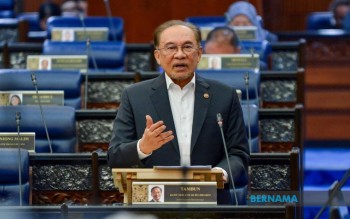
The Malaysian government is embarking on a detailed examination of establishing a strategic national petroleum reserve as part of a broader push to fortify the country's energy independence and resilience in an increasingly volatile global landscape. Prime Minister Datuk Seri Anwar Ibrahim disclosed the initiative following the inaugural National Energy Council Meeting of 2026, which he presided over in Kuala Lumpur on July 15. The decision reflects mounting concerns about geopolitical tensions and the fragility of international energy supply networks, factors that have become increasingly significant for resource-dependent economies in the region.
The petroleum reserve initiative sits within a comprehensive overhaul of Malaysia's energy strategy centred on the National Energy Transition Roadmap (NETR). Anwar emphasised that the government remains committed to advancing this transition in a methodical and results-driven manner, recognising that energy security and environmental sustainability are interconnected imperatives. A strategic reserve would act as a buffer against external shocks, protecting Malaysia's economy and ensuring continuity of essential services during periods of international supply disruption or price volatility. For a nation heavily dependent on energy imports and with substantial domestic petroleum production, this reserves system could prove invaluable in navigating unpredictable market conditions and maintaining economic stability.
Progress on renewable energy expansion demonstrates tangible momentum in Malaysia's broader energy transition goals. As of December 2025, renewable energy sources now account for 31 per cent of the country's installed generation capacity, marking a significant stride in reducing reliance on coal-generated electricity. This expansion has been facilitated through strategic government interventions and policy frameworks designed to attract private investment into clean energy projects. The Prime Minister highlighted the successful rollout of the Corporate Renewable Energy Supply Scheme (CRESS), which allows businesses to source renewable power directly while managing variability through Battery Energy Storage System (BESS) technology. This integration of storage capabilities addresses a persistent challenge in renewable energy deployment—the intermittency of wind and solar generation—and strengthens the overall stability of the electrical grid.
Transportation represents another critical frontier in Malaysia's energy transition strategy. The government has continued promoting B15 biodiesel adoption across the transport sector, gradually shifting vehicle fleets toward more sustainable fuel options. This initiative gains further momentum through Petronas' establishment of a dedicated biofuel production hub in Pengerang, Johor, positioning Malaysia to leverage its agricultural and petrochemical infrastructure for the development of environmentally friendlier transportation fuels. The Pengerang facility could eventually support regional demand for biofuels, potentially creating export opportunities and positioning Malaysia as a leader in sustainable fuel innovation within Southeast Asia.
Public transport electrification is advancing at a measured pace that reflects Malaysia's commitment to reducing transport-sector emissions. The government has deployed 250 electric buses across urban centres nationwide, while simultaneously expanding rail infrastructure coverage to 800 kilometres, facilitating a shift from private vehicle use to cleaner mass transit options. These complementary investments in electric and rail-based transport create integrated urban mobility networks that reduce both carbon emissions and traffic congestion. Cities like Kuala Lumpur and Penang are benefiting from these expanded transit options, though broader challenges around maintenance, operator training, and grid capacity expansion remain ongoing considerations.
Hydrogen technology represents Malaysia's most forward-looking energy venture, with the Autonomous Rapid Transit (ART) system in Sarawak positioned as a pilot project for hydrogen hub development. Phase 1 of this Sarawak initiative is scheduled for completion by year-end 2026, signalling that hydrogen fuel-cell technology is transitioning from theoretical proposition to practical implementation within Malaysia's transport infrastructure. Hydrogen presents particular promise for heavy-transport applications and industrial processes where electrification faces technical or economic constraints, and Sarawak's development corridor makes it an appropriate testbed for this emerging technology. Successful execution of the hydrogen hub could position Malaysia at the forefront of hydrogen adoption in Southeast Asia and attract international investment in related technologies and manufacturing.
The confluence of these energy initiatives reveals a sophisticated, multi-track approach to addressing Malaysia's long-term sustainability and security concerns. Rather than pursuing a single technological pathway, the government is diversifying its energy sources and supply mechanisms, reducing vulnerability to disruptions in any particular sector or supply chain. This diversification strategy mirrors approaches adopted by other regional and global economies facing similar energy transition pressures. The petroleum reserve study must be understood within this broader context—it serves as an insurance policy ensuring that as Malaysia transitions away from fossil fuels, it maintains adequate reserves to manage short-term energy demands and market volatility.
Geopolitical considerations underpin much of this strategic rethinking. Middle Eastern tensions, supply chain vulnerabilities exposed by recent global crises, and the potential weaponisation of energy supplies by state actors have prompted reassessment among energy-importing nations. Malaysia's geographic position in one of the world's most strategically contested regions amplifies these concerns. A national petroleum reserve would provide the government with strategic flexibility during international crises, enabling Malaysia to stabilise domestic fuel prices and ensure continuous supply to critical sectors including healthcare, transportation, and utilities.
Implementing these energy strategies carries significant fiscal and logistical implications. Renewable energy expansion requires sustained investment in grid modernisation, energy storage infrastructure, and workforce training. Transportation electrification demands substantial capital for vehicle procurement and charging networks. Hydrogen development necessitates entirely new industrial ecosystems and technological expertise. The petroleum reserve initiative would require construction of storage facilities and capital allocation, adding further to the government's energy transition expenditures. Successfully balancing these investments while maintaining fiscal sustainability represents a key policy challenge for the coming years.
The institutional framework established through the National Energy Council meetings provides regular oversight and strategic direction for these initiatives. With the council now convening as the primary forum for energy policy coordination, the government signals that energy transition is a central priority deserving sustained political attention and cross-agency collaboration. This governance arrangement facilitates integration between transport, industrial, renewable energy, and reserve strategies that might otherwise develop in isolation.
For Malaysian businesses and consumers, these developments carry tangible implications. The renewable energy transition and transport electrification will gradually reshape energy costs and availability over coming years. Corporate actors increasingly reliant on renewable power should monitor CRESS opportunities and battery storage capabilities. Transport operators and fleet managers must anticipate the expanding biofuel requirements and eventual electrification timelines. Investors focused on clean technology, hydrogen infrastructure, and energy storage stand to benefit from government prioritisation of these sectors.
Regionally, Malaysia's energy strategy contributes to broader Southeast Asian efforts to reduce carbon emissions and enhance energy independence. Successful implementation of these initiatives could establish Malaysia as a reference point for other developing economies navigating the energy transition, while the hydrogen hub in Sarawak might anchor regional cooperation in emerging fuel technologies. As geopolitical uncertainties persist and climate imperatives intensify, the decisions made through mechanisms like the National Energy Council Meeting will shape not only Malaysia's energy future but its competitive position within a rapidly evolving global economy.

