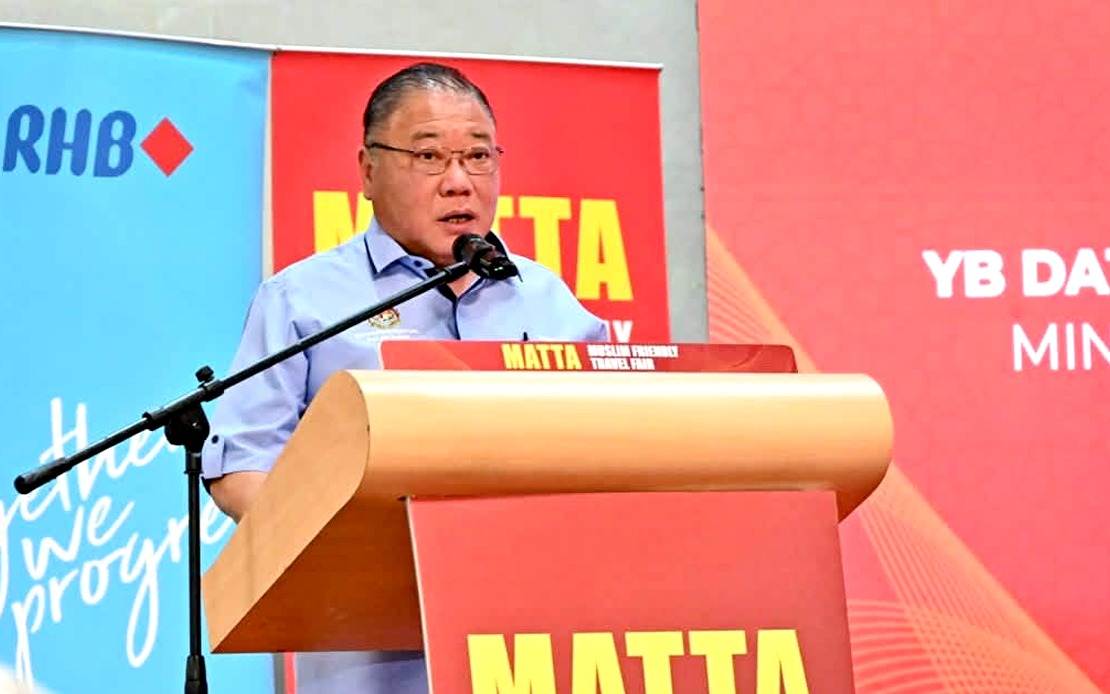
The Malaysian government is moving to establish a floor price structure for umrah packages, coupled with mandatory service quality standards, in an effort to shield pilgrims from exploitative travel operators offering dangerously discounted religious journeys. Datuk Seri Tiong King Sing, the Minister of Tourism, Arts and Culture, unveiled the initiative at the opening of the Malaysian Association of Tour and Travel Agents (MATTA) Muslim Friendly Travel Fair 2026 in Kuala Lumpur on July 4, signalling a hardened regulatory stance after consultations with key stakeholders including Tabung Haji and the Religious Affairs portfolio within the Prime Minister's Department.
The proposed mechanism represents a departure from the current open-market approach, which has allowed travel companies to compete aggressively on price without corresponding transparency about what services pilgrims will actually receive. Tiong emphasised that operators will be required to maintain a clearly defined minimum threshold below which umrah packages cannot be priced, while simultaneously providing comprehensive disclosure of the facilities, accommodation, meals, transport, and religious guidance included in each offering. This dual requirement aims to eliminate the information asymmetry that currently leaves many Malaysian Muslims vulnerable to purchasing incomplete or sub-standard packages.
The urgency driving this policy reflects real concerns about pilgrims stranded abroad or unable to perform essential rites due to inadequate arrangements. Tiong articulated the problem with striking clarity, noting that the government cannot tolerate situations where Malaysians travel for umrah only to find themselves unable to return home, or arriving at the holy sites without the logistical support necessary to complete their religious obligations. These scenarios, though perhaps not endemic, have generated sufficient public concern and ministry-level attention to warrant structured intervention in what has long been a relatively unregulated sector dominated by hundreds of competing operators.
Under the new framework, travel operators will retain flexibility to differentiate their offerings through tiered categories such as Premium, Gold, Silver, and Platinum packages—allowing consumers to choose according to their budgets and preferences. However, each tier will have a government-mandated floor price that reflects a realistic cost of providing the services promised in that category. This approach balances consumer choice with consumer protection, preventing a race to the bottom in pricing while preserving market competition around service quality and amenities rather than price alone.
The policy also reflects broader concerns about Malaysia's competitive position in the burgeoning Muslim-friendly tourism market. Tiong highlighted that regional and international competitors are rapidly enhancing their offerings to capture a share of the lucrative Muslim travel segment. He cited Macau as a noteworthy example of a destination investing heavily in halal dining infrastructure, prayer facilities in airports, Muslim-friendly hotel options, and targeted promotional materials for Islamic visitors—capabilities that Malaysia, despite its historical advantages as a Muslim-majority nation, cannot take for granted.
This competitive dynamic is significant for Malaysia's economy and soft power. The umrah market alone represents substantial revenue for both travel operators and ancillary service providers, while the broader Muslim-friendly tourism ecosystem—encompassing halal dining, Islamic banking services, prayer facilities, and cultural experiences—has become a strategic industry for many Southeast Asian and international destinations. Malaysia's failure to maintain regulatory standards and service quality in the umrah segment risks eroding its reputation as a reliable destination for Muslim travellers, particularly as word-of-mouth experiences with rogue operators spread across digital networks and diaspora communities.
The government's approach also implies a recognition that industry self-regulation has been insufficient. Despite the existence of professional associations and codes of conduct, the proliferation of budget packages and occasional reports of stranded pilgrims suggest that market forces alone have not adequately protected consumers. By introducing minimum pricing backed by regulatory enforcement, the government is essentially declaring that the cost of a quality umrah experience cannot be compressed below a certain threshold without degrading the product, and that consumers deserve protection from operators who pretend otherwise.
Implementation will likely involve coordination between Tiong's ministry, Tabung Haji—which plays a central role in pilgrimage services—and possibly the Ministry of Domestic Trade and Cost of Living or other enforcement agencies. The practical challenge will involve defining minimum prices for each tier without inadvertently pricing out lower-income Malaysians or stifling competition among responsible operators. Regulators will need to conduct cost-of-service analyses for accommodation, meals, transport, guides, insurance, and other components to establish defensible floor prices.
The timing of this announcement, made at a tourism industry fair, also sends a signal to the travel trade that standards tightening is imminent. Operators who have relied on razor-thin margins and aggressive pricing will need to recalibrate their business models, potentially consolidating costs, improving efficiency, or shifting towards service differentiation. This transition period may provoke some industry resistance, particularly from smaller operators, though larger and more established companies with robust cost structures may welcome clear regulatory parameters that reduce destructive price competition.
For Malaysian pilgrims, the policy holds genuine promise. A minimum pricing floor coupled with transparent service specifications should reduce the incidence of unexpected poor conditions, financial loss, or incomplete religious experiences. However, effectiveness will ultimately depend on consistent enforcement, transparent complaint mechanisms, and periodic audits of operator compliance. The government must also consider how the policy might affect the accessibility of umrah for lower-income groups, potentially requiring targeted subsidies or affordable tier options to ensure that pilgrimage remains achievable for Malaysian Muslims across income levels.
Beyond umrah specifically, this regulatory move reflects a broader maturation of Malaysia's approach to tourism governance. Rather than relying solely on promotional campaigns and destination marketing, the government is recognising that protecting consumer experience and service standards is equally critical to long-term competitiveness. As Muslim-friendly tourism becomes an increasingly crowded field, Malaysia's regulatory frameworks and commitment to consumer welfare may ultimately prove as important as its geographic location or cultural identity in sustaining market leadership.

