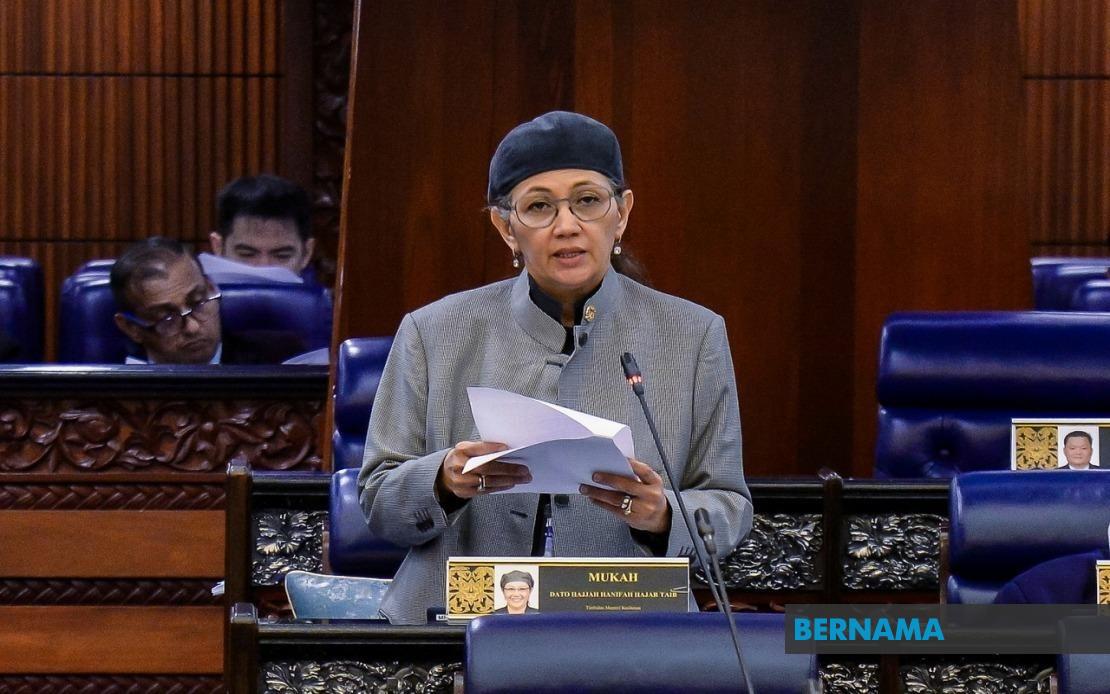
The Malaysian Health Ministry is undertaking a significant recruitment push to alleviate Sabah's pressing shortage of medical professionals, with Deputy Health Minister Datuk Hanifah Hajar Taib announcing plans to place 560 permanent doctor positions in the state beginning this October. The initiative reflects growing acknowledgment at federal level that healthcare delivery in the country's east Malaysian regions faces structural challenges requiring immediate intervention, particularly as competing job markets and geographic isolation continue to discourage medical graduates from accepting rural postings.
The announcement comes amid sobering historical patterns of job rejection in Malaysia's healthcare system. Based on past intake cycles, the Ministry anticipates that only approximately 280 of the 560 doctors offered positions in Sabah will actually report for duty—a 50 per cent acceptance rate that underscores deeper workforce retention challenges beyond simple recruitment numbers. Even at this optimistic projection, the net addition would leave Sabah approximately 24 medical officers short of its identified shortage of 256 practitioners, revealing the scale of systemic imbalance across Malaysia's regional health infrastructure.
Sabah's current medical workforce reflects this precarious situation. The state maintains 2,803 established medical officer posts, of which only 1,863 positions—or 66.5 per cent—are actively filled. A further 366 officers, representing 13.1 per cent of posts, are away on study leave, leaving 570 vacancies amounting to 20.3 per cent of total capacity. To manage operations despite these gaps, the Health Ministry has deployed 680 contract doctors throughout Sabah, a temporary measure that, while essential, lacks the permanence and institutional knowledge that career civil service positions provide.
The broader context reveals Sabah's healthcare challenges as part of a nationwide pattern. According to the 2024 Health Indicators report, eight Malaysian states—including Sabah—fall below the national average for doctor-to-population ratios, indicating that workforce distribution remains fundamentally uneven across the federation. However, there are signs of incremental progress. Sabah's ratio improved by 25.1 per cent between 2020 and 2023, suggesting that sustained attention and targeted deployment strategies can yield measurable gains, even if barriers to rapid transformation persist.
The Health Ministry's response extends beyond simple staffing announcements to include structural reforms designed to address systemic job-rejection patterns. Officials have introduced requirements compelling contract officers transitioning to permanent status to accept at least one placement in either Sabah, Sarawak, or Labuan, effectively leveraging career advancement to incentivize service in underserved regions. This approach represents a practical acknowledgment that voluntary mechanisms alone have historically failed to redistribute healthcare professionals equitably across Malaysia's geography.
Integral to this strategy is the enhanced e-Placement system, rolled out in 2025, which aims to streamline the assignment process and reduce administrative friction. The Ministry has established formal quotas within this system: Sarawak will receive 650 permanent medical officer placements whilst Sabah receives 310 positions, collectively representing 42.7 per cent of the nationwide placement quota of 2,248 permanent positions. This proportional allocation signals recognition that East Malaysian states require disproportionate investment to achieve functional parity with peninsular regions.
The nationwide recruitment effort itself is ambitious in scale. The Health Ministry is racing to fill 4,500 permanent medical officer posts across two accelerated phases. The first phase, which commenced in June 2026, targeted 328 officers for permanent appointment nationwide, with 39 assigned to Sabah. Results from this initial cohort proved disappointing: only 20 of Sabah's allocations accepted their postings whilst 19 declined, reinforcing concerns about acceptance rates that hover around 50 per cent. This experience informed the second phase, launching in October 2026, which will distribute 4,172 permanent offers—substantially larger and designed to generate sufficient acceptances to meet cumulative targets.
For Malaysian policymakers and healthcare administrators, the Sabah situation illuminates broader tensions within Malaysia's civil service medical recruitment. Geographic, economic, and lifestyle factors continue to drive young physicians toward urban centres and higher-income jurisdictions, creating persistent imbalances that administrative mechanisms alone cannot entirely resolve. The state's improvement trajectory between 2020 and 2023 demonstrates that sustained focus can produce results, yet the gap between positions offered and positions accepted suggests that structural incentives—whether financial, professional, or lifestyle-related—require deeper examination.
Looking forward, the success of this October 2026 deployment will likely determine the trajectory of health workforce policy in East Malaysia. If acceptance rates improve beyond historical 50 per cent benchmarks, policymakers may gain confidence in the reformed e-Placement system and the structural incentive framework. Conversely, persistent rejections would signal that material factors beyond administrative reform require attention, possibly including revised compensation structures, career pathway enhancements, or infrastructure investment in regions where doctors are posted. For Sabah specifically, achieving the full 560 placements would represent meaningful progress toward workforce stabilization, though complete resolution of the 256-officer shortfall would require additional tranches of recruitment in subsequent years.

