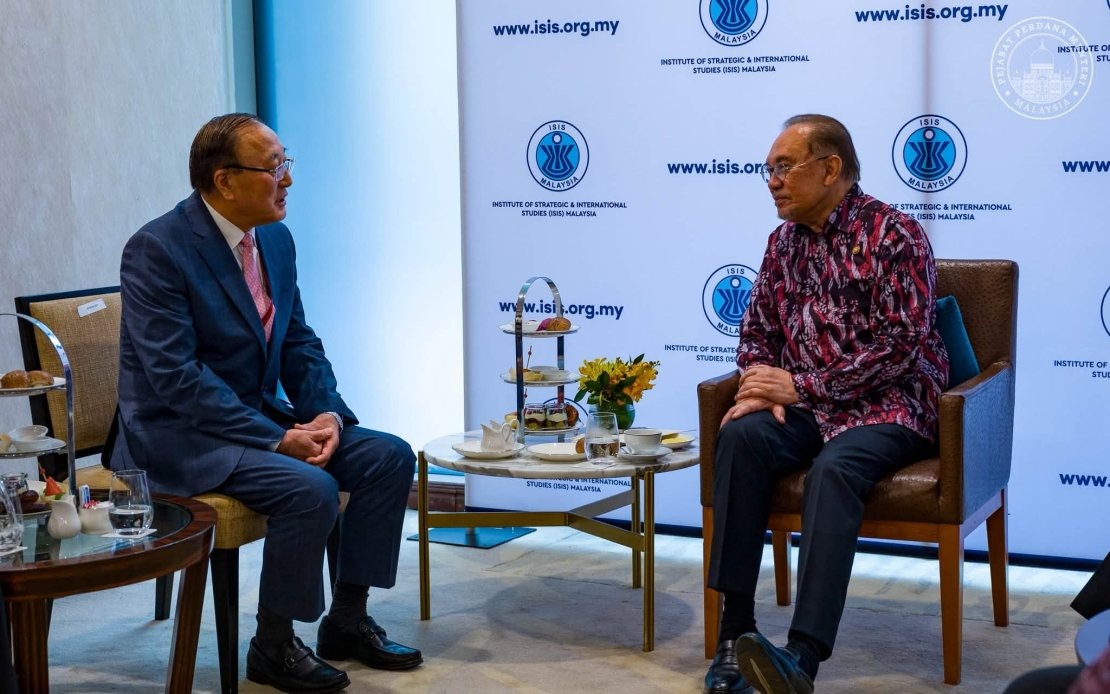
Prime Minister Datuk Seri Anwar Ibrahim has signalled Malaysia's intention to deepen its engagement with the Boao Forum for Asia (BFA), identifying multiple strategic domains where the country aims to build closer partnerships with the influential regional think-tank. The announcement came during a bilateral meeting in Kuala Lumpur between Anwar and BFA secretary-general Zhang Jun, underscoring the importance both parties place on advancing cooperation amid increasingly complex geopolitical and economic circumstances across the region.
The scope of the proposed collaboration is notably expansive, spanning eight key policy areas that reflect contemporary challenges facing Southeast Asia and the broader Indo-Pacific. Trade and investment remain foundational pillars, representing the traditional economic underpinnings of Malaysia's regional engagement strategy. However, Anwar's emphasis on digital transformation and artificial intelligence signals recognition that Malaysia must position itself competitively in the technology-driven global economy. These sectors have emerged as critical differentiators for middle-income nations seeking to transition toward higher-value economic activity and attract multinational investment.
Energy transition represents another dimension of strategic importance, particularly given Malaysia's historical dependence on hydrocarbon revenues and its need to balance economic growth with environmental sustainability commitments. Regional cooperation in this sphere could accelerate knowledge transfer and investment in renewable energy infrastructure, supporting ASEAN's broader climate pledges and the transition toward net-zero emissions. Food security, meanwhile, addresses vulnerabilities exposed during recent global supply-chain disruptions, with Southeast Asian nations recognising that self-sufficiency and regional resilience require coordinated approaches to agricultural innovation and resource management.
Anwar's dual role as Prime Minister and Finance Minister lends particular weight to his commitment on behalf of the Malaysian government. His personal engagement with the BFA reflects the administration's prioritisation of multilateral regional platforms as conduits for advancing national interests. The BFA itself has grown into a significant convening body since its establishment, bringing together policymakers, business leaders, and academics from across Asia and beyond to address shared challenges.
The Malaysian leader framed the cooperation initiative within the context of what he characterised as an increasingly unstable international environment, marked by geopolitical tensions, economic headwinds, and disruptive technological change. This framing acknowledges the reality that individual nations possess limited capacity to navigate such challenges in isolation. Anwar's emphasis on "closer regional cooperation, inclusiveness and dialogue-based cooperation" reflects a diplomatic approach that privileges consensus-building and multilateral problem-solving over zero-sum competition.
For Malaysia specifically, enhanced ties with the BFA carry several practical implications. The forum provides a platform for articulating Malaysian perspectives on regional issues, potentially amplifying the nation's voice in conversations that shape Asian policy directions. Given Malaysia's geographic position, economic dynamism, and cultural diversity, the country's active participation in such forums reinforces its credentials as a responsible stakeholder committed to regional stability and prosperity. Enhanced cooperation also creates opportunities for Malaysian businesses, researchers, and policymakers to access networks and expertise within the BFA ecosystem.
The timing of this announcement merits consideration. Regional tensions, including maritime disputes and evolving great-power competition, have created an imperative for dialogue mechanisms and platforms that facilitate understanding and cooperation among Asian nations. The BFA, with its emphasis on inclusive dialogue and consensus-building, offers an alternative architecture to more contentious bilateral or minilateral arrangements. Malaysia's commitment to strengthening these ties suggests confidence in dialogue-based approaches to managing regional tensions.
Education and talent development, explicitly mentioned as cooperation domains, connect to longer-term capacity-building objectives. Collaboration in these areas supports human capital development across the region, creating pathways for knowledge exchange and professional development. For Malaysia, which hosts numerous regional educational institutions and aspires to position itself as a knowledge hub, such cooperation reinforces these ambitions while contributing to broader regional capability-building.
Anwar's statement that cooperation should bring "tangible benefits to the people as a whole" introduces an important normative dimension, suggesting that economic and strategic engagement must ultimately translate into improved living standards and opportunities for ordinary citizens. This framing addresses legitimate concerns that regional cooperation frameworks sometimes prioritise elite interests over grassroots development. By anchoring the BFA partnership to inclusive benefit-sharing, Anwar acknowledges the political importance of demonstrating concrete returns from regional engagement.
The reference to strengthening the region's "resilience" appears particularly significant given contemporary challenges including pandemic preparedness, climate change impacts, and economic volatility. Resilience, in this context, implies not merely surviving shocks but adapting and recovering effectively. Regional cooperation in the identified domains—particularly energy transition, food security, and digital transformation—directly contributes to building such resilience. These are areas where ASEAN nations share vulnerabilities and where coordinated responses yield superior outcomes compared to unilateral action.
Zhang Jun's visit to Malaysia and the substantive engagement at the prime ministerial level indicates the BFA's own commitment to deepening relationships with key Southeast Asian participants. The forum recognises that effective regional leadership requires sustained engagement with major economies and influential voices. Malaysia's receptiveness to this outreach, combined with Anwar's articulation of specific cooperation areas, suggests a mutually beneficial relationship likely to evolve in coming years.
Looking forward, the success of this enhanced cooperation will depend on translating diplomatic commitments into institutional mechanisms, resource allocation, and concrete deliverables. Joint working groups, research initiatives, and people-to-people exchange programmes would represent logical next steps. As Malaysia navigates complex regional and global circumstances, partnerships like that with the BFA offer valuable channels for influence, learning, and problem-solving in an increasingly interdependent world.

