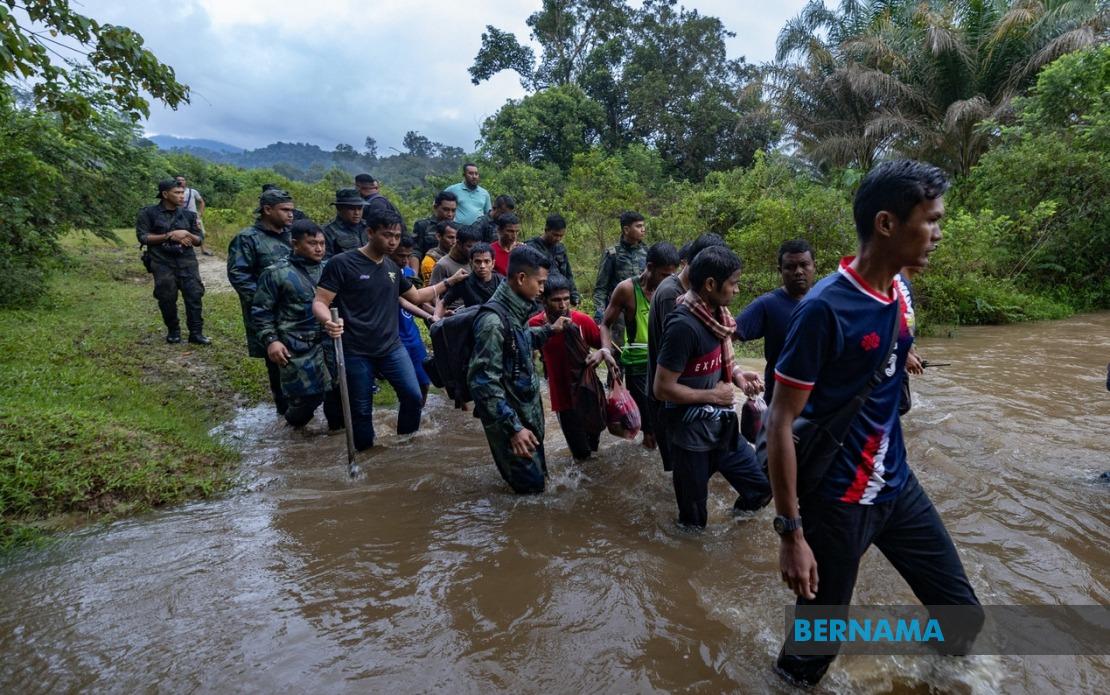
Malaysia is moving to deepen its engagement with both ASEAN and the United Nations High Commissioner for Refugees in tackling the protracted Rohingya displacement crisis, adopting what officials describe as a more strategic and comprehensive framework that balances diplomatic pressure with on-the-ground humanitarian operations. Deputy Foreign Minister Datuk Lukanisman Awang Sauni outlined the country's evolving approach during a parliamentary session, signalling that Kuala Lumpur recognises the need for sustained multilateral coordination as the refugee situation continues to generate instability across Southeast Asia.
At its core, Malaysia's strategy rests on leveraging two distinct institutional channels. Through ASEAN, the country has pursued diplomatic advocacy for peaceful resolution of the underlying Myanmar conflict, while simultaneously working with the UNHCR to ensure protection and humanitarian assistance for Rohingya populations already residing within Malaysian borders. This dual-track approach reflects a pragmatic acknowledgement that addressing refugee crises requires both upstream political intervention and downstream humanitarian response, yet each mechanism operates under constraints that limit comprehensive outcomes.
The Rohingya displacement has emerged as a critical test of Malaysia's regional influence and humanitarian credentials. As one of Southeast Asia's most developed economies and a country with significant Muslim-majority demographics, Malaysia has positioned itself as both a moral voice for refugee protection and a practical host for vulnerable populations. However, the scale of displacement—with hundreds of thousands of Rohingya scattered across the region and beyond—has revealed the limits of bilateral and multilateral cooperation frameworks designed for different eras and challenges.
Lukanisman's remarks to parliament underscored a sobering reality: ASEAN's foundational principles, while designed to preserve regional autonomy and stability, have constrained the bloc's ability to mount decisive collective action. The consensus-based decision-making system and the non-interference doctrine, cornerstones of ASEAN diplomatic culture, mean that even when member states sympathise with humanitarian objectives, formal collective response remains difficult. This structural limitation has become increasingly evident as Myanmar's internal instability has continued to generate refugee outflows, with no mechanism within ASEAN capable of compelling substantive change in the source country.
Simultaneously, the UNHCR operates under a mandate fundamentally limited to refugee protection and humanitarian assistance. While the organisation provides essential services—documentation, shelter, medical care, and advocacy against refoulement—it lacks the political authority or enforcement mechanisms to address the root causes driving displacement. This distinction matters enormously: the UNHCR cannot negotiate Myanmar's political settlement, cannot pressure the military junta, and cannot facilitate the conditions necessary for voluntary repatriation. Instead, it manages symptoms while structural drivers persist unaddressed.
The convergence of these constraints has produced what Malaysian officials now acknowledge as an unsatisfactory equilibrium. Current regional efforts, while valuable in saving lives and upholding humanitarian principles, remain inherently reactive and insufficient for resolving the crisis at scale. Malaysia and its partners have become managers of a chronic crisis rather than architects of a durable solution. This reality has prompted Malaysian policymakers to articulate forward-looking strategies that attempt to work within existing institutional frameworks while pushing their boundaries.
Among proposed measures is a strengthened responsibility-sharing mechanism among ASEAN member states. Rather than expecting any single country to absorb the full burden of hosting displaced populations, this approach seeks to distribute protection obligations more equitably across the region. Such burden-sharing could reduce the concentrated impact on frontline states like Malaysia, which hosts one of the world's largest undocumented migrant populations, while building broader regional investment in resolving the crisis. However, translating this concept into concrete commitments has proven challenging, as member states balance humanitarian considerations against domestic political pressures and resource constraints.
Equally central to Malaysia's revised strategy is promotion of a political settlement that would enable voluntary, safe and dignified return of Rohingya refugees. This objective acknowledges that temporary protection and humanitarian assistance, however essential, cannot substitute for a sustainable political resolution in Myanmar itself. Yet achieving such a solution requires engagement with Myanmar's military leadership—a government increasingly isolated internationally and resistant to external pressure. The challenge for Malaysia and ASEAN lies in finding diplomatic pathways that maintain engagement while refusing to legitimise rights abuses.
The articulation of these goals reflects Malaysia's self-conception as a responsible international actor committed to peace, security and humanitarian principles. For Malaysian policymakers, the Rohingya crisis represents both a moral imperative and a strategic challenge. Uncontrolled refugee flows can fuel irregular migration networks, human trafficking operations, and security vulnerabilities that destabilise entire regions. The instability radiating from Myanmar affects not just Myanmar and Bangladesh, but reverberates throughout Southeast Asia, creating transnational challenges that no single country can manage unilaterally.
Looking forward, Malaysia's repositioning suggests recognition that incremental improvements to existing frameworks, while necessary, may prove insufficient without more fundamental shifts. The international community's collective response to the Rohingya crisis remains fragmented, with limited financial contributions, insufficient diplomatic pressure on Myanmar, and deep disagreements about appropriate responses. Within this context, Malaysia's emphasis on deepening ASEAN and UNHCR cooperation, while candid about institutional limitations, represents an attempt to maximise available tools while pushing for systemic adaptation.
The deputy minister's parliamentary remarks also served a domestic audience, signalling to Malaysian legislators and constituents that their government remains engaged on a crisis that commands significant public attention. With Malaysia hosting substantial Rohingya populations in Kuala Lumpur, Selangor, and other urban centres, the issue carries immediate local implications affecting resource allocation, social cohesion, and urban planning. Demonstrating sustained diplomatic engagement reassures Malaysians that their government treats the crisis with appropriate seriousness.
Ultimately, Malaysia's evolving approach encapsulates a broader Southeast Asian dilemma: how to respond humanely to mass displacement while lacking the tools for political resolution. By committing to enhanced cooperation with both ASEAN and the UNHCR, and by articulating ambitious goals around responsibility-sharing and political settlement, Malaysia is attempting to signal leadership on a crisis that defies easy solutions. Whether this intensified engagement can translate into meaningful progress on the ground remains contingent on broader geopolitical developments in Myanmar and evolving international commitment to the region's stability.

