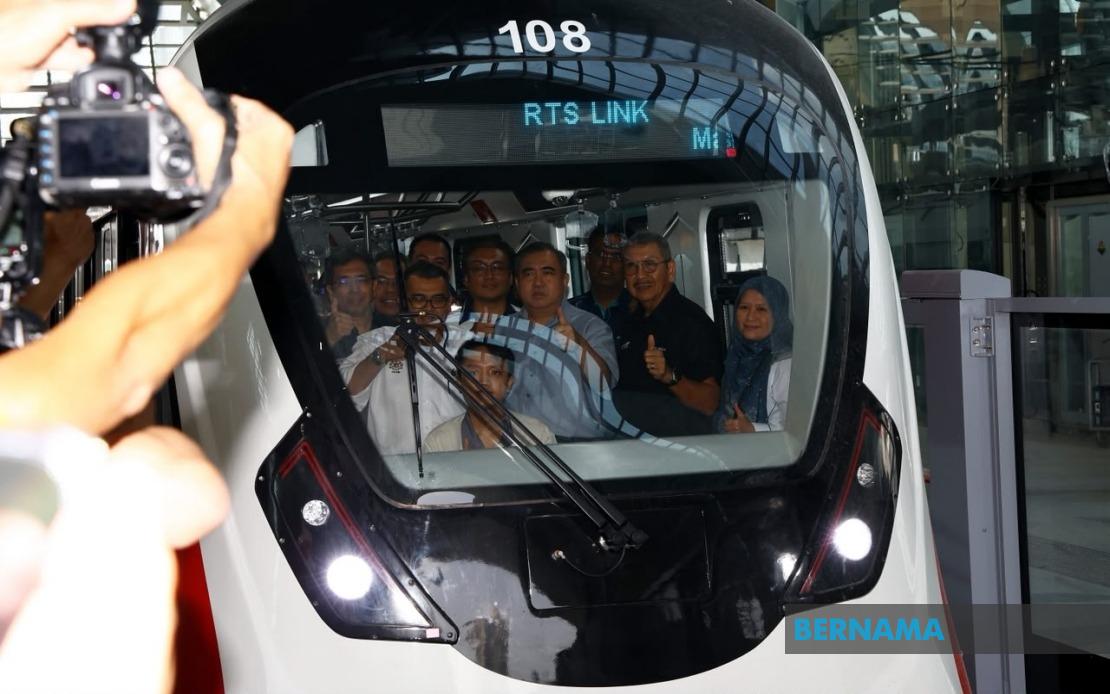
Malaysia's Transport Ministry is moving ahead with a RM60 million bridge project designed to directly connect the Bukit Chagar RTS Link Station with the KTMB Komuter rail network, a strategic infrastructure investment aimed at streamlining passenger movement between two critical transport corridors in Johor Bahru. The initiative represents a deliberate effort to optimise what will become a major trans-border commuter gateway when the RTS Link opens on January 1, 2025, eliminating friction points that would otherwise compromise the system's operational efficiency.
Transport Minister Anthony Loke announced the approved project during an inspection of the Bukit Chagar construction site, emphasising that the bridge addresses a fundamental connectivity gap in the region's public transport architecture. Currently, travellers moving between Komuter services and the RTS Link would need to navigate through JB Sentral, an indirect routing that adds both time and complexity to journeys. By constructing a dedicated pedestrian and passenger facility, the government is essentially removing a structural inefficiency that could otherwise dampen ridership and limit the economic potential of the corridor.
The bridge construction is projected to require approximately 12 months for completion, a timeline that positions it to be operational shortly after or concurrent with the RTS Link's debut. This synchronisation matters strategically; simultaneous opening of both the link and the improved Komuter connection signals to commuters that an integrated system awaits them, rather than a fragmented collection of transport options. The Ministry of Economy has already approved the funding allocation, with the Ministry of Transport bearing responsibility for project execution.
Beyond the bridge itself, Malaysia is orchestrating a broader transport ecosystem expansion around Bukit Chagar that underscores the government's commitment to multi-modal integration. The Stage Bus Service Transformation 2.0 initiative will inject at least 200 additional buses into the system, specifically configured to serve residential neighbourhoods throughout Johor Bahru and funnel passengers toward the Bukit Chagar hub. This expansion, pending final Ministry of Finance approval and completion of operator agreements, is deliberately timed to coincide with the RTS Link's operational launch, ensuring that passengers arriving from suburban areas have seamless onward connections to Singapore.
The strategic importance of this transport infrastructure extends beyond mere convenience. The RTS Link's projected capacity of 10,000 passengers per hour in each direction represents substantial cross-border commuter traffic that Malaysia aims to accommodate efficiently. Without complementary improvements like the Komuter bridge and bus expansion, bottlenecks would develop at the very moment when Johor Bahru needs to project itself as a modern, integrated transport hub capable of handling seamless regional movement.
Building Bukit Chagar into a genuine multi-modal transport interchange requires integration with multiple stakeholder systems. The planned coordination with JB Sentral, e-hailing services, and other regional public transport options transforms what might otherwise be a stand-alone infrastructure project into a nodal point within a broader Malaysian transport network. For commuters throughout Johor, this means a single destination—Bukit Chagar—becomes the logical access point for multiple transport modes rather than requiring visitors to navigate between separate facilities.
Construction progress on the core RTS Link infrastructure has advanced significantly, with the physical building, Customs, Immigration and Quarantine complex, and the Bukit Chagar station itself now complete. The project has transitioned into testing and commissioning phases, a critical period where system integration testing, fault-free operations, and trial runs verify that all components function properly before public operations commence. This technical validation process, while invisible to eventual passengers, determines whether the infrastructure performs reliably when the region's commuter population begins daily transit.
For Malaysian readers, the Bukit Chagar development represents a tangible example of how infrastructure policy translates into daily mobility. The RM60 million bridge investment demonstrates that policymakers recognise that building a modern transport connection requires attention to often-overlooked details like pedestrian transfers between systems. A commuter facing a five-minute walk to transfer services versus a 15-minute detour through JB Sentral will experience that bridge as either a minor annoyance or a game-changing convenience, depending on which scenario materialises.
The broader regional context matters considerably. The RTS Link positions Johor Bahru as a gateway to Singapore's transport network and employment market for Malaysian commuters, while creating reciprocal opportunities for Singaporean and international passengers to access Johor's economic zones. Enhanced bus services and improved Komuter connections amplify this effect by extending the effective reach of the RTS Link into residential areas beyond central Johor Bahru, maximising the corridor's utility for lower-income and suburban populations who might otherwise lack practical access to cross-border employment opportunities.
Operational reliability will ultimately determine whether this investment achieves its intended objectives. The RTS Link's success depends not only on the train itself functioning properly but on the supporting ecosystem—the bridge, the bus network, the Komuter connections—all working in synchronisation. If any component underperforms or opens late, the efficiency gains envisioned by planners diminish substantially. The government's focus on completing complementary infrastructure simultaneously rather than sequentially suggests awareness that transport integration requires holistic rather than piecemeal development.
Financial commitments accompanying this transport expansion signal confidence in the cross-border commuter market's potential. Between the bridge investment, bus service expansion, and the core RTS Link infrastructure, Malaysia is deploying considerable capital in the expectation that Johor Bahru will become a preferred route for regional commuter traffic. Whether this confidence proves justified will depend partly on factors beyond Malaysia's control, including Singaporean economic conditions and employment patterns, but improved local connectivity removes at least the infrastructure-related barriers to capturing this market opportunity.

