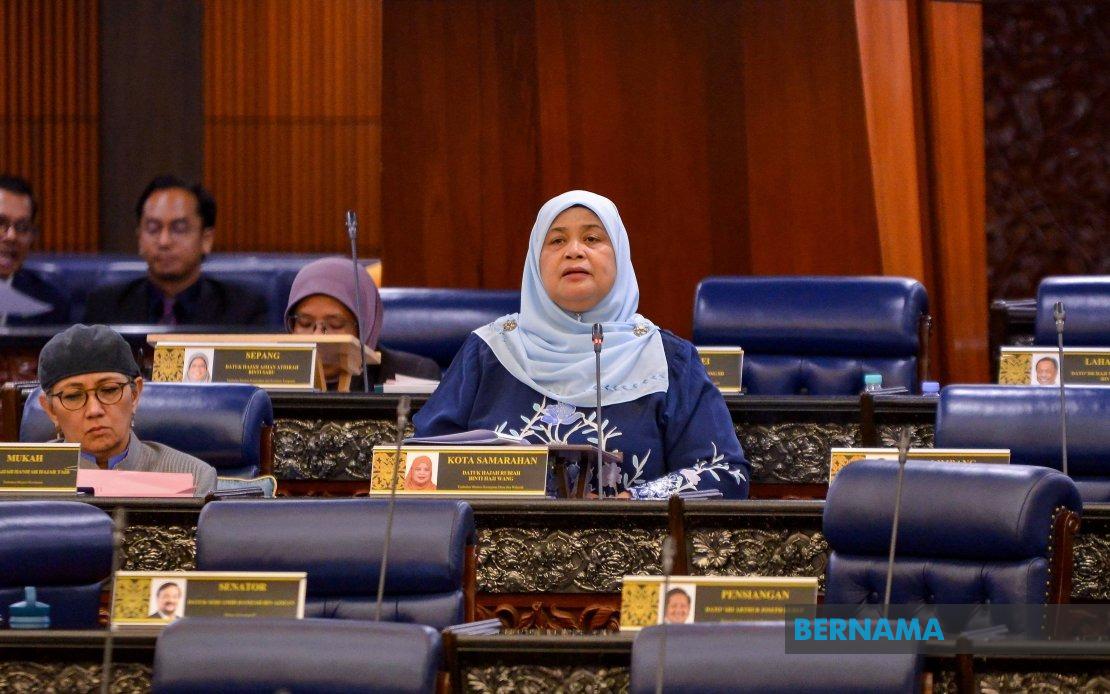
Malaysia's government is embarking on a comprehensive transformation of its Technical and Vocational Education and Training (TVET) 2.0 framework, centred on revamping how qualifications are assessed and recognised by employers. Deputy Minister of Rural and Regional Development Datuk Rubiah Wang outlined the strategic pivot during parliamentary proceedings, emphasising that the shift will directly link educational standards with real-world labour market demands, ultimately raising job prospects for vocational graduates and tackling the persistent mismatch between what students learn and what industries actually need.
The core innovation lies in securing formal endorsement from major industry players as part of the accreditation process. This departure from traditional credential verification seeks to create a seamless bridge between training institutions and employers, ensuring that TVET graduates emerge not merely with certificates but with tangible skills that companies immediately recognise and value. By embedding industry input into curriculum design and assessment protocols, the framework aims to eliminate the disconnect that has historically plagued vocational programmes across the region—where graduates possess qualifications that employers either overlook or deem insufficiently aligned with contemporary business requirements.
Rubiah articulated an ambitious vision for TVET graduates under the new framework. Beyond technical competency, the programme envisions producing individuals capable of launching their own ventures and stimulating economic activity, particularly in rural communities. This entrepreneurial emphasis reflects broader policymaking trends acknowledging that vocational education must cultivate not just compliant workers but creative problem-solvers and business builders who can diversify local economies and generate employment for their peers. The aspiration to turn graduates into "job creators" rather than merely job-seekers represents a philosophical shift in how Malaysia conceptualises the return on investment in vocational training.
A particularly innovative strand involves the TVET Tahfiz programme, which integrates Quranic memorisation with technical and digital skills development. This initiative addresses a growing demand among Muslim families seeking educational pathways that honour religious values while ensuring economic viability for their children. By combining spiritual and character development with proficiency in emerging technologies, the programme seeks to produce graduates who are simultaneously rooted in faith and equipped for global competitiveness—a distinctive approach that may prove attractive across Southeast Asia's Muslim-majority regions.
The ministry is pursuing aggressive specialisation across its training network to establish centres of excellence in high-demand fields. TVETMARA Petaling Jaya has been designated as the hub for Internet of Things expertise, while TVETMARA Besut concentrates on cloud computing capabilities. TVETMARA Pasir MAS serves as a Building Information Modelling centre, addressing the construction and infrastructure sector's digital transformation needs. This geographic and thematic distribution allows concentrated resource allocation and deepens faculty expertise in niche domains where Malaysia seeks competitive advantage.
Technology adoption sits at the forefront of curriculum modernisation. Institutions under the Ministry of Rural and Regional Development's purview are systematically integrating artificial intelligence, cybersecurity, automation, robotics, and smart manufacturing systems into training programmes. This alignment with Industry 4.0 principles acknowledges that contemporary manufacturing and service sectors demand workers fluent in digital ecosystems—a requirement that traditional vocational education often overlooked until recent years. By front-loading technology competency, the updated framework positions Malaysian graduates to participate in advanced value chains rather than remaining confined to routine assembly or service tasks.
The German-Malaysian Institute exemplifies the international dimension of Malaysia's TVET enhancement strategy. Through formal partnerships transferring German industrial technology, the institute focuses on advanced manufacturing methodologies rooted in Industry 4.0 principles. Such international collaboration provides Malaysian vocational students exposure to global best practices and technical standards, while signalling to employers that graduates have been trained to international benchmarks rather than parochial domestic specifications. This global orientation matters particularly as multinational corporations increasingly base hiring decisions on whether prospective employees can integrate into internationally-coordinated production systems.
At the higher education tier, Universiti Kuala Lumpur's Bachelor of Artificial Intelligence Technology programme represents the convergence of traditional university credentials with cutting-edge technological domains. This pathway allows high-performing TVET graduates to transition into degree-level study without the traditional academic prerequisites, creating clearer progression routes and recognising vocational accomplishment as a legitimate foundation for tertiary education. The programme's existence signals that AI competency—increasingly central to competitive advantage—is not solely the preserve of elite universities but accessible through Malaysia's vocational ecosystem.
The imperative driving these reforms reflects deeper anxieties about skills displacement and economic positioning. Southeast Asia faces mounting competition from lower-wage jurisdictions for routine manufacturing work, while simultaneously confronting rapid technological disruption that renders yesterday's skilled trades redundant. By equipping TVET graduates with adaptable, technology-enabled capabilities, Malaysia attempts to secure its workforce's relevance in increasingly automated production environments. The focus on rural economic development through entrepreneurship suggests policymakers recognise that traditional employment prospects in manufacturing and construction face structural pressures, necessitating alternative pathways to prosperity.
For Malaysia's regional peers, the TVET 2.0 framework offers instructive lessons about institutionalising industry partnership in vocational education. Many Southeast Asian nations grapple with similar skills misalignment problems, where training outputs fail to match employer requirements, generating youth unemployment even amid labour shortages. Malaysia's explicit integration of industry recognition into accreditation mechanisms, rather than treating employer input as optional consultation, represents a potentially replicable governance innovation. The specialisation strategy likewise demonstrates how smaller economies can avoid competing on generic vocational credentials by instead cultivating recognised expertise in high-value technological niches.
Successful implementation will require sustained collaboration between education bureaucracies, training institutions, industry associations, and individual employers. Accreditation transformation cannot succeed if industry partners remain passive endorsers rather than active curriculum co-designers. Similarly, institutions must possess sufficient autonomy and resource stability to invest in expensive technological infrastructure and faculty development. The framework's ambition is evident, but its realisation depends on whether political commitment translates into consistent funding, institutional empowerment, and employer engagement across implementation timelines that necessarily extend beyond electoral cycles.

