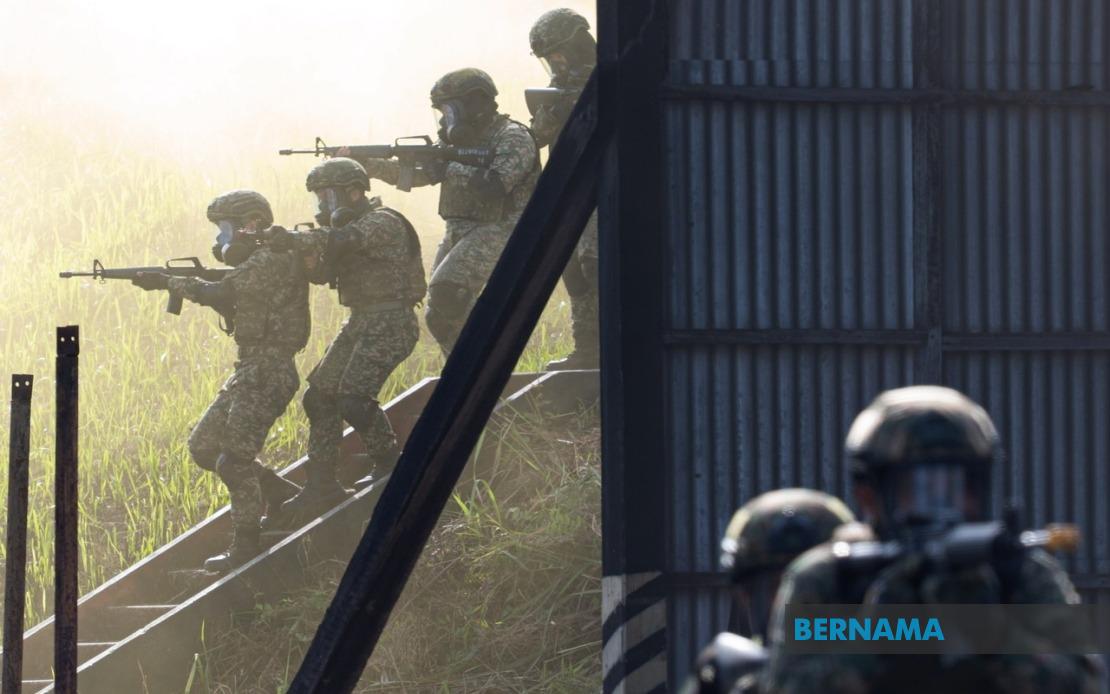
Prime Minister Datuk Seri Anwar Ibrahim has committed to boosting Malaysia's defence spending in the 2027 Budget, signalling the government's determination to maintain military capability and enhance personnel welfare across the Malaysian Armed Forces. Speaking at an event in Melaka on August 7, Anwar, who simultaneously holds the Finance Minister portfolio, outlined the rationale for expanded defence investment as part of broader efforts to preserve national security and safeguard what he termed the country's most valuable asset: sustained peace.
Anwar's announcement underscores a strategic shift in budgetary priorities as Malaysia navigates an increasingly complex regional security environment. The Prime Minister stressed that military preparedness cannot be treated as a reactive exercise, emphasising that nations must maintain constant vigilance rather than waiting for threats to materialise. His assertion that "conflicts do not occur when expected" reflects broader concerns about evolving geopolitical dynamics in Southeast Asia, where maritime tensions, great-power competition, and non-traditional security challenges have prompted regional governments to reassess defence postures. For Malaysia, a country with extensive maritime borders and significant strategic interests, this proactive stance carries particular resonance.
The proposed allocation would address multiple dimensions of military modernisation and personnel support. Beyond equipment acquisition, the government plans to direct resources toward improving living conditions for service members, including upgrading barracks facilities, constructing a new military hospital, and ensuring reliable maintenance of essential infrastructure such as water supply systems. These welfare improvements reflect recognition that military effectiveness depends not solely on hardware but on personnel morale, retention, and operational capacity. The broader approach acknowledges that attracting and retaining skilled military personnel requires competitive compensation and dignified working environments.
Anwar highlighted that the MADANI Government has already substantially elevated defence budgets over the preceding three years, with allocations rising by more than 35 per cent. He expressed some frustration that this significant expansion has not received proportionate public attention, suggesting that transparent communication about defence investments remains a challenge for Malaysian policymakers. The Prime Minister's observation that "expressions of support and concern mean little if equipment remains in poor condition or procurement is mired in controversy" points to deeper institutional concerns about how defence resources have historically been managed and deployed.
Crucially, Anwar emphasised that future weapons and equipment procurement must follow systematic, transparent processes that eliminate opportunities for profiteering and excessive agent commissions. This stipulation appears directed at historical procurement scandals that have periodically afflicted Malaysian defence spending, where middlemen and inflated margins have consumed substantial portions of allocated funds without corresponding military capability gains. By foregrounding procurement integrity, Anwar signals that the government recognises that spending increases alone cannot guarantee improved military readiness without concurrent institutional reforms addressing systemic corruption and inefficiency.
The government's capacity to increase defence expenditure has been enabled by improving macroeconomic conditions. Anwar pointed to Malaysia's economic recovery, strengthening currency, rising foreign direct investment, and controlled inflation as factors supporting enhanced defence allocation. This framing suggests that defence budgeting remains contingent upon broader fiscal health, implying that sustained spending increases depend on maintaining economic momentum. For a nation managing multiple competing expenditure demands across healthcare, education, and infrastructure, the ability to expand defence spending simultaneously signals either genuine economic improvement or deliberate reordering of budgetary priorities that merits scrutiny.
The event itself, held in Melaka with attendance from significant defence and government figures including Deputy Defence Minister Adly Zahari, Chief Secretary to the Government Tan Sri Shamsul Azri Abu Bakar, and Army Chief General Tan Sri Azhan Md Othman, underscored the defence establishment's unified backing for increased spending. The presence of Minister in the Prime Minister's Department (Religious Affairs) Senator Dr Zulkifli Hasan reflected the interconnected nature of security and religious affairs governance in Malaysia's institutional framework, particularly regarding military facilities and personnel welfare involving faith communities.
Beyond the headline allocation increase, Anwar announced specific welfare initiatives including RM147,000 for the Armed Forces Family Welfare Association and RM1 million directed toward maintaining mosques and prayer halls at four military installations in Melaka: Terendak, Sungai Udang, Masjid Tanah, and Bukit Beruang. These targeted disbursements demonstrate attention to both secular welfare support and religious facility maintenance, addressing the comprehensive needs of military personnel and their families. The focus on religious infrastructure maintenance within military establishments reflects Malaysia's specific security context where military cohesion and morale involve attending to personnel's spiritual and cultural needs.
The timing of this announcement, preceding Budget 2027's tabling in the Dewan Rakyat scheduled for October 9, allows parliamentary and public deliberation on defence spending priorities before formal budgetary legislation. This advance notice provides transparency regarding government intentions while establishing political momentum for the proposed increases. For Malaysian stakeholders and regional observers, the announcement signals continued commitment to military modernisation as Malaysia positions itself within broader Southeast Asian defence dynamics and maintains deterrence capabilities across its extensive territorial waters.
The Prime Minister's comprehensive framing of defence investment—encompassing capability development, personnel welfare, procurement integrity, and economic sustainability—reflects sophisticated understanding that military readiness encompasses technical, human, and institutional dimensions. Whether the government can translate these commitments into sustained implementation while maintaining procurement transparency remains a critical question, particularly given historical challenges in Malaysian defence administration. The 2027 Budget will provide clearer indication of whether planned increases materialise and how allocated resources distribute across competing defence priorities.

