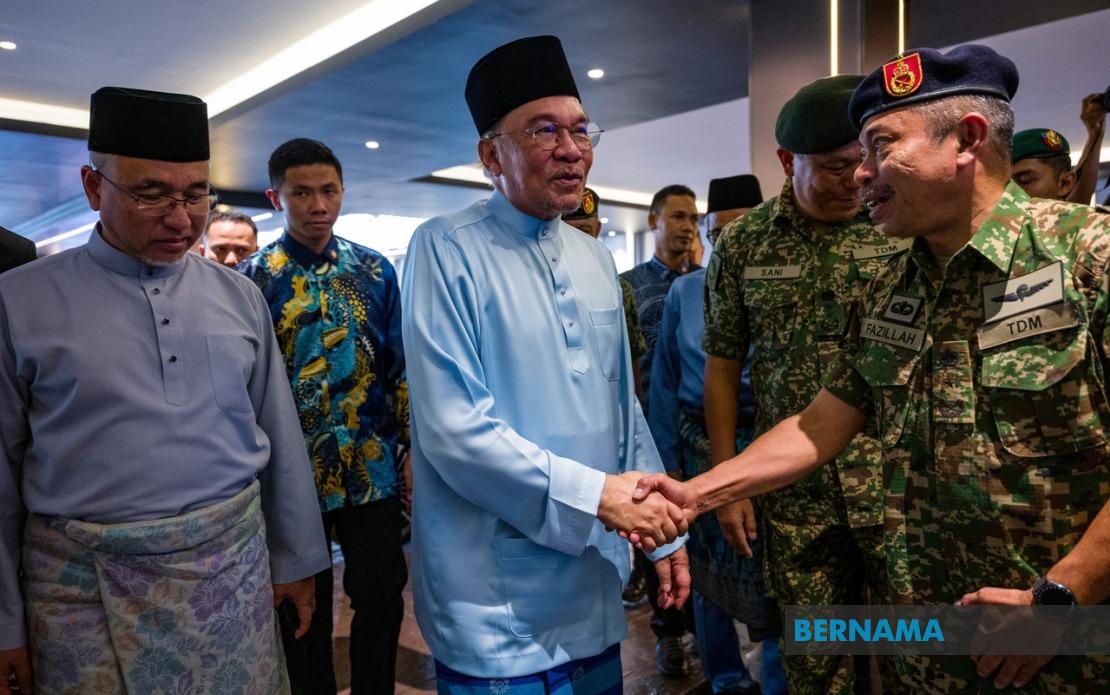
Prime Minister Datuk Seri Anwar Ibrahim has committed to raising defence spending in Budget 2027, a decision that underscores the government's determination to transform the Malaysian Armed Forces into a more capable and integrated deterrent. The announcement, made during an event at Terendak Camp in Melaka, reflects a strategic pivot toward modernising defence infrastructure at a time when regional security dynamics continue to evolve. Chief of Defence Force General Tan Sri Malek Razak Sulaiman welcomed the initiative, characterising it as evidence of sustained political support for military development and operational preparedness.
The increased budget allocation addresses multiple dimensions of military readiness and personnel management. Beyond procurement of advanced assets and equipment, the enhanced funding will channel resources toward improving the quality of life for service members and their families—a recognition that personnel retention and morale directly affect operational effectiveness. The government plans to upgrade military housing facilities, construct a new hospital for service members, and ensure reliable basic utilities including water supply across military installations. These infrastructure improvements represent a long-overdue acknowledgement that defence capability rests not only on hardware but on the wellbeing and stability of those who serve.
General Tan Sri Malek Razak emphasised that the modernisation programme aligns with the MAF's Future Force strategic development plan, a comprehensive roadmap designed to guide military transformation over the coming decades. This strategic framework identifies priority areas for capability enhancement, from technological upgrades to organisational restructuring. By anchoring budget increases to this established plan, the government signals that spending decisions follow a coherent long-term vision rather than ad-hoc responses to security threats. Such strategic clarity is essential for effective defence planning, particularly given the lengthy procurement cycles that characterise military equipment acquisition.
The timing of this budget commitment carries regional significance. Southeast Asia faces a complex security environment characterised by maritime disputes, increasing military competition among major powers, and evolving transnational threats ranging from terrorism to cyber warfare. Malaysia's geographic position—straddling crucial sea lanes and bordered by multiple nations—makes military readiness particularly important for national sovereignty and regional stability. By investing in modernisation now, the government positions Malaysia to navigate these challenges more effectively and maintain credible deterrence capabilities.
Personnel welfare improvements represent a particularly strategic investment often overlooked in defence discussions. Military effectiveness depends on attracting talented individuals and retaining experienced personnel who have invested years developing expertise. Poor living conditions, inadequate medical facilities, and limited housing options have historically driven skilled personnel toward civilian careers offering better compensation and quality of life. By improving these conditions, the government removes barriers to retention and makes military service more attractive to high-calibre recruits. This approach recognises that human capital is ultimately as critical as technological capital in defence contexts.
Anwar Ibrahim also announced that the government has agreed in principle to streamline and accelerate promotion mechanisms for both military and police personnel, bringing these systems into alignment with broader civil service frameworks. This bureaucratic reform carries significant implications for career progression and motivation. Simplified advancement pathways can enhance morale by creating clearer pathways to advancement and reducing perception of arbitrariness in personnel decisions. However, implementation details will prove crucial—streamlining must not compromise merit-based selection or inadvertently disadvantage qualified candidates from particular backgrounds or services.
The Budget 2027 defence increase must be contextualised within Malaysia's broader fiscal environment and competing budgetary priorities. Government spending on health, education, and infrastructure all compete for limited resources. The decision to increase defence allocation reflects a deliberate policy choice about national priorities. While the specific amount of the increase remains undisclosed in available announcements, the commitment itself signals that the government views defence modernisation as sufficiently important to warrant prioritisation amid fiscal constraints. This positioning may influence future budget negotiations and signal to defence industries and international partners that Malaysia intends to upgrade its capabilities systematically.
International defence suppliers and regional partners will likely interpret this commitment as indicative of Malaysia's long-term defence purchasing trajectory. Such signals matter in defence industry relationships, as weapons systems manufacturers make investment and production decisions partly based on anticipated demand from key markets. Malaysia's commitment to modernisation may influence negotiating positions with defence suppliers and affect the terms of future military cooperation agreements with allied nations. Conversely, the announcement also reinforces Malaysia's commitment to maintaining a credible defence posture, which indirectly contributes to regional stability by assuring allies and potentially reassuring smaller neighbours about Malaysia's capacity to maintain order within its territory.
The government's emphasis on integrated deterrence suggests a sophisticated understanding of modern defence requirements. Traditional notions of deterrence based on military force alone have evolved to encompass diplomatic, economic, and cyber dimensions. An integrated approach recognises that military modernisation cannot succeed in isolation but must complement broader national security strategies. This framing suggests the defence budget increase forms part of a larger security architecture rather than representing military spending for its own sake.
Implementation will ultimately determine whether these commitments translate into tangible improvements. Defence procurement projects frequently encounter delays, cost overruns, and technical challenges that can undermine intended outcomes. The government must establish robust project management mechanisms, transparent oversight structures, and realistic timelines for equipment acquisition and facility construction. Personnel welfare improvements should be implemented swiftly to deliver immediate morale benefits, whereas equipment modernisation represents a longer-term investment requiring patience and sustained commitment across multiple budget cycles.
Looking forward, the increased defence allocation establishes a foundation for Malaysia's military evolution during a period of significant geopolitical change. The commitment to both hardware modernisation and personnel welfare reflects a balanced approach that recognises defence effectiveness depends on both technological sophistication and human capital. Sustained budget increases across multiple years will be necessary to realise the ambitions articulated in the Future Force strategic plan, demanding that successive governments maintain commitment to defence modernisation regardless of other fiscal pressures or shifting political priorities.

