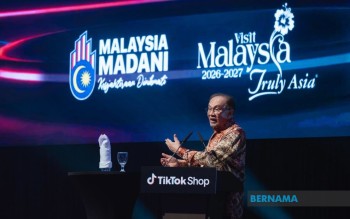
Malaysia is implementing a more rigorous vetting process for foreign investment applications to safeguard its domestic economy and ensure incoming businesses contribute meaningfully through job creation and local economic activity. Prime Minister Datuk Seri Anwar Ibrahim made the announcement at the TikTok Shop Summit 2026 in Kuala Lumpur on Wednesday, signalling a more protective stance toward local enterprises even as the country maintains its commitment to open trade and digital commerce expansion.
The initiative stems from growing concerns flagged by the Ministry of Investment, Trade and Industry regarding a troubling pattern of foreign companies establishing operations in Malaysia without generating any substantial local benefits. These enterprises, which typically operate warehouses and provide transit services, have drawn particular scrutiny because they contribute neither employment opportunities nor meaningful economic returns to Malaysia, despite enjoying the country's investment-friendly environment.
Anwar highlighted a specific category of problematic business structures where foreign operators register shell companies under ostensibly local names, creating an illusion of Malaysian ownership and operation. These entities then proceed to import and sell goods—ranging from food items like coffee, tea, and biscuits to other consumer products—that are entirely sourced from overseas. The deception undermines the legitimate interests of actual local businesses while flooding the market with foreign merchandise under a veneer of domestic legitimacy.
Cross-border e-commerce platforms such as Temu and Pinduoduo have significantly accelerated this trend, allowing international sellers to access Malaysian consumers with minimal regulatory friction. While acknowledging that Malaysia functions as an open economy where digital and online platforms have legitimately increased business entry and competition, Anwar expressed deep concern about predatory pricing practices designed to rapidly capture market share at the expense of local competitors. He characterised such strategies as modern dumping—a practice where foreign sellers deliberately undercut local businesses with unsustainably low prices to eliminate competition rather than compete fairly.
A particularly egregious example cited by Anwar involves large international investors leasing warehouse facilities at Port Klang, Malaysia's principal port, without any requirement or intention to employ local workers or procure Malaysian products. These operations function purely as transshipment hubs or distribution centres for re-exporting goods, extracting value from Malaysia's strategic geographic location and port infrastructure while returning virtually nothing to the economy or community.
The Prime Minister's remarks reveal the government's recognition that investment quantity must be balanced against investment quality. As Malaysia aspires to higher-value economic participation in the digital age, allowing low-quality investment that creates neither jobs nor demand for local goods represents a form of economic leakage—a drain on resources and opportunities that should benefit Malaysian workers and businesses. The government has already begun enforcement action through dedicated officers, though Anwar indicated that significantly stricter protocols are necessary going forward.
This policy shift carries important implications for Southeast Asia's investment landscape, particularly as the region becomes increasingly attractive to global companies seeking alternatives to China-centric supply chains. Malaysia's move signals that while the country remains welcoming to genuine foreign investment, it will no longer tolerate arrangements that exploit its market access and infrastructure without reciprocal contribution. Other ASEAN nations facing similar challenges may view Malaysia's approach as a template for balancing openness with protection of domestic interests.
For Malaysian small businesses and entrepreneurs, the announcement represents cautious optimism that government has recognised the existential threat posed by uncontrolled import flooding through nominally local entities. Local retailers and manufacturers have increasingly complained about being undercut by foreign competitors hiding behind Malaysian business facades, and Anwar's public acknowledgement of this problem suggests it has reached policy-making levels where action becomes inevitable.
The Ministry of Investment, Trade and Industry will now conduct comprehensive reviews of incoming investment proposals to verify that applicants meet clear criteria for local economic contribution. While details of these new standards remain to be articulated, the expectation is that applications will face enhanced scrutiny regarding employment generation, local procurement commitments, and meaningful value-addition within Malaysia rather than merely using the country as a transit or warehousing location.
This recalibration reflects broader global trends toward more protectionist investment screening, even among traditionally trade-liberal economies. The European Union, Australia, and Japan have all tightened foreign investment rules in recent years to prevent strategic assets from passing to foreign control and to ensure investment genuinely benefits domestic economies. Malaysia's approach aligns with this international drift while remaining compatible with World Trade Organization obligations and existing free-trade agreements.
However, the government must navigate carefully to avoid creating uncertainty that deters legitimate foreign investment or invites complaints from trading partners. The success of Malaysia's revised investment framework will depend entirely on transparent implementation and clear communication of the new standards to both domestic and international business communities. Done well, it can effectively filter out rent-seeking investment while welcoming productive foreign capital that truly serves Malaysia's economic development objectives.

