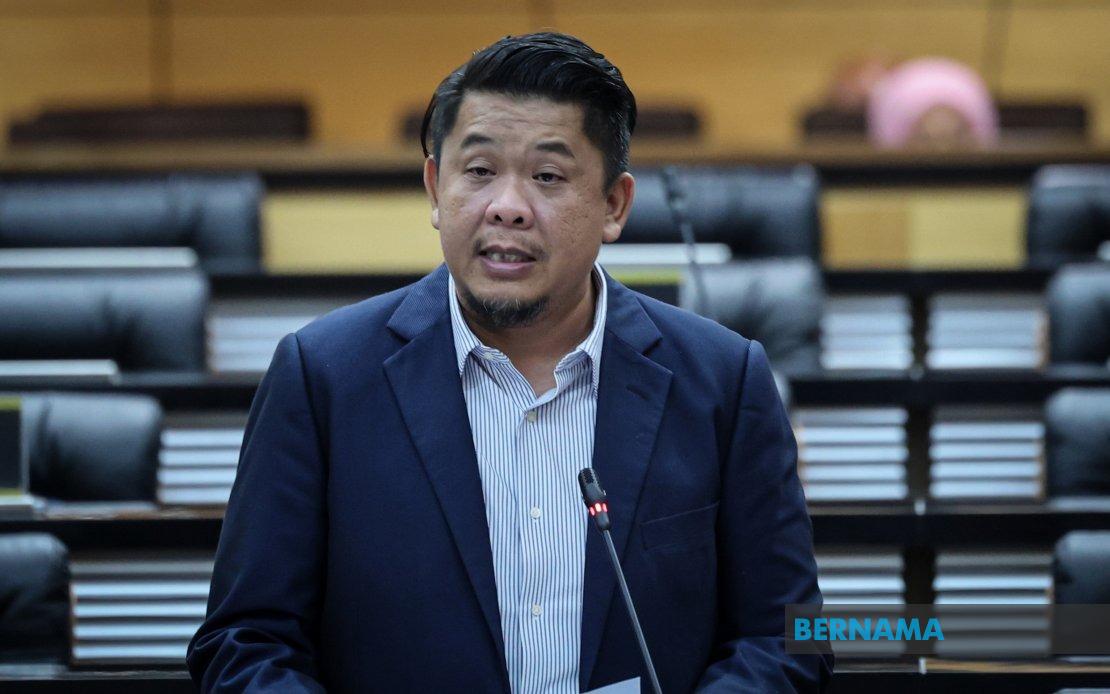
Malaysia has formally declared its intention to return to the United Nations Security Council as a non-permanent member for the 2036–2037 term, reaffirming its commitment to reshaping one of the world's most influential but contentious international bodies. The submission, made official by the Deputy Foreign Minister Datuk Lukanisman Awang Sauni, signals Kuala Lumpur's determination to inject developing-world perspectives into deliberations on global peace and security at a moment when the council faces mounting criticism over its structural ineffectiveness.
The candidacy filing comes at a time of heightened international tensions, with the Deputy Foreign Minister emphasizing that Malaysia will leverage the platform to advance a long-standing diplomatic agenda centred on dismantling the veto mechanism. Speaking in Parliament, Datuk Lukanisman outlined Malaysia's core position: the exclusive power granted to the five permanent members—the United States, Russia, China, Britain, and France—to block resolutions has become a barrier to swift international action on grave crises, from armed conflicts to humanitarian disasters.
Malaysia's opposition to the veto extends beyond philosophical principle. The nation has articulated specific conditions under which the mechanism should be curtailed or eliminated entirely. According to the Deputy Foreign Minister, Malaysia believes the veto should be prohibited in instances involving violations of international law, particularly catastrophic crimes including war crimes, genocide, and crimes against humanity. The emphasis on civilian infrastructure destruction appears to reference the ongoing conflict in Gaza, illustrating how Malaysia frames its reform ambitions within current geopolitical disputes.
Foreign Minister Datuk Seri Mohamad Hasan is expected to reinforce this position during Malaysia's National Statement at the 81st UN General Assembly Debate scheduled for September in New York. This high-profile platform will allow Malaysia to present its candidacy directly to the global community whilst simultaneously pressuring permanent members to acknowledge the growing resentment toward the veto's abuse. For Malaysian policymakers, the dual messaging—a formal bid coupled with substantive criticism of the council's structure—represents a calculated diplomatic strategy aimed at building support among fellow non-aligned and developing nations.
Malaysia's previous service on the UNSC provides institutional experience and credibility to its reform arguments. The nation has consistently positioned itself as an advocate for the Global South, leveraging its membership in various regional and international groupings to amplify voices often sidelined in New York's corridors of power. A second term would enable Kuala Lumpur to deepen these efforts during a period when the council's legitimacy is increasingly questioned by smaller and mid-sized nations frustrated by their exclusion from decision-making on matters affecting global security.
The veto system, established in 1945 to reflect post-World War II power distribution, has become a lightning rod for reform advocates who argue it is anachronistic and counterproductive. Permanent members have wielded the veto to protect allies or block action against themselves, most recently exemplified by Russia's repeated use to shield itself and its allies from censure over Ukraine, and by Western vetoes protecting Israel during the Gaza emergency. Malaysia's position aligns with broader arguments within the developing world that the council requires structural transformation to maintain relevance and moral authority.
The bid also reflects Malaysia's broader foreign policy orientation toward multilateralism and advocacy for international law. As a middle-power nation without permanent seat status, Malaysia has consistently championed the interests of non-aligned countries and emerging economies. A successful candidacy would provide a two-year platform to amplify these concerns at the highest levels of international governance. The timing of the submission, roughly a decade before the actual service period, allows Malaysia to build coalitions and secure support among the 193 UN member states that vote on non-permanent seat allocations.
Regionally, Malaysia's candidacy carries implications for Southeast Asia's diplomatic standing. The Association of Southeast Asian Nations has long sought greater representation and influence in global governance structures. Malaysia's push for UNSC reform resonates with ASEAN's broader agenda of championing multilateralism, maintaining international law, and reducing great-power domination. Success in securing the seat would enhance the region's collective voice on international security matters whilst reinforcing ASEAN's commitment to rules-based international order.
Domestically, the foreign policy emphasis on UNSC reform and global peace serves Malaysia's interest in projecting itself as a principled actor on the world stage. Parliamentary questioning about the veto's disproportionate impact, posed by member Datuk Seri Sh Mohmed Puzi Sh Ali, indicates that these issues resonate across Malaysia's political spectrum. By framing its candidacy around justice and institutional reform rather than narrow national interest, Kuala Lumpur appeals to both domestic constituencies and the broader international community that increasingly views the current UNSC structure as illegitimate.
The path to securing the non-permanent seat is not automatic. Malaysia will face competition from other nations seeking similar positions, and permanent members may view some reform proposals with skepticism. Nevertheless, Malaysia's candidacy and its accompanying diplomatic messaging represent a calculated bid to shape the international security agenda whilst positioning the country as a serious voice for institutional change in global governance.

