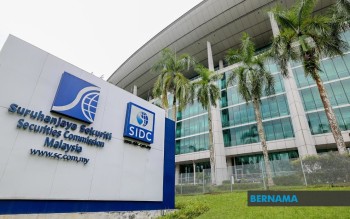
Malaysia's government is making a deliberate push to attract Russian capital into its Islamic finance sector, signalling a significant shift in the country's investor diversification strategy. Working alongside the Securities Commission Malaysia, the Ministry of Finance has outlined an ambitious plan to deepen engagement with Russian and Central Asian financial actors, positioning the nation as a bridge between Moscow's financial interests and global Islamic capital markets. The initiative reflects a broader recognition that Malaysia's established credentials in shariah-compliant finance can serve as a foundation for expanding into untapped geographic markets, particularly among investors seeking alternatives to traditional Western financial channels.
The cornerstone of this strategy centres on a planned exploratory mission to Central Asia scheduled for 2026 or 2027, framed explicitly as part of the Islamic capital market's internationalisation agenda. This visit, which will include Russia, aims to accomplish multiple objectives simultaneously: evaluating how receptive these markets are to adopting Islamic finance structures, building networks among key stakeholders, and establishing the architectural foundations for a connected ecosystem linking Malaysia with the broader Eurasian region. Rather than a simple sales pitch, Malaysian authorities envision this engagement as a mutual assessment of opportunity, recognising that successful market entry requires understanding local regulatory environments, existing financial infrastructure, and investor appetite for shariah-compliant instruments.
A particularly significant development emerged in May 2025 when the Head of the Republic of Tatarstan expressed formal interest in adopting Malaysia's Islamic finance development model. This endorsement from a major Russian federal subject opens a tangible pathway for Malaysia to export not merely financial products but also expertise, advisory services, and institutional knowledge accumulated through two decades of developing the world's most sophisticated Islamic finance ecosystem. The Ministry of Finance has specifically identified shariah advisory services, management consultancy, professional training, and capacity-building as high-potential service exports that can generate revenue while simultaneously establishing Malaysian institutions as trusted advisors in the Russian market.
The diplomatic groundwork for this expansion has been quietly progressing for several years. The Securities Commission has conducted bilateral meetings with both the Central Bank of Russia and the Saint Petersburg International Mercantile Exchange in 2023 and again in 2025, laying the bureaucratic and technical foundations necessary for substantive financial cooperation. These conversations suggest that Russian monetary authorities are seriously contemplating how Islamic finance mechanisms might integrate into their broader financial system, possibly to diversify funding sources, serve Muslim-majority populations in regions like Tatarstan, or position themselves as alternative financial hubs independent of Western-dominated systems.
For Malaysia, this represents more than simply opening a new market. The country has long positioned itself as the global headquarters of Islamic finance, competing with the Gulf states and increasingly with Indonesia. However, market saturation in traditional strongholds and the geographic concentration of Islamic finance expertise in the Middle East have created a compelling case for expansion into underserved regions. Russia, despite its substantial Muslim population and growing financial sophistication, has historically remained peripheral to global Islamic finance discussions. Malaysia's systematic approach to changing this reflects strategic thinking about market gaps and first-mover advantages in establishing standards and preferences in emerging markets.
The government has also framed this initiative within its Capital Market Masterplan 2026-2030, indicating that Russian outreach is not a peripheral initiative but rather integrated into Malaysia's core financial development strategy. This masterplan emphasises regulatory modernisation, product innovation across asset classes, and deepened international partnerships—all critical elements for successfully competing in global capital markets. By threading the Russian expansion through this overarching framework, policymakers are signalling that diversifying the investor base and geographic reach of Malaysian Islamic finance requires sustained institutional investment and coordination across multiple agencies.
Crucially, Malaysian authorities have explicitly stated that investment from Russia will be welcomed subject to compliance with domestic laws and international standards. This language appears calibrated to address potential Western concerns about financial flows while maintaining diplomatic neutrality. For Russian investors, it provides assurance that they will not face arbitrary restrictions based on geopolitical considerations, though regulatory scrutiny will remain robust. This balance is delicate but essential for credibility—Malaysia must simultaneously attract Russian capital while maintaining its standing within the international financial system and compliance with sanctions regimes where applicable.
The broader context involves Malaysia's aspiration to serve as a connecting node in global financial flows, particularly between non-aligned countries seeking alternatives to dollar-denominated finance and Western banking infrastructure. Islamic finance, with its principles of ethical investment, asset-backed instruments, and prohibition of speculative excess, appeals to investors across ideological lines. Russia's historical experience with financial sanctions and exclusion from certain Western financial channels creates natural incentives to explore alternative mechanisms, and Malaysia's established credibility in shariah finance offers a trusted partner for such diversification.
From a Southeast Asian perspective, Malaysia's Russian pivot also carries implications for regional financial integration. If successful, the model could extend to other countries in the region exploring Islamic finance adoption or expansion. Indonesia, with the world's largest Muslim population, and other ASEAN members with significant Islamic constituencies could potentially benefit from similar ecosystem-building exercises. Malaysia's role as a regional hub becomes more pronounced if it can establish itself as the gateway through which investors from outside traditional Islamic finance strongholds access both regional and global Islamic capital markets.
The emphasis on Maqasid al-Shariah—the underlying objectives and principles of Islamic law—in the ministry's public statements suggests that Malaysian authorities view this expansion as more than commercial opportunity. By framing Russian engagement within the ethical and moral framework of Islamic finance rather than purely transactional terms, Malaysia is positioning itself as an institution with values that transcend narrow financial interest. This rhetorical choice matters for long-term relationship building and for establishing Malaysia as a custodian of Islamic finance principles rather than merely a service provider.
Looking ahead, the success of this strategy will depend on tangible execution during the planned 2026-2027 visits and follow-up negotiations. Russia's actual commitment to adopting Islamic finance structures at scale remains uncertain, and political relationships can shift rapidly. However, Malaysia's systematic approach—combining government support, regulatory framework enhancement, international partnership development, and expertise export—demonstrates serious commitment to capturing this emerging market opportunity. For investors and businesses across Southeast Asia, the unfolding Malaysia-Russia Islamic finance relationship represents both a competitive dynamic and a potential template for how regional financial hubs can leverage specialised expertise to access new geographic markets in an increasingly multipolar global economy.

