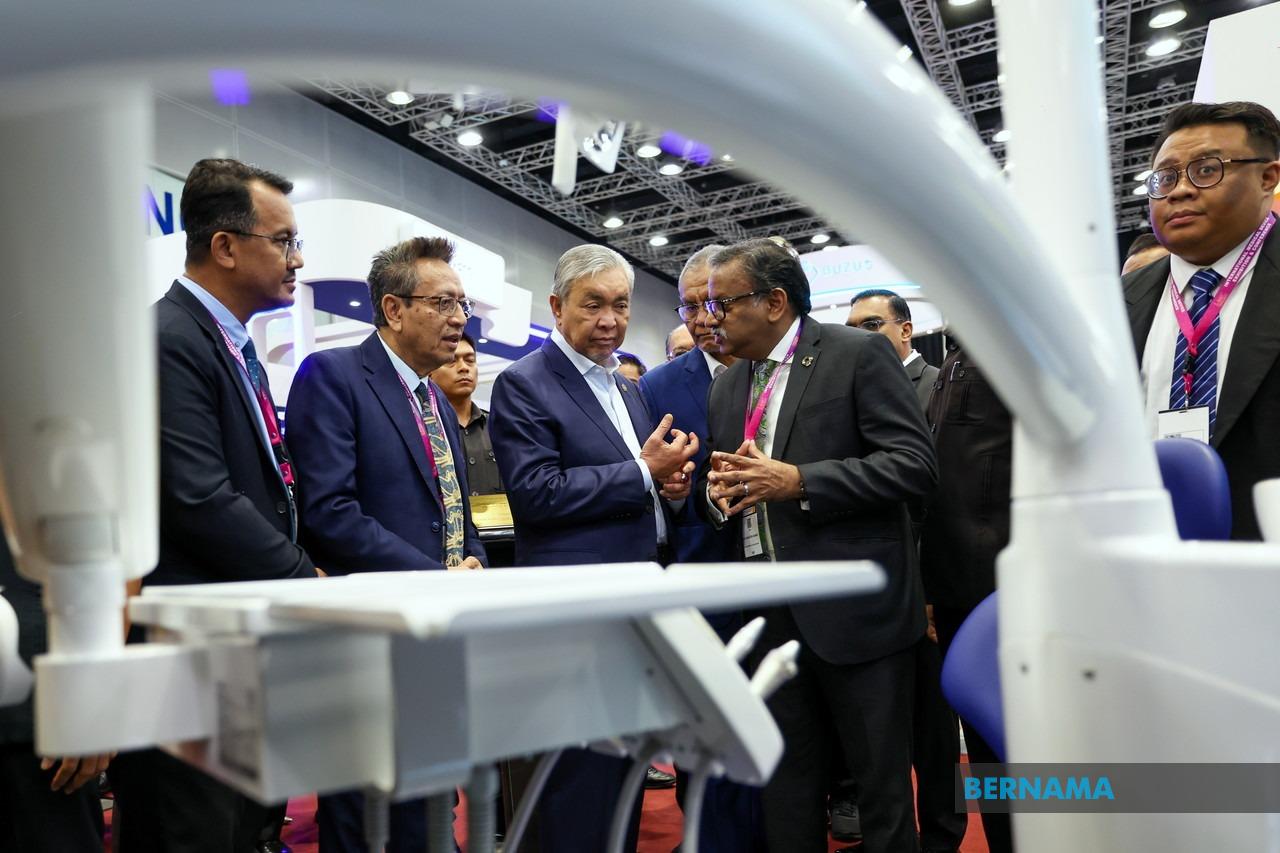
Malaysia has set its sights on dramatically expanding its medical device export footprint, with Deputy Prime Minister Datuk Seri Dr Ahmad Zahid Hamidi announcing an ambitious goal to exceed RM50 billion in shipments by 2030, a significant leap from the RM34.54 billion recorded in 2025. Speaking at the closing ceremony of the International Medical Device Exhibition and Conference (IMDEC) 2026 in Kuala Lumpur, Ahmad Zahid outlined a comprehensive three-pillar strategy designed to propel the country's medical technology sector into the upper echelon of global manufacturing and innovation.
The first pillar centres on this export acceleration, but Ahmad Zahid stressed that sheer volume growth would be insufficient. Instead, Malaysia must increasingly pivot towards manufacturing higher-value medical devices that command premium pricing and reflect advanced technological capabilities. This shift represents a maturation of the sector beyond its traditional reliance on lower-margin assembly and production of standardized components, positioning Malaysia to capture greater profitability from each export dollar. The emphasis on value-add aligns with regional trends where competitors are similarly moving up the manufacturing value chain, making differentiation through quality and innovation essential for sustained competitiveness.
The second ambition articulated by Ahmad Zahid involves nurturing at least ten homegrown Malaysian MedTech champions capable of holding their own in regional and international markets. This objective acknowledges that while Malaysia has successfully attracted multinational corporations and established itself as a manufacturing hub, the country has produced relatively few globally recognized indigenous medical technology companies that command their own intellectual property portfolios and brand recognition. By developing such champions, Malaysia would reduce its dependency on foreign investors and create indigenous innovation ecosystems that retain technology leadership and wealth creation within the country. Ahmad Zahid emphasized that Malaysia would continue welcoming established international MedTech firms while simultaneously building the domestic capability foundation required for local enterprises to thrive.
The third and perhaps most revealing pillar of this strategy concerns employment quality rather than mere job creation. Ahmad Zahid highlighted that at least half of all positions generated by new MedTech investments by 2030 should constitute managerial, technical, and supervisory roles, a meaningful upgrade from the current baseline of just 33.1 percent recorded in 2025. This metric reflects a critical policy concern across Southeast Asia: ensuring that manufacturing expansion translates into meaningful skill development and income advancement for the local workforce, rather than merely creating lower-wage assembly positions. Ahmad Zahid's framing captured the tension inherent in attracting investment—capital may be geographically mobile, but if Malaysia seeks to build genuine productive capacity and technical expertise, the workforce must be equipped with corresponding capabilities.
Integral to this employment strategy is Ahmad Zahid's call for earlier and deeper collaboration between government, educational institutions, and corporate investors. Rather than waiting for skill shortages to emerge after facilities are operational, Ahmad Zahid urged companies to engage during the planning phase, helping design vocational and technical programmes, identifying emerging skill requirements, and creating apprenticeship pathways that expose students to real-world industrial conditions. This proactive approach reduces onboarding friction, accelerates productivity, and builds a pipeline of employment-ready candidates. For Malaysia's technical and vocational education system, which Ahmad Zahid oversees as National Technical and Vocational Education and Training Council chairman, this represents an opportunity to align curriculum more directly with industry demand and secure corporate support for training infrastructure.
The strategic context for these ambitions is reinforced by strong market fundamentals. In 2025 alone, Malaysia approved RM4 billion in new medical device investments spanning forty-six separate projects, generating nearly 3,400 employment opportunities. These figures demonstrate sustained foreign investor confidence and suggest that Malaysia's existing infrastructure, regulatory frameworks, and skilled labour base remain attractive to international capital. The global medical device industry, valued at over USD572 billion in 2025, is projected to nearly double to exceed USD1 trillion by 2034, creating an expanding opportunity for Malaysia to capture market share during this growth phase.
International Medical Device Exhibition and Conference 2026, held from August 26 to 28, provided the platform for Ahmad Zahid's announcements and brought together more than 160 exhibitors alongside over fifty regional and international speakers specializing in regulation, innovation, and healthcare transformation. Such gatherings serve multiple purposes—they showcase Malaysia's capabilities to prospective investors, facilitate networking among industry players, and signal government commitment to sectoral development. The size and calibre of participation suggests that Malaysia's positioning as a serious contender in the global MedTech supply chain is increasingly recognized.
For Malaysian policymakers, the export and employment targets represent quantifiable benchmarks against which progress can be measured. Achieving RM50 billion in exports would require approximately 45 percent growth over five years, equivalent to a compound annual growth rate of approximately 8 percent, a challenging but conceivable target given current investment flows. The employment quality target of 50 percent MTS positions reflects international best practice in manufacturing-led development, where successful countries have historically used selective industrial policy to upgrade workforce capabilities in tandem with capital inflows.
The broader implications extend beyond Malaysia's borders. As regional competitors in Thailand, Vietnam, and Indonesia similarly pursue medical device sector development, Malaysia's focus on differentiation through higher-value products and indigenous innovation capability-building offers a distinctive strategic pathway. Rather than competing purely on cost and volume, Malaysia is positioning itself as a source of advanced manufacturing expertise and intellectual property generation, a positioning that could prove more resilient to future cost-based competition from lower-wage economies. This approach also responds to global supply chain reconfiguration trends, wherein multinational medical device companies are actively diversifying their geographic footprints to reduce concentration risk and tap into regional growth markets, with Southeast Asia representing a logical destination for such diversification.

