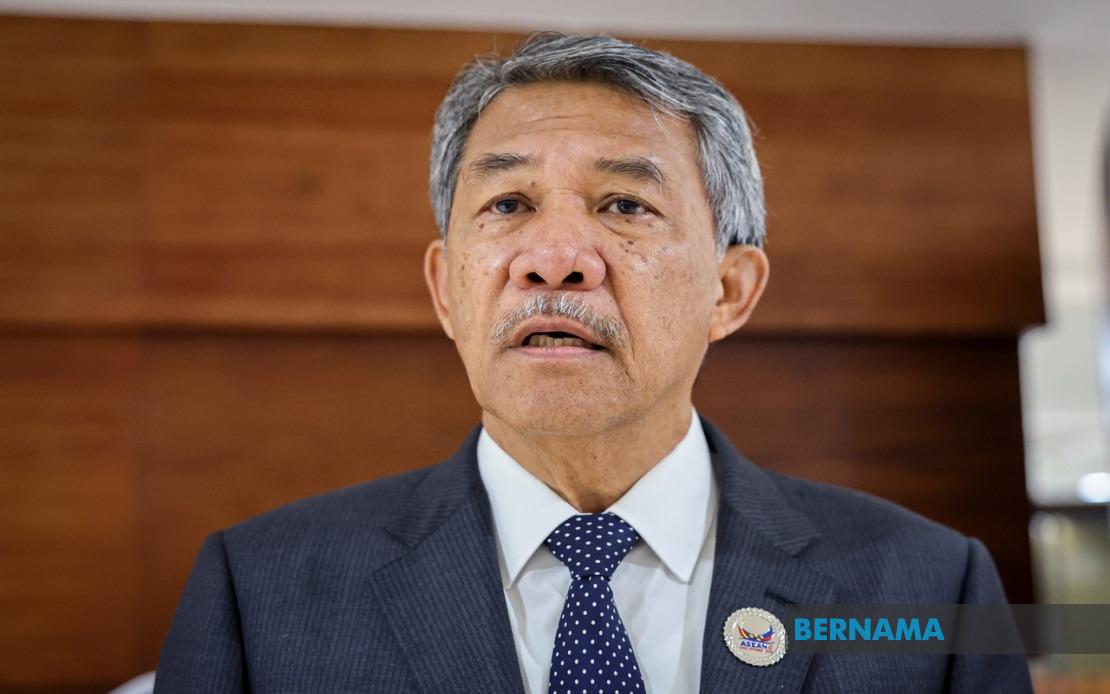
Malaysia has been tasked with steering ASEAN's relationship with Turkiye following the regional bloc's decision to accept the country as a new Dialogue Partner, Foreign Minister Datuk Seri Mohamad Hasan announced in Manila on July 21. Both developments emerged from the plenary session of the 59th ASEAN Foreign Ministers' Meeting and Post-Ministerial Conference, underscoring the bloc's calculated expansion of its diplomatic partnerships in a shifting geopolitical environment.
The elevation of Turkiye represents a measured step by ASEAN to broaden its strategic partnerships beyond traditional Asia-Pacific relationships. Mohamad explained that the process had been deliberately rigorous, with ASEAN applying stringent criteria to any application for Dialogue Partner or membership status. The deliberation had proceeded through multiple tiers of review, involving the ASEAN secretariat, foreign ministers, and officials, reflecting the bloc's commitment to maintaining selective standards for institutional expansion.
Malaysia's role as country coordinator carries particular weight given its current chairmanship of ASEAN in 2025. The country had formally championed Turkiye's admission during its tenure, positioning itself as the natural intermediary for nurturing this emerging relationship. This responsibility will likely involve coordinating bilateral dialogues, facilitating mutual engagement initiatives, and ensuring that Turkiye's integration into ASEAN's diplomatic framework progresses smoothly. For Malaysia, the assignment underscores its influence within the regional bloc and its capacity to shape ASEAN's external engagement strategy.
The significance of Turkiye's new status extends beyond ceremonial recognition. As a transcontinental NATO member with substantial influence spanning Europe, the Middle East, and Central Asia, Turkiye brings considerable geopolitical weight to ASEAN's external relations portfolio. The partnership opens pathways for enhanced trade negotiations, defence cooperation, and cultural exchanges. For Southeast Asian nations, engagement with Turkiye offers opportunities to diversify their international partnerships and strengthen connections with a strategically positioned power that straddles multiple regions of global significance.
Simultaneously, ASEAN approved the United Kingdom's accession as a new member of the ASEAN Regional Forum during the same plenary session. This dual expansion reflects ASEAN's deliberate strategy to strengthen ties with key global actors beyond its immediate neighbourhood. The ARF, which focuses on regional security dialogue, gains added institutional depth through British participation, potentially enriching conversations on maritime security, cyber governance, and counter-terrorism initiatives.
Central to ASEAN's deliberations was the preservation of what member states characterise as their "centrality" in regional and global affairs. Mohamad emphasised that maintaining ASEAN's pivotal position remained paramount as the bloc navigates an increasingly volatile geopolitical and geo-economic landscape. This concern reflects anxieties that great-power competition and competing regional blocs could marginalise ASEAN's voice or compartmentalise Southeast Asia into competing spheres of influence. By carefully selecting new partners and maintaining institutional coherence, ASEAN seeks to retain agency over its diplomatic agenda.
The plenary session, chaired by Philippine Foreign Affairs Secretary Ma. Theresa P. Lazaro, also afforded space for discussing ASEAN Community Vision 2045—the bloc's long-term strategic blueprint for integration and development. ASEAN Secretary-General Dr Kao Kim Hourn presented updates on progress toward this vision, signalling the interconnection between internal consolidation and external engagement. The discussions underscored how ASEAN's outreach to countries like Turkiye and the United Kingdom must complement, rather than distract from, the bloc's core project of regional cohesion.
For Malaysia specifically, the appointment as country coordinator for ASEAN-Turkiye relations carries implications for its bilateral relationship with Ankara. The two countries already maintain diplomatic ties, but Malaysia's new institutional role may catalyse deeper economic and security partnerships. Turkish investments in Southeast Asia could expand, while defence cooperation frameworks might evolve. Malaysian businesses may find new opportunities in the Turkish market, and reciprocal visits by high-level officials could become more frequent and substantive.
The timing of these decisions merits attention. ASEAN's expansion of Dialogue Partners comes amid intensifying strategic competition in the Indo-Pacific and persistent tensions in the South China Sea. By welcoming countries from beyond the traditional Western alliance structure—Turkiye sits at an angle to conventional geopolitical alignments—ASEAN reinforces its commitment to strategic autonomy and non-alignment. This positioning allows the bloc to engage multiple powers without subordinating itself to any single strategic vision.
The moratorium on new Dialogue Partners, referenced by Mohamad, underscores ASEAN's cautious approach to institutional expansion. Rather than opening membership indiscriminately, the bloc has established mechanisms to evaluate applications rigorously and prevent dilution of its collective voice. Turkiye's acceptance after sustained scrutiny suggests it met stringent benchmarks, likely including demonstrated commitment to ASEAN values, economic substance, and strategic complementarity with regional interests.
Looking forward, Malaysia's stewardship of ASEAN-Turkiye ties will shape how comprehensively this partnership develops. The coordinator role involves convening working groups, facilitating sectoral dialogues, and identifying priority areas for cooperation—whether in trade, education, defence, or cultural exchange. Success in this capacity could elevate Malaysia's profile as a diplomatic orchestrator within ASEAN and position it advantageously for future regional leadership roles.
The broader implications extend to how ASEAN positions itself globally. By systematically deepening partnerships with strategically significant countries across multiple continents, the bloc constructs a diversified web of relationships that insulates it from over-dependence on any single power. For Malaysian policymakers and regional analysts, these developments signal ASEAN's determination to remain a consequential actor in an increasingly multipolar world, one that engages partners judiciously and preserves institutional coherence amid external pressures.

