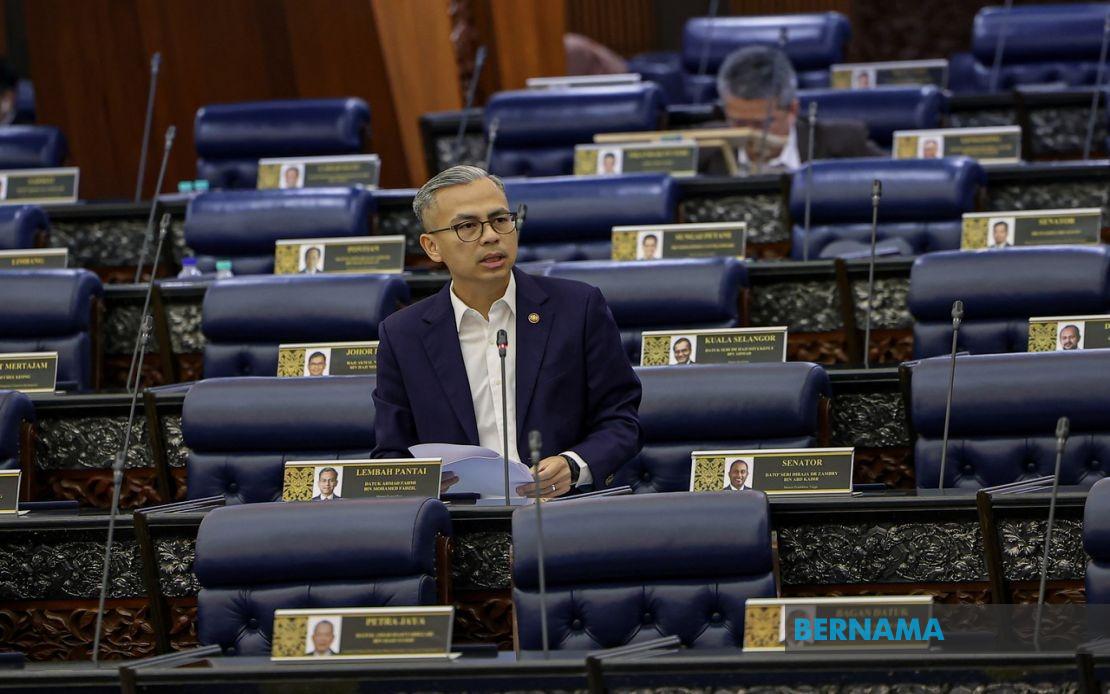
The Malaysian government has moved forward with legislative reform to address evolving security concerns within the communications sector, introducing the Communications and Multimedia (Amendment) Bill 2026 for its first reading in Parliament on July 13. Communications Minister Datuk Seri Fahmi Fadzil presented the Bill, which is expected to proceed to second reading during the current parliamentary session, signalling the government's intention to advance these provisions into law relatively swiftly.
At its core, the amendment targets Section 202 of the Communications and Multimedia Act 1998, establishing two new subsections that fundamentally reshape how Malaysia approaches universal service obligations. The legislative architecture creates explicit pathways for the government to direct the Malaysian Communications and Multimedia Commission (MCMC) to initiate or support universal service programmes where authorities determine such measures serve the national interest from a security perspective. This represents a significant evolution in how telecommunications regulation intersects with state security frameworks, reflecting broader global trends where digital infrastructure increasingly intersects with national resilience concerns.
The Bill's introduction of subsections 202(1A) and 202(1B) grants the Minister specific authority to mandate MCMC involvement in security-focused universal service initiatives covering both network services and application-based services. This dual focus acknowledges the modern reality that telecommunications security extends beyond traditional infrastructure to encompass digital applications and data services. The amendments effectively bridge the gap between legacy telecommunications regulation and contemporary digital service provision, recognising that cybersecurity and application-level threats now pose comparable risks to physical network integrity.
Critically, the Bill establishes that determinations regarding what constitutes a national security matter shall rest with the National Security Council operating under the National Security Council Act 2016. This institutional arrangement ensures that decisions triggering new universal service obligations operate within Malaysia's established national security decision-making apparatus rather than residing unilaterally with the communications regulator. The placement of this authority reflects a governance structure that centralises high-level security determinations while delegating operational implementation to specialist agencies, a design intended to balance rapid response capabilities with institutional oversight.
The proposed amendments contemplate diverse operational mechanisms for achieving security-driven universal service objectives. These include encouraging or facilitating the installation of network infrastructure positioned to enhance national security outcomes and mandating the provision or promotion of specific network or application services where security benefits have been established. This flexibility suggests the government anticipates varied implementation scenarios—ranging from geographic coverage expansion to strategic technology deployment—without prescribing fixed approaches upfront. The regulatory flexibility embedded within the framework allows for adaptive responses to emerging security challenges without requiring immediate legislative amendment.
Subsection 202(1B) incorporates a consistency requirement, stipulating that any national universal service initiative undertaken under this expanded framework must remain aligned with the overarching objects of the Communications and Multimedia Act 1998. This constraint prevents the security amendment from becoming a vehicle for regulatory overreach divorced from the Act's foundational telecommunications principles. By anchoring new security powers within the Act's original purposes, the legislation attempts to maintain doctrinal coherence within communications law while acknowledging that security considerations now form legitimate elements of those purposes.
The amendments to Section 202(2) empower the Minister to formulate detailed regulations governing national universal service initiatives through mechanisms already embedded within Section 16 of Act 588. This regulatory pathway avoids requiring specific parliamentary approval for each operational directive, enabling the executive branch to adapt implementation procedures as circumstances evolve. The regulatory approach provides necessary operational flexibility, though it also concentrates considerable discretion within the executive apparatus, potentially warranting parliamentary scrutiny of any regulations subsequently issued under these expanded powers.
From a Malaysian economic perspective, the government has explicitly committed that implementation of this Bill will impose no additional financial burden on the public treasury. This assurance carries significant weight given Malaysia's ongoing fiscal consolidation objectives and the substantial capital requirements characteristic of telecommunications infrastructure projects. The commitment suggests that security-driven universal service obligations will either be absorbed within existing MCMC operational budgets or funded through mechanisms not involving direct government expenditure—potentially including cost-sharing arrangements with telecommunications carriers themselves.
The Bill's timing reflects Malaysia's evolving assessment of digital infrastructure vulnerabilities in an increasingly contested security environment. Throughout Southeast Asia, governments have progressively integrated security considerations into telecommunications regulation, recognising that critical digital infrastructure underpins economic resilience, financial stability, and emergency response capabilities. Malaysia's legislative initiative aligns with comparable regional and global movements toward embedding security requirements within universal service frameworks, though the specific Malaysian approach centres institutional security determinations within the National Security Council rather than distributing such authority across multiple agencies.
For telecommunications operators in Malaysia, these amendments introduce a new category of regulatory obligation structured around national security imperatives rather than purely commercial market considerations. Companies will need to assess whether their existing network architectures and service portfolios align with potential security-driven universal service directives that may emerge following the Bill's passage. The framework's flexibility regarding implementation mechanisms suggests that specific operational requirements will emerge through regulatory guidance rather than statutory prescription, necessitating ongoing dialogue between operators and the MCMC regarding compliance expectations.
The legislative framework also carries implications for Malaysia's position within regional digital governance frameworks and international telecommunications standards. As governments worldwide increasingly weaponise telecommunications regulation to advance security objectives, Malaysia's approach demonstrates the balancing act required between enabling security-focused network control and maintaining the regulatory predictability that international operators and foreign investors require. The explicit consistency requirement anchoring security provisions to Act 588's traditional objects suggests an intent to preserve such predictability within defined boundaries.
Looking forward, the Bill's passage will likely trigger detailed regulatory guidance from the MCMC and potentially from the National Security Council regarding how security determinations should inform universal service planning. Telecommunications industry participants should anticipate evolving requirements for network resilience, application security certification, and infrastructure investment aligned with security-identified priorities. The legislative amendment represents not merely a technical modification to existing law but a foundational shift in how Malaysia formally integrates security considerations into universal service provision—a shift with substantial implications for infrastructure investment decisions, regulatory compliance, and the relationship between security objectives and competitive telecommunications markets.

