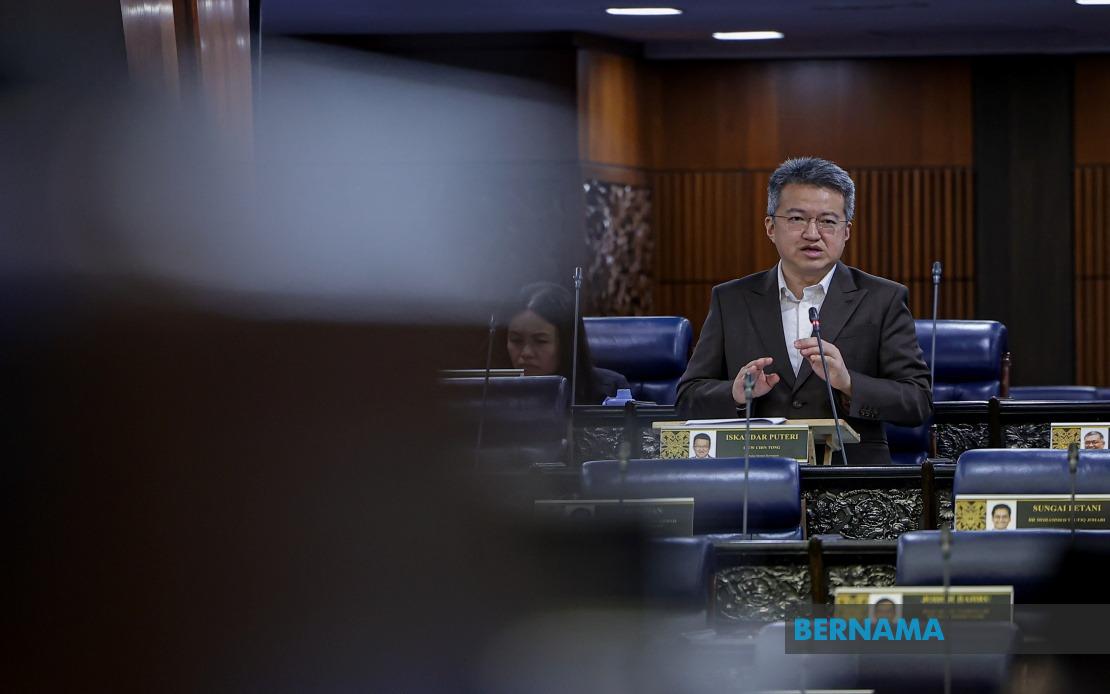
The MADANI Government continues pursuing systematic institutional reforms aimed at rebuilding Malaysia's tarnished international reputation and restoring investor confidence following the 1Malaysia Development Berhad scandal. Deputy Finance Minister Liew Chin Tong told Parliament that the administration, led by Prime Minister Datuk Seri Anwar Ibrahim, has introduced a series of structural changes designed to prevent any future occurrence of financial mismanagement on the scale witnessed with 1MDB while simultaneously working to strengthen market confidence in the nation's fiscal stewardship.
The 1MDB affair remains one of Malaysia's most significant governance failures, with billions in public funds diverted through a complex web of shell companies and international transactions. The fallout extended far beyond domestic political consequences, prompting investigations by foreign law enforcement agencies, triggering cross-border legal proceedings, and generating sustained international media scrutiny that fundamentally undermined global perceptions of Malaysia's institutional integrity and public finance management. Liew emphasised that this reputational damage has created considerable headwinds for government efforts to attract foreign investment and maintain confidence among international markets in the stability and reliability of Malaysian fiscal policies and institutions.
Central to the reform agenda is the enactment of the Public Finance and Fiscal Responsibility Act 2023, legislation designed to embed stronger fiscal discipline throughout the government apparatus and establish clear mechanisms to prevent the concentration of power in individual hands that characterised the 1MDB misadventure. This framework represents a deliberate shift toward institutional restraint, establishing statutory requirements that constrain executive discretion in managing public finances and creating enforceable accountability mechanisms that were conspicuously absent during the 1MDB period.
Complementing this legislative foundation, the government has amended the Audit Act to significantly expand the investigative powers of the Auditor-General's office. The revised framework introduces a "follow the public money" approach that enables more penetrating and comprehensive audits of public expenditure flows, moving beyond traditional compliance auditing toward genuine forensic examination of how government funds are deployed across the system. This represents a fundamental shift in the auditor's role from passive compliance monitor to active guardian of fiscal integrity.
Additional governance initiatives under development include a dedicated Government Procurement Bill, which will establish transparent, standardised procedures for public purchasing that eliminate opportunities for patronage and corruption. Simultaneously, the government is reforming the regulatory and legal framework governing state-owned enterprises, recognising that many 1MDB vulnerabilities stemmed from SOE structures that lacked adequate oversight and accountability mechanisms. These enterprises, often operating with considerable autonomy from standard public sector controls, became vehicles for financial misadventure precisely because their governance frameworks contained significant gaps.
The financial toll of 1MDB continues to drain government resources years after the scandal's exposure. Since 2017, the Malaysian government has expended RM18.7 billion from both operating and development budgets to satisfy 1MDB's obligations, a staggering diversion of resources from productive public investment toward remedying past financial mismanagement. The burden intensified after the MADANI Government assumed office in March 2023, when it faced the immediate challenge of redeeming USD3 billion in government-guaranteed 1MDB bonds, requiring an allocation of RM13 billion from the development budget—equivalent to approximately 13.1 percent of that year's entire development expenditure.
This fiscal hemorrhage illustrates a fundamental problem with the 1MDB structure: government guarantees on 1MDB debt instruments created an explicit liability for the federal government, transforming what appeared initially as an off-balance-sheet investment vehicle into a direct fiscal obligation when the underlying scheme collapsed. The scale of this commitment—requiring the government to redirect more than one-tenth of annual development spending toward debt redemption—underscores the magnitude of the strategic miscalculation involved in enabling 1MDB's expansion without adequate oversight.
Despite these drains on fiscal capacity, Liew reported that Malaysia has achieved record-breaking investment approvals and trade performance under the current administration's economic stewardship. This counterintuitive outcome—that the government has attracted heightened investor interest despite continuing 1MDB obligations—suggests that the comprehensive reform agenda has gained measurable international credibility. Investors appear persuaded that the institutional changes represent genuine commitments to reformed governance rather than rhetorical gestures.
The government's position in global competitiveness rankings has also improved, indicating that Malaysia's reputation, while still bearing 1MDB's scars, is gradually recovering through demonstrated institutional change. This gradual rehabilitation of Malaysia's standing among international economic actors depends heavily on consistency in implementing the announced reforms and demonstrating that new governance frameworks produce tangible results in preventing corruption and mismanagement.
For Malaysian citizens and businesses, these reforms carry direct implications. Stronger fiscal discipline and expanded audit powers mean government resources are less vulnerable to misappropriation, theoretically improving the allocation of public funds toward infrastructure, education, and healthcare rather than enriching connected elites through opaque financial schemes. Enhanced procurement transparency should drive competitive bidding processes that reduce costs and improve service quality in government contracting.
From a regional perspective, Malaysia's governance reforms assume significance beyond national borders. Southeast Asian economies navigating similar tensions between development ambitions and institutional capacity watch Malaysia's reform trajectory closely. The MADANI Government's investment in robust institutional frameworks—from expanded audit authority to public finance legislation—offers either a template for peer nations facing governance challenges or a cautionary example if reforms prove insufficient to prevent future scandals.
The government's determination to prevent 1MDB recurrence reflects recognition that fiscal scandals inflict damage extending far beyond immediate financial losses. The reputational harm lingers, distorting international perceptions of an entire nation's competence and trustworthiness for years after initial exposure. Malaysia's experience demonstrates that rebuilding investor confidence requires not merely rhetorical commitment to reform but demonstrated structural change, legislative anchoring of accountability mechanisms, and sustained institutional performance that vindicates public commitments to improved governance.

