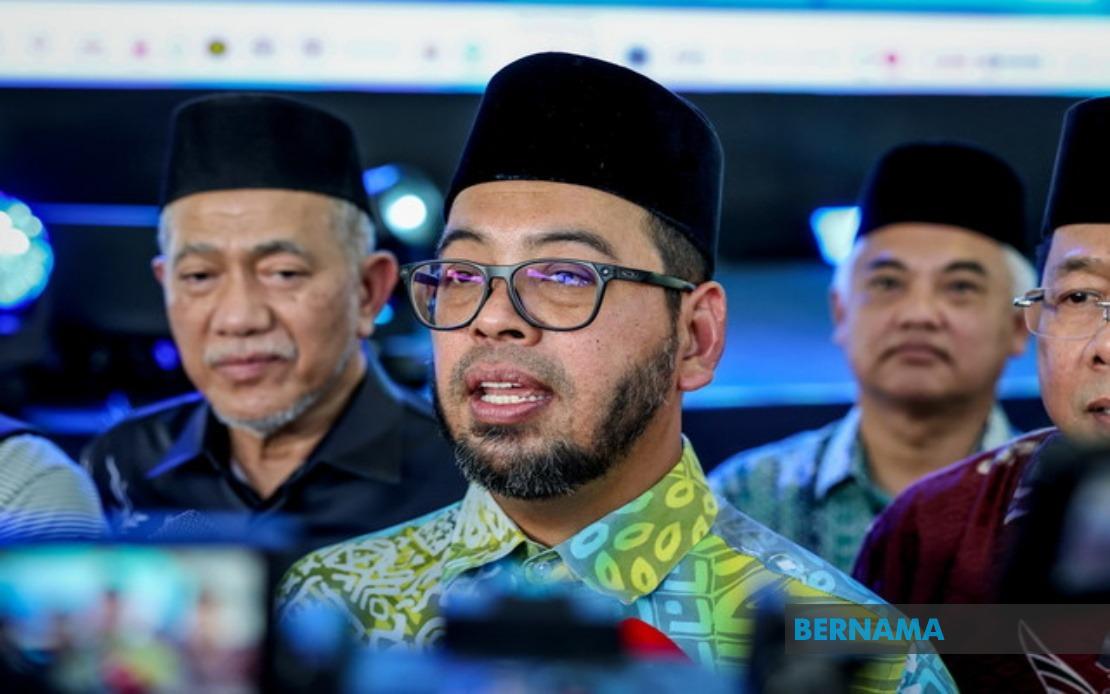
Malaysia is consolidating its position among the world's most respected nations in managing Islamic affairs, according to Minister in the Prime Minister's Department (Religious Affairs) Dr Zulkifli Hasan, who highlighted how the country's institutional frameworks and policy approaches have won admiration from international observers and scholars across multiple continents.
Speaking at the opening of the Northern Zone MADANI Ulama and Umara Multaqa at Masjid Timah in Permatang Pauh, Bukit Mertajam, Dr Zulkifli Hasan underscored that Malaysia's international standing rests on empirical foundations. The minister noted that measurable indicators and assessments by respected global analysts consistently validate the country's competence in this domain, a reality that contradicts occasional assertions about Islam facing marginalisation domestically.
"When I travel abroad, Malaysia's management of Islamic affairs is often observed and admired by other countries. Data consistently shows that we remain among the world's leaders in this field," Dr Zulkifli Hasan remarked, emphasizing that international perceptions extend beyond mere diplomatic courtesy. The global community, he stressed, recognizes Malaysia as a substantive contributor to advancing religious affairs governance at the planetary scale.
The country's halal certification infrastructure stands as a centerpiece of these achievements. Administered by the Department of Islamic Development Malaysia (JAKIM), the halal certification system has established itself as among the most rigorous and internationally trusted mechanisms for verifying Islamic compliance in food, pharmaceuticals, and other commercial sectors. This framework has become a benchmark that other Muslim-majority nations reference when developing their own certification protocols.
Malaysia's hajj operations constitute another pillar of international recognition. Lembaga Tabung Haji, the dedicated institution managing the annual pilgrimage, has garnered multiple global acknowledgments for its operational efficiency, logistical coordination, and care standards extended to Malaysian pilgrims. This achievement is particularly significant given the logistical complexity of facilitating hundreds of thousands of pilgrimages annually while maintaining service quality and financial prudence.
The Islamic finance sector represents perhaps Malaysia's most dominant contribution to global Islamic economic architecture. The country has maintained the world's leading position in Islamic finance for eleven consecutive years, a distinction reflecting decades of regulatory refinement, institutional development, and market confidence. Malaysian Islamic banks, takaful operators, and sukuk issuers now serve as reference points for jurisdictions seeking to develop Shariah-compliant financial ecosystems.
Educational initiatives underscore the government's commitment to deepening Islamic knowledge alongside contemporary skills development. The Kelas Al-Quran dan Fardu Ain (KAFA) 2.0 curriculum initiative represents a pedagogical evolution, moving beyond rote memorization toward practical application and lived understanding of Islamic teachings. This approach aims to produce graduates equipped with both spiritual grounding and practical competencies relevant to modern society.
The tahfiz ecosystem demonstrates Malaysia's institutional sophistication in supporting Quranic memorization. A layered structure comprising the National Tahfiz Council, National Tahfiz Policy, National Tahfiz Standard, and the Malaysia Tahfiz Certificate creates pathways enabling graduates to transition into professional and higher education trajectories. Rather than confining tahfiz students to purely religious vocations, this framework facilitates their entry into engineering, medicine, law, and other fields, thereby expanding the pool of professionals grounded in Islamic scholarship.
The government's articulated commitment to producing more professional huffaz who can contribute to national development reflects a strategic vision integrating religious learning with economic participation. This approach differs from frameworks elsewhere that sometimes compartmentalize religious and secular education, creating artificial barriers between spiritual formation and professional advancement.
During the same event, Yayasan Takwa distributed RM280,000 across 28 mosques in Penang, with each institution receiving RM10,000. Selected religious schools also secured equivalent allocations, demonstrating tangible resource commitment to institutional strengthening at grassroots levels. These contributions address infrastructure and operational needs that directly influence community engagement with Islamic institutions.
For Malaysian policymakers and regional observers, these developments suggest that Malaysia's Islamic affairs governance model has become a reference point for other Southeast Asian and wider Muslim-majority nations grappling with questions of religious institutional development, education, and economic integration. The combination of institutional capacity, regulatory sophistication, and policy innovation positions Malaysia as a source of lessons applicable across diverse contexts.
As regional religious dynamics continue evolving and global interest in Islamic governance frameworks persists, Malaysia's demonstrated capabilities offer templates that balance modern institutional requirements with authentic Islamic principles. The country's trajectory indicates that comprehensive approaches spanning certification systems, financial architecture, educational curricula, and community support mechanisms generate both domestic stability and international credibility in managing complex religious affairs.

