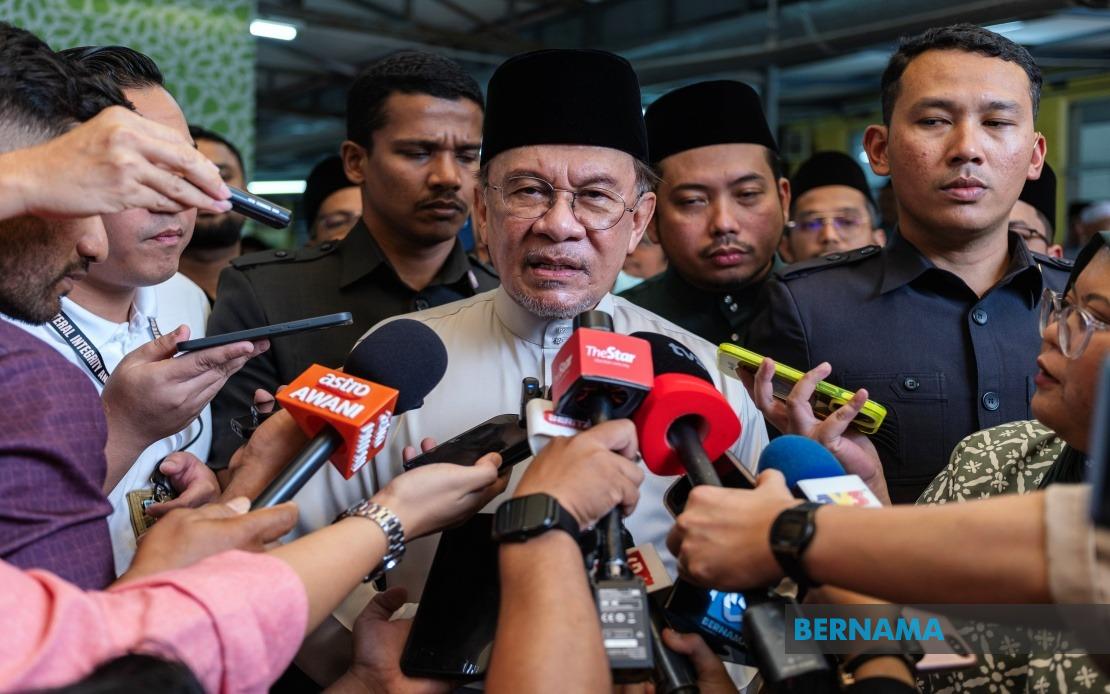
Malaysia will not waver from its position on Low Taek Jho, the fugitive businessman better known as Jho Low, irrespective of any potential pardon considerations by the United States, Prime Minister Datuk Seri Anwar Ibrahim declared on Friday. Speaking after prayers at Masjid As-Sodiqin in Taman Kobena, Kuala Lumpur, the Prime Minister underscored the government's commitment to legal principles, stating that Malaysia's response to any US decision on the matter would remain unchanged and uninfluenced by external pressure.
Anwar's remarks come amid international media speculation that Jho Low may feature among approximately 250 individuals under consideration for presidential clemency by US President Donald Trump, with the potential announcement timed to coincide with the United States' 250th Independence Day celebrations. The timing of such reports has drawn heightened attention given Malaysia's long-standing pursuit of accountability related to the 1MDB scandal, making any development concerning Jho Low's legal status a matter of considerable domestic concern.
The Prime Minister's statement carried unmistakable resolve, explicitly affirming that Malaysia would neither be unsettled nor deterred by whatever determination the American authorities ultimately reach. By characterizing any US decision as an internal matter for that nation alone, Anwar positioned Malaysia's response within the framework of respecting sovereign decision-making while simultaneously reiterating national priorities. This careful diplomatic language reflects the delicate balance required when addressing matters involving a major ally whilst protecting domestic interests.
Jho Low's case remains emblematic of Malaysia's struggle against corruption and financial crime on the international stage. The businessman's alleged central role in the misappropriation of billions of ringgit from state investment fund 1Malaysia Development Berhad (1MDB) made him a symbol of the kleptocracy that the current administration has committed itself to confronting. His continued evasion of Malaysian jurisdiction through asylum and flight to various countries has been a persistent irritant in the nation's anti-corruption agenda.
For Malaysian observers, the question of whether the Trump administration might extend clemency to Jho Low represents far more than a routine exercise of presidential power. Such action would potentially undermine Malaysia's efforts to hold individuals accountable for massive financial crimes that harmed the nation's economy and international reputation. The 1MDB scandal exposed vulnerabilities in financial oversight and regulatory frameworks, and pursuing those responsible through legal channels has become a matter of national importance and institutional credibility.
Anwar's insistence on adherence to the rule of law suggests that Malaysia views any potential pardon not as a discrete bilateral matter but as a test of international commitment to the principles of accountability and justice. By publicly and unequivocally stating that Malaysia will not be influenced by external developments, the Prime Minister signaled to both domestic and international audiences that the government's position on wrongdoing remains consistent and principled regardless of shifting political circumstances elsewhere.
The exchange also highlights the complex terrain that Malaysian policymakers must navigate when dealing with major powers whose decisions might conflict with national interests. Rather than engaging in public diplomatic confrontation, Anwar chose to frame Malaysia's stance as a steadfast commitment to universal principles. This approach preserves bilateral relationships whilst making clear that Malaysia's judicial and governmental institutions will not be swayed by developments outside national borders.
Beyond the Jho Low matter, Anwar also informed media representatives that Malaysia had received and was considering a proposed RM1 million contribution from the United States directed toward the restoration of Tugu Negara, the National Monument, in connection with Malaysia's National Day celebrations next year. This announcement stands in somewhat striking contrast to the firmness expressed regarding Jho Low, illustrating how Malaysia engages with the US across multiple dimensions simultaneously. The planned Cabinet discussion of the restoration project indicates that such proposals undergo proper governmental review and approval processes.
The juxtaposition of these two developments underscores Malaysia's pragmatic approach to its relationship with Washington. The nation seeks to benefit from cooperation and assistance in areas such as cultural preservation and national infrastructure while maintaining sovereignty over matters of justice and accountability. Jho Low's case, which predates the current administration's tenure, provides a clear test of whether Malaysia's commitment to pursuing high-profile cases will remain resolute across changing international political conditions.
For Southeast Asian observers more broadly, Malaysia's public stance carries implications beyond its borders. Regional nations facing similar challenges in pursuing transnational corruption cases may draw lessons from how Malaysia articulates its commitment to legal principles while managing relationships with powerful international actors. The region has watched carefully as various high-profile individuals have sought refuge or assistance from multiple quarters, making clear signals about enforcement priorities important for deterrence.
Moving forward, Malaysia's actual conduct will matter as much as its rhetorical commitment. Should the US ultimately extend clemency to Jho Low, Malaysian officials will face sustained pressure to demonstrate that the nation's stated dedication to legal accountability is more than aspirational rhetoric. Anwar's forthright public declaration on Friday has essentially locked the government into a position from which backing down would carry significant political costs and would undermine confidence in institutional resolve.

