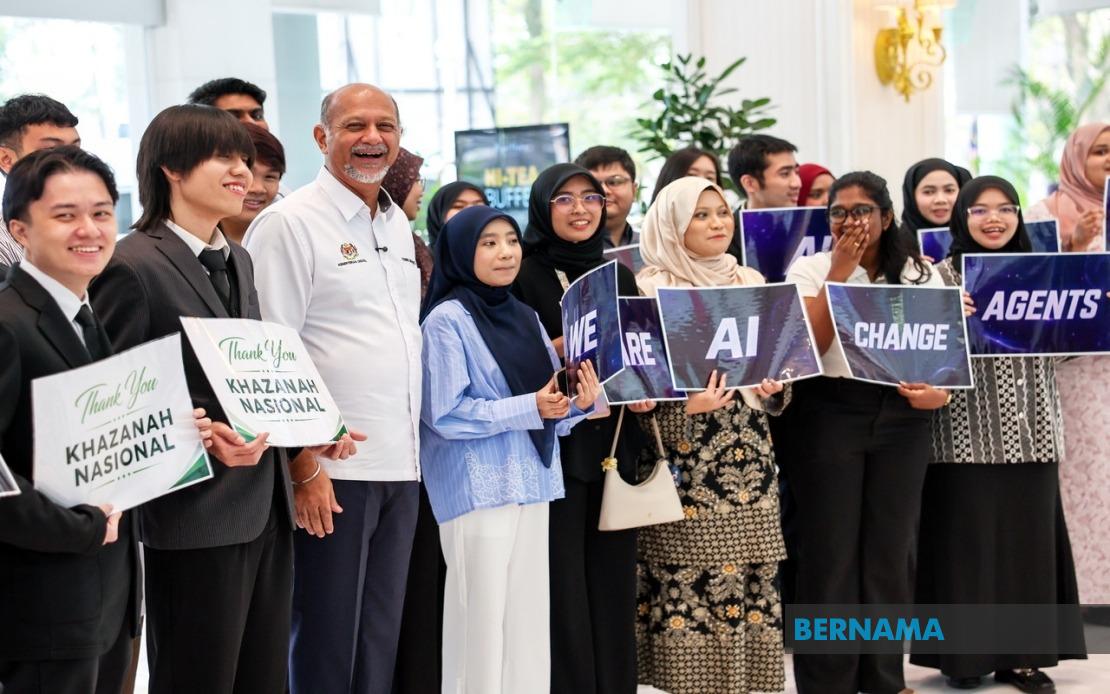
Malaysia's government is moving away from a reactive approach to technology governance and adopting a forward-looking strategy centred on anticipating challenges before they materialise. Digital Minister Gobind Singh Deo articulated this strategic shift while opening the AI-Ready Malaysia Summit 2026 in Petaling Jaya, emphasising that the nation's rapid technological trajectory demands governmental structures capable of responding nimbly and decisively to future disruptions.
The traditional model, whereby policymakers formulate regulations and enforcement mechanisms only after problems surface, has become inadequate in an era of accelerating innovation. This lag between challenge emergence and policy response creates a window of vulnerability that leaves nations exposed to unintended consequences. By restructuring governmental processes to identify risks years in advance, Malaysia aims to implement protective measures and developmental frameworks immediately when difficulties arise, rather than scrambling to catch up after the fact. This represents a fundamental recalibration of how Kuala Lumpur approaches the digital future.
Central to this transformation is the establishment of AI Malaysia, the coordinating body tasked with steering the nation towards its 2030 aspiration of becoming a leading artificial intelligence centre. Rather than serving as a passive research institute, AI Malaysia functions as a strategic planning apparatus designed to map technological trajectories, identify sectoral vulnerabilities, and pre-emptively develop policy solutions. This institutional architecture reflects international best practice, where leading technology nations maintain specialised agencies capable of translating technological forecasting into governmental action.
Gobind highlighted that AI Malaysia's mandate encompasses six priority sectors deemed critical to national development and competitiveness. Agriculture represents the first frontier, where precision farming technologies, predictive analytics for crop management, and AI-driven resource optimisation can substantially enhance productivity and sustainability. Transport constitutes another urgent domain, encompassing autonomous vehicles, intelligent traffic systems, and supply chain optimisation. Healthcare rounds out the identified sectors, where AI applications range from diagnostic support systems to personalised medicine and epidemiological forecasting. Each represents domains where Malaysia possesses either economic significance or developmental urgency.
Development of enabling legislation and policy frameworks constitutes another pillar of the proactive strategy. By formulating Bills before specific crises demand reactive legislative patches, Malaysia establishes coherent regulatory ecosystems that attract investment and enable responsible innovation. These anticipatory measures prevent the fragmented, piecemeal regulatory approaches that have characterised technology governance in many jurisdictions, where each new problem generates ad-hoc solutions that collectively create internal contradictions and compliance burdens.
Access and digital literacy emerge as equally important dimensions of Malaysia's forward-looking agenda. Technological sophistication without widespread comprehension and accessibility reproduces existing social inequalities while generating new forms of digital exclusion. The minister stressed that public understanding of artificial intelligence capabilities and limitations constitutes a prerequisite for meaningful adoption. Citizens must grasp how AI can address practical problems in their daily lives before technology penetration can reach critical mass across Malaysian society.
Affordability and ease of access present substantial structural challenges in the Southeast Asian context. Unlike developed markets where telecommunications infrastructure and purchasing power enable rapid consumer technology adoption, Malaysia must deliberately architect accessibility mechanisms ensuring that AI applications reach beyond urban professionals and wealthy consumers to encompass rural populations, small enterprises, and economically marginalised segments. This requires deliberate policy intervention preventing market mechanisms alone from determining technology distribution patterns.
The strategic emphasis on awareness-building reflects recognition that technology adoption depends not merely on technological capability but on social readiness. Citizens unwilling or unable to trust new systems, or fundamentally misunderstanding their operations, will resist adoption regardless of objective benefits. This cultural dimension receives insufficient attention in many development strategies, yet determines practical implementation success. Malaysia's commitment to education and awareness therefore addresses a genuine prerequisite for technological advancement rather than merely rhetorical window-dressing.
For Malaysia specifically, this proactive orientation carries significant implications for regional positioning. ASEAN neighbours pursuing reactive technology governance risk falling behind in critical sectors where first-mover advantages compound over time. By positioning itself as a jurisdiction capable of anticipating technological change and establishing predictable regulatory environments, Malaysia enhances its appeal as a destination for technology investment and development. Multinational enterprises seeking stable jurisdictions where AI can be deployed at scale increasingly favour countries demonstrating sophisticated governance capacity.
The approach also addresses legitimate public concerns regarding technological disruption to employment, social cohesion, and established institutional arrangements. Communities experiencing sudden technological displacement develop political resistance and skepticism toward innovation. Proactive governance enabling stakeholder consultation before implementation and providing transition support mechanisms reduces this friction. Malaysia's framework thus serves not merely economic objectives but social stability imperatives inherent in managing rapid technological change.
Implementation fidelity will ultimately determine whether this strategic reorientation yields tangible benefits. Government agencies historically demonstrate considerable institutional inertia, with established bureaucratic procedures resistant to acceleration and fundamental process reorientation. Sustained commitment from senior leadership, resource allocation commensurate with stated priorities, and accountability mechanisms ensuring agencies actually execute proactive mandates remain essential preconditions for success. The rhetoric of proactive governance must translate into observable structural changes in how Malaysian policymakers identify emerging challenges and develop responsive institutional capabilities.

