Geopolitical tensions in the Middle East have created genuine anxiety about food security across Asia, with the threat of shipping disruptions through the Strait of Hormuz raising fears about supply shortages and runaway inflation. When crude oil and petroleum products face restrictions, the ripple effects extend far beyond petrol pumps—fertilisers become more expensive, food packaging materials grow scarce, and transportation costs spike across the entire agricultural value chain. Malaysia, as a trading nation heavily reliant on global commerce, appeared vulnerable to these shocks. Yet contrary to expectations, food prices here have remained remarkably restrained, a outcome that reflects deliberate government strategy rather than mere good fortune.
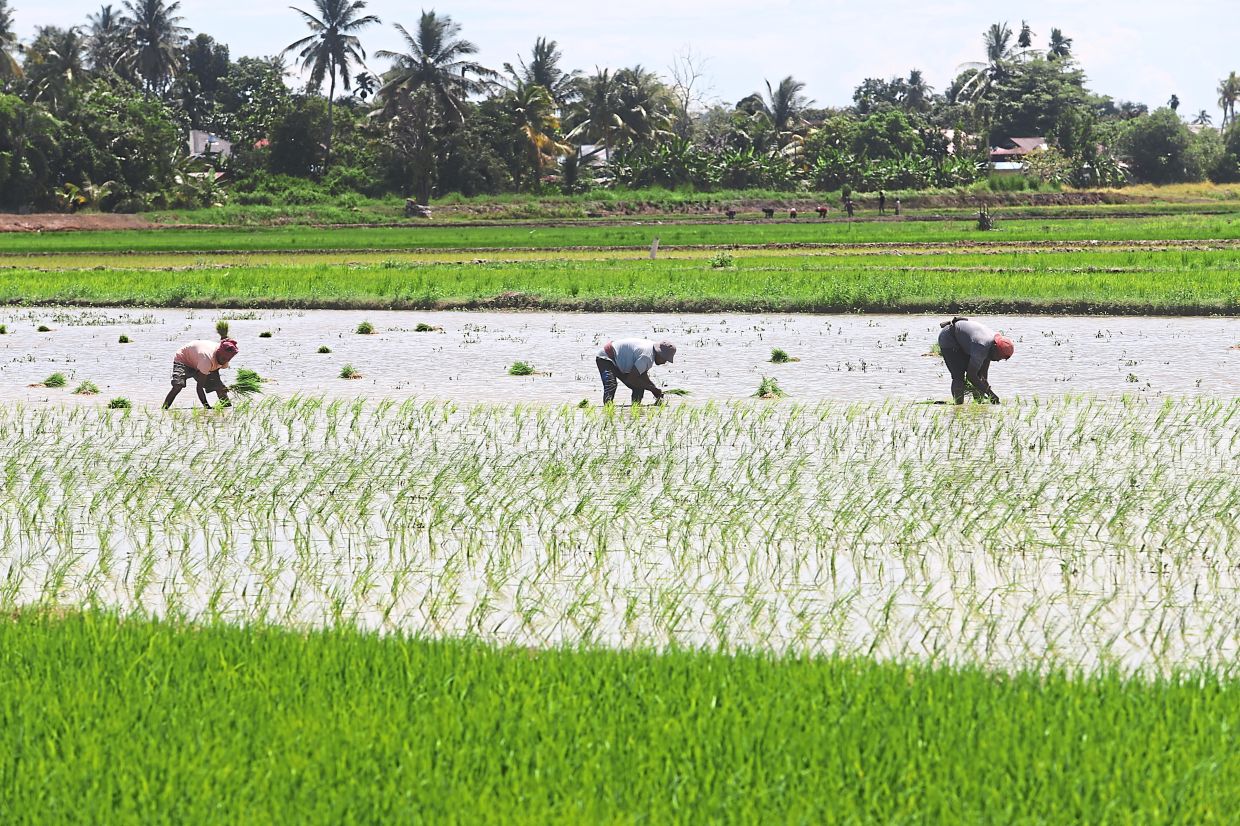
The Malaysian government recognised early that agricultural producers needed immediate relief from rising input costs. In April, the Ministry of Finance expanded the Budi Agri-Komoditi diesel subsidy programme from RM300 to RM400 monthly—a 33 percent increase designed to help farmers manage their fuel expenses for machinery and transport. Simultaneously, the ploughing incentive scheme (IPKP) was expanded substantially, nearly doubling from RM160 to RM300 per hectare for the 2026 planting season. Farmers in Peninsular Malaysia also received an advance RM200-per-hectare payment to help them prepare land before planting. These interventions were not random; they targeted the precise cost pressures bearing down on rural producers, allowing them to continue operations without immediately passing increased expenses to consumers.
According to Prof Datuk Dr Nasir Shamsudin, an agricultural economist at Putra Business School and professor emeritus at Universiti Putra Malaysia's Faculty of Agriculture, these programmes delivered measurable relief. The monthly Budi Agri-Komoditi assistance directly offsets diesel and transportation expenses, while the enhanced IPKP incentive improves cash flow when farmers need it most—before the planting season begins. As short-term cost-mitigation tools, these initiatives have successfully eased production pressures, sustained output levels, protected farming livelihoods, and prevented sharp price increases at consumer level. The effectiveness shows in Malaysia's food inflation statistics: year-on-year inflation stood at just 1.4 percent in May 2026, a modest increase from 1.2 percent in April, suggesting that cost savings achieved through subsidies have been partly transmitted to consumers.
Prime Minister Datuk Seri Anwar Ibrahim acknowledged in a Facebook post in May that these interventions reflected government awareness of pressures created by rising living costs and global economic uncertainty. Characterising smallholders and entrepreneurs as the backbone of Malaysia's economy, he signalled political commitment to sustaining the agricultural sector. This messaging matters because it reassures farming communities that support will continue, encouraging them to maintain production levels despite external shocks. The government's actions moved beyond rhetorical comfort, however, embedding substantial resources into the system.
Budget 2026 allocates RM2.62 billion across multiple agricultural and fisheries programmes—a commitment that suggests policymakers view food security as fundamental to economic and social stability. Paddy price support, crop cultivation incentives, fertiliser subsidies, seed assistance, and production incentives together form a comprehensive safety net. The fishing sector receives RM160 million to provide living allowances of up to RM300 monthly and catch incentives, acknowledging that marine food producers face similar pressures. Local fruit growers benefit from RM55 million in support for infrastructure and incentive programmes covering pineapples, soursop, water apple, and pomelo. These allocations reveal deliberate diversification of support rather than concentration on rice alone.
While these initiatives were introduced before the February onset of US-Iran tensions, they have inadvertently strengthened Malaysia's agricultural resilience against exactly the kind of external shocks now materialising. The timing was fortuitous but the strategic thinking transcends any single crisis. Authorities have confirmed that essential food stocks remain adequate, with chicken, eggs, fish, milk, and fruit supplies lasting at least one month despite ongoing global supply chain disruptions. Rice supplies, including national buffer stocks, offer five to six months of security. Fertiliser reserves provide approximately nine months of coverage. These stockpiles represent both precaution and confidence in domestic supply capacity.
Yet Prof Nasir emphasises that subsidies alone cannot solve Malaysia's structural food security challenges. The full benefits of government assistance depend on how effectively cost reductions move through the entire food supply chain, from farm to retail. More fundamentally, long-term stability requires permanent improvements in agricultural productivity and supply chain efficiency. Investments in farm mechanisation, precision agriculture, climate-smart farming techniques, high-yield seed varieties, efficient irrigation systems, post-harvest infrastructure, and integrated logistics networks can permanently lower production costs per unit and reduce reliance on continuous government handouts. These capital investments transform the sector's competitive position rather than merely subsidising existing inefficiencies.
The government is simultaneously promoting alternatives to chemical fertilisers, recognising that dependence on globally-traded inputs leaves the sector vulnerable to price swings. A RM5.5 million project under the 13th Malaysia Plan focuses on converting agri-food waste into compost and organic fertilisers through circular economy principles. Biofertilisers and Effective Microorganisms products represent partial diversification away from chemical inputs, though they cannot fully replace imported nutrients without substantial productivity gains elsewhere. This multi-pronged approach—subsidies for immediate relief, stockpiling for medium-term security, and agricultural modernisation for long-term resilience—demonstrates sophisticated policy thinking.
However, Malaysia confronts a fundamental structural vulnerability that no single policy can entirely resolve. As a net food importer with an agri-food trade deficit reaching RM39.34 billion in 2024, the country depends heavily on global markets for rice, wheat, dairy products, and meat. This import dependence exposes both consumers and producers to external price shocks whenever global logistics experience disruption or geopolitical events restrict supply routes. Even sectors appearing self-sufficient domestically often rely substantially on imported inputs—seeds, fertilisers, machinery, and spare parts flow from international suppliers. When shipping through strategic chokepoints faces uncertainty, these dependencies become acutely apparent.
Building genuine long-term food security therefore demands investment in domestic production capacity that goes beyond current ambitions. Malaysia cannot eliminate its import dependence quickly, but it can gradually reduce it through sustained productivity improvements and crop diversity. Strategic vertical integration—developing seed multiplication facilities, fertiliser production capacity, and advanced food processing infrastructure—would reduce vulnerability to external shocks. Yet such transformation requires years of sustained investment and political commitment extending beyond electoral cycles. The current approach balances pragmatism with aspiration: immediate subsidies stabilise present conditions while productivity investments address future vulnerabilities.
The broader significance of Malaysia's response extends beyond domestic food security. As a middle-income country facing supply chain disruptions alongside more developed peers, Malaysia demonstrates that strategic government intervention, when precisely calibrated, can protect citizens from external shocks without artificial price controls that distort markets or deplete fiscal reserves unsustainably. The approach also illustrates recognition that agriculture represents both economic sector and national security concern. By maintaining farmer incomes and production capacity, Malaysia preserves rural livelihoods while ensuring stable urban food supplies—a balance many developing nations struggle to achieve.
The challenge ahead remains formidable. Global uncertainties will persist, potentially intensifying as climate change increases weather volatility and geopolitical fragmentation complicates supply routes. Malaysia's food prices have weathered this particular storm, but structural dependence on imports means future shocks will test resilience again. The government's willingness to allocate substantial resources to agricultural support, alongside genuine investment in productivity improvement, suggests recognition that food security cannot be treated as peripheral concern. Whether these investments mature into permanent capacity gains or remain temporary subsidy transfers will determine whether Malaysia truly emerges more resilient when the next disruption arrives.

